Written By | International News Agencies
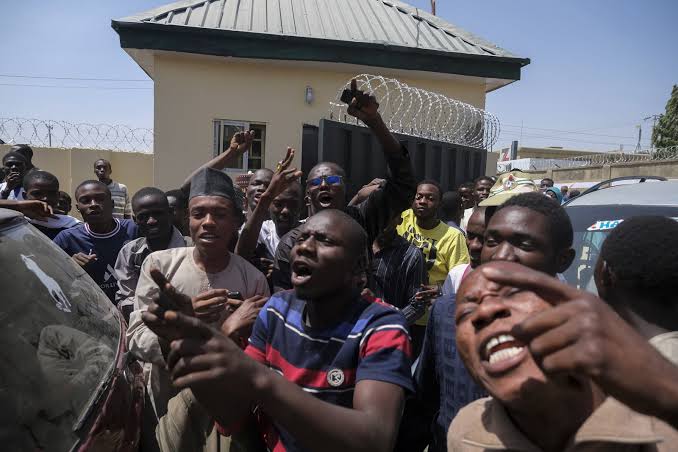
The attack took place on Nnebisi Road during a procession organised by the Obidient/OK Movement, the grassroots network that backs Obi, according to The Sun and other Nigerian outlets
Nigeria
One person was killed and five were injured on Saturday when suspected thugs attacked a rally by supporters of opposition presidential candidate Peter Obi in Asaba, the Delta State capital, in what has become the most serious in a string of reported attacks on opposition events as Nigeria heads toward a presidential vote on Jan. 16, 2027. Police confirmed the casualties and opened an investigation. The accounts of what happened, and who is responsible, conflict sharply: organisers and a prominent opposition figure blame the state government, while the state government and the ruling party deny involvement and say the organisers ignored police warnings. Whatever the investigation finds, the episode has put political violence at the center of a campaign that is barely beginning.
What happened in Asaba
The attack took place on Nnebisi Road during a procession organised by the Obidient/OK Movement, the grassroots network that backs Obi, according to The Sun and other Nigerian outlets. Obi is the presidential candidate of the Nigeria Democratic Congress (NDC), with former Kano governor Rabiu Kwankwaso as his running mate. One person was reportedly killed and five injured.
The Delta State Police Command confirmed one death and five injuries. Police spokesman Bright Edafe said officers had received intelligence suggesting possible violence before the event, invited the organisers to a security meeting and advised against a procession on the open road. The organisers went ahead anyway, he said, according to the account carried by QED.ng and The Rio Times Online. The command said an investigation was under way.
Obi condemned the violence in a post on X on Sunday. He called the incidents disturbing, said the victims had only been exercising their democratic rights, and demanded an investigation, the identification of the perpetrators and their prosecution "regardless of their political affiliations." "Political violence has no place in a democracy and can never be justified," he wrote, adding that the NDC and Obidient movement would not be intimidated and would respond peacefully and lawfully.
Competing accounts
Ovie Omo-Agege, a former deputy Senate president, went further. In a statement issued Sunday through an aide, Godwin Anaughe, he said: "The attack on the Obidients did not happen by accident. It was sponsored. The Delta State Government is behind it." He claimed armed men struck about 20 minutes after the procession began, damaged more than 30 vehicles and injured more than 10 supporters, including the movement's state coordinator, Favour Emerure. He also accused members of the Delta chapter of the ruling All Progressives Congress (APC) of involvement and called on Governor Sheriff Oborevwori, President Bola Tinubu, the police and the Department of State Services to act.
Those figures differ from the police count of five injured, and Omo-Agege's allegations are unproven. The Delta State Government condemned the violence and called for prosecution of those responsible, but Commissioner Charles Aniagwu said the incident could have been avoided had the organisers heeded security advice. The Delta APC rejected the claims linking its members to the attack, saying no evidence supports them.
Taken together, the statements show the difficulty of reconstructing events in the days after such incidents: the casualty count is confirmed by police, while the number of injured vehicles and people, the identity of the attackers and the question of sponsorship all remain contested.
A pattern, or a coincidence?
The Asaba attack did not occur in isolation. On Nov. 4, Sahara Reporters carried a statement from Omoyele Sowore, the presidential candidate of the African Action Congress, condemning an attack on Obi's convoy in Calabar, Cross River State, which reportedly occurred shortly after Obi visited the palace of the Obong of Calabar. The article gave no casualty figures, arrests or police statement for Calabar, and the date of the attack was not specified. "Political violence against anyone, regardless of party affiliation, must never be tolerated," Sowore said, before accusing the Tinubu government of fuelling it: "State-sponsored thuggery has become a feature of the build-up to the 2027 elections." That is a political accusation from a rival candidate, offered without evidence in the report.
Sowore also described an attack on himself and his campaign team at a restaurant in Ado-Ekiti after a radio interview. Ekiti State Police called it an "altercation" and said they arrested 11 suspects, reportedly recovering phones, charms and walkie-talkies, according to the same report. Sowore and his lawyer, Femi Falana, allege that the masterminds were not arrested and that police and DSS operatives seized the restaurant's CCTV equipment and returned it with the recordings erased. Those claims are unverified in the article, and the police have characterised the incident differently.
Earlier incidents add to the picture. Legit.ng reported that suspected thugs allegedly opened fire on supporters of Obi and Kwankwaso in Warri, Delta State, on Sept. 18, citing a post by a photographer associated with Obi; no police statement was reported and the claim was unconfirmed. ThisDay reported in September that Benue youths stopped Obi from visiting the Yelewata massacre site. Individually, many of these accounts are contested. Collectively, they describe a campaign in which the opposition's candidates repeatedly say they are being blocked or attacked, and in which police and political actors dispute each account.
The race
The stakes are high because the contest is genuinely competitive on paper, and because the field is crowded. INEC, the Independent National Electoral Commission, published its final list of presidential candidates on Sept. 12, according to The Nigeria Lawyer: 18 tickets, down from 19 in an August publication after a New Nigeria Peoples Party candidate was dropped. The leading tickets are Tinubu, running with Vice President Kashim Shettima for the APC; former vice president Atiku Abubakar, running with Chibuike Rotimi Amaechi for the African Democratic Congress (ADC); and Obi with Kwankwaso for the NDC. Sowore is on the ballot for the AAC, and Donald Duke for the Peoples Redemption Party.
The election date has shifted. INEC first fixed the presidential poll for Feb. 20, 2027, according to a Nairametrics headline from February, and later revised its timetable; the Nigeria Lawyer now reports a Jan. 16, 2027 date for the presidential and National Assembly elections. The next president is due to be inaugurated on May 29, 2027, per The Rio Times Online. The opposition has fragmented across several vehicles, with Obi and Kwankwaso in the NDC and Atiku and Amaechi in the ADC. That division could split the anti-incumbent vote, which is one reason the ruling party's rivals are acutely sensitive to anything that hampers their ability to reach voters.
Beyond the presidency: Lagos and the economy
The presidential race is not the only contest. On Nov. 8, four Lagos gubernatorial candidates debated rents, housing, flooding, traffic and education, The Rio Times Online reported. They included Obafemi Hamzat, the current deputy governor, for the APC; Gbadebo Rhodes-Vivour for the ADC; and Funso Doherty for the NDC. The debate suggests that, away from the violence, substantive campaigning is under way in Nigeria's economic capital.
Analysis: the credibility question
The immediate issue is not who is ahead, but whether the conditions for a credible campaign exist. Three things matter. First, the quality of the investigation. Police have confirmed the death and opened an inquiry, but their account, that organisers disregarded advice against a road procession, is also the sort of framing opposition figures treat with suspicion, as Sowore's remarks about the Ekiti case show. A transparent, prompt and evidence-based outcome, including identification of the attackers and a clear answer about who sponsored them, would do far more to calm the situation than competing statements.
Second, the partisan dynamic. Allegations of state complicity have come from opposition figures, including Omo-Agege, Sowore and, implicitly, Obi's supporters; denials have come from the government and the APC. The reporting reviewed for this story contains no independent evidence either way. That absence is itself a problem for public confidence, because in the absence of proof each side's narrative hardens.
Third, the pace of escalation. With roughly 10 weeks to go until the vote by the calendar date reported, the number of rallies, processions and travelling convoys will increase, as will the number of potential flashpoints. The police position that road processions invite violence, if applied broadly, could restrict opposition campaigning in practice; the opposition position that it should be able to campaign freely without intimidation raises the question of what security guarantees will be provided.
What to watch
Key markers include whether police announce arrests or identify suspects in Asaba; whether Obi, Kwankwaso and other candidates alter their campaign schedules or demand protection; whether the electoral commission or civil society groups issue statements on political violence; and whether further incidents are reported in the coming week. Also watch for any independent or cross-party review of the Calabar, Ekiti and Warri incidents. For Nigeria's democracy, the test is not only the result on Jan. 16 but whether voters believe every major candidate could campaign safely to get there.