Written By | Staff Writer
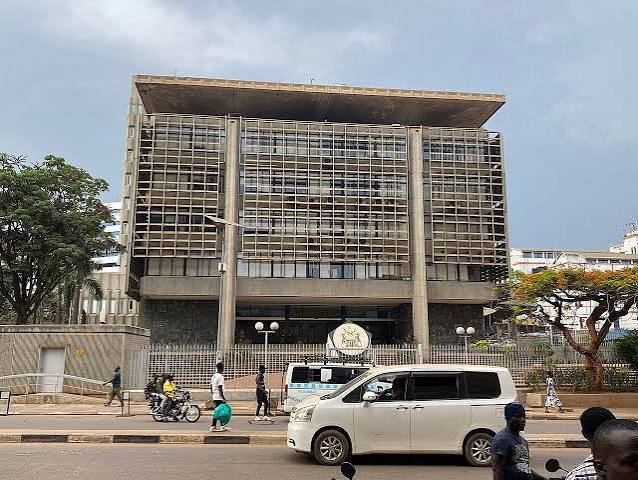
The current account deficit widened by US$1.4 billion to US$4.6 billion.
BUSINESS AND ECONOMY
What is happening
Uganda’s private sector is feeling the strain of an external oil and currency shock and the central bank’s response to it. The Bank of Uganda’s monthly Business Tendency Indicator, released on Wednesday 4 November, showed business confidence falling to 53.5 in October, below a consensus forecast of about 57 and the weakest reading since February 2023, according to The Rio Times. The index is still above the 50 line that separates optimism from pessimism, but the direction is unmistakable: August stood at 57.8, and September was first published at 55.8 before being revised to 56.7.
The October reading in detail
The survey covers firms in construction, manufacturing, wholesale trade, agriculture and services, asking about orders, jobs, prices and credit. The weakest component was access to credit, at 38.9. Own finances fell to 47.1 from 52.6, current employment sat at 47.9, below 50, and the present business situation slipped to 50.3 from 53.7. Supplier orders eased to 53.9 from 57.7. Selling prices climbed to 66.4 from 61.5, meaning more firms are raising prices. A bright spot is the three-month outlook, at 59.2, which shows more firms expect conditions to improve than to deteriorate.
By sector, construction was the weakest at 39.8 (from 46.0), with order books at just 30.3. Wholesale trade fell to 46.7, other services to 53.4 from 59.7, and manufacturing edged down to 52.6. Agriculture bucked the trend, rising to 57.5 from 56.4. Financial services remained the most upbeat group at 77.7, though down from 85.0.
The cause: an oil shock and a weak shilling
The slide follows a sharp tightening of monetary policy. On Wednesday 14 October the Bank of Uganda held a special meeting outside its regular schedule and raised its Central Bank Rate by 225 basis points, from 9.75% to 12%. It had earlier lifted the cash reserve requirement for commercial banks from 11% to 13.5%, effective 24 September. The bank blamed the escalating Middle East conflict for a sharp deterioration since August, saying disrupted shipping and energy infrastructure raised oil prices, freight and insurance costs, widening the current account deficit and increasing exchange-rate volatility.
The numbers are stark. The current account deficit widened by US$1.4 billion to US$4.6 billion. The goods deficit rose to US$2.8 billion for the 12 months to August from US$2.4 billion, while the services deficit grew to US$3.3 billion from US$2.2 billion, largely because of freight. Lower coffee and cocoa prices and weaker tourism receipts compounded the problem. Remittances lifted the secondary income surplus to US$3.1 billion from US$2.7 billion but did not offset weaker capital inflows as higher foreign interest rates pulled money away. Uganda has no oil refinery and imports its fuel, so depreciation and high oil prices fed directly into pump prices. The Daily Monitor reported on 5 October that the shilling had reached its weakest level on record, and has since run analysis pieces on what comes next after the hike and on the costs of defending the currency.
Inflation and growth outlook
Headline inflation rose to 4.6% in September from 4.1% in August, driven by food crop prices and fuel, while core inflation rose to 3.7%. The bank now forecasts headline inflation of 7% to 7.5% over the next 12 months and core inflation of 5.5% to 6%, above its 5% medium-term target. It warned that the fuel shock could persist and combine with depreciation and El Niño weather to entrench inflation. It also cut its growth forecast for the 2026/27 financial year to 6.0%–6.5% from 7.0%–7.5%, noting that growth slowed to 6.4% in the quarter to September from 6.8% in the previous quarter. Medium-term growth of around 8% is still expected as oil production approaches and exports strengthen.
Early market reaction
On the day of the hike the central bank’s indicative mid rate moved from about 4,130 shillings per dollar at the open to about 3,951 at the close, a gain of roughly 4.5% for the shilling in a single session. The Daily Monitor later reported the shilling notching up some gains on improved dollar supply and a weaker greenback. Whether that recovery will last is unclear.
Why it matters
Higher policy rates are meant to defend the currency and contain inflation, but they raise borrowing costs just as firms report the tightest credit conditions in the survey. For a construction sector already running at a confidence reading below 40, and for small traders dependent on short-term credit, the combination of costlier loans and costlier fuel is a heavy burden. The sharp rise in the selling-price index also suggests that firms are passing costs on to consumers, which could keep inflation elevated even as demand softens.
The episode also exposes structural vulnerabilities: dependence on imported fuel, on a narrow set of commodity exports led by gold and coffee, and on volatile tourism and capital flows. The Uganda Bureau of Statistics and the Bank of Uganda reported that export revenue for August was up 36% on higher gold earnings, a reminder that some external indicators remain supportive.
What to watch next
The Bank of Uganda said it stands ready to take further action. Its Monetary Policy Committee would normally meet in November, although no date has been confirmed in the reporting reviewed. Key signals include how fast commercial banks pass the higher policy rate on to borrowers, the October inflation print, the next Business Tendency Indicator, and monthly trade data due on 3 December. Analysts will also watch whether October proves to be a trough or the start of a longer decline; the survey itself does not give reasons for the fall, and the link to the rate rise is an interpretation. The central bank also revises past readings, so even the October figure may change.