Somalia
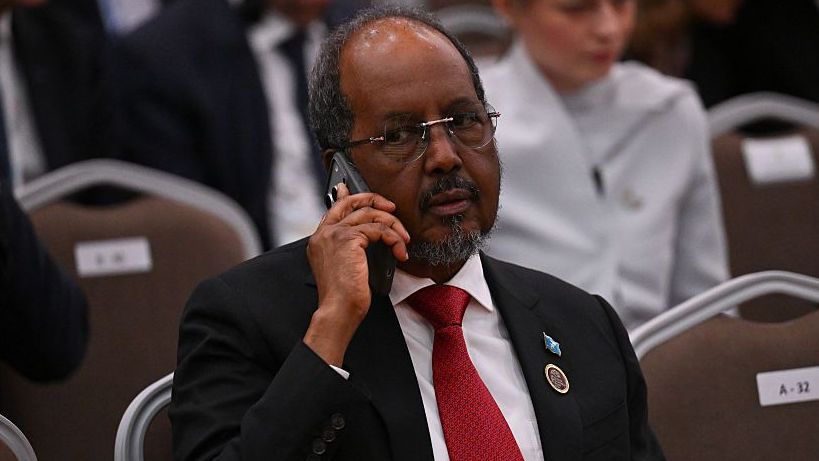
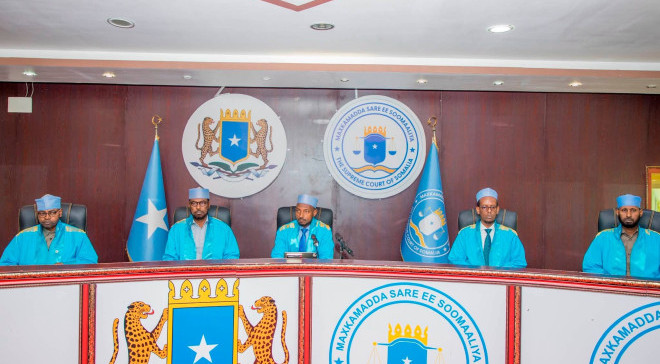
Somalia's Supreme Court has ruled that the mandates of the federal government and both houses of parliament have run out, setting up a direct confrontation with President Hassan Sheikh Mohamud over who has the authority to govern. In a five-judge decision handed down on Nov. 5, the court held that parliament's and the government's terms ended on April 14 and that Mohamud's four-year term expired on May 15. It limited the government to routine caretaker duties and ordered political leaders to agree on an electoral framework within 30 days and hold elections within 90 days. Within a day, the Attorney General's Office had rejected the ruling, and the presidency was embroiled in a separate fight over who legitimately leads the judiciary itself. The ruling does not say who would hold presidential authority if talks fail, or how its deadlines would be enforced.
The stakes extend well beyond a legal argument. Somalia is a fragile federation that is still fighting the al-Shabaab insurgency, and its international security and diplomatic scaffolding is thinning at the very moment its political settlement is being contested.
Background: a term-extension fight months in the making
The crisis traces to constitutional amendments that parliament approved on March 4 and Mohamud signed four days later. According to reporting by Geeska Afrika Online, the changes extended presidential and parliamentary terms from four years to five and replaced the current indirect, clan-based system of choosing lawmakers with direct parliamentary elections. Mohamud, who was elected in 2022, argued the amendments allowed him to remain in office until May 2027. He has also said the reforms are needed to end indirect elections.
Opposition leaders and several federal member states objected from the start, arguing that the changes lacked political consensus. Their objection was not to direct voting in principle but to the idea that a switch to direct voting could justify lengthening an incumbent's term or setting an electoral timetable without broad agreement. The country's electoral commission has nonetheless scheduled parliamentary elections for April 15, 2027 and a presidential election for May 15, 2027, according to Geeska's account.
In South West State, federal troops seized the city of Baidoa on March 30 after a confrontation with regional leader Abdiaziz Hassan Mohamed Laftagareen, who then resigned. Leaders of Puntland and Jubaland accuse the presidency of centralizing power and undermining Somalia's federal arrangements.
There had also been signs of movement. On Sept. 1, the Somali Guardian, citing a Somali Stream report, said Mohamud had broadly accepted holding elections within seven months and a political settlement with the opposition after mediation by international partners. The report described a softening of his earlier insistence that his term had been extended by a year. But it also described the limits of the concession: in his latest response he recast the international role from "mediation" to "facilitation," replaced the opposition's call for international guarantors with "observers," and dropped wording that tied the presidential vote to the seven-month period. No technical matters had been agreed, the paper reported, and the sides had not settled the size of an election taskforce or a timetable.
What the court decided, and what it did not
The ruling came in a challenge brought by former president Sharif Sheikh Ahmed. The court dismissed his challenge to the amendment process itself, finding that he lacked legal standing. But it accepted his challenge to the extension of sitting officials' terms, finding that the new duration could not apply to existing mandates without an explicit provision saying so.
The consequences, as Geeska reports them, are sweeping on paper: actions taken under the powers of the institutions after their mandates expired are declared invalid, and the government is confined to routine caretaker functions. The court ordered leaders to agree an electoral framework within 30 days and to hold elections within 90 days. Yet it left open the central practical question. It named no interim authority if talks fail and set out no enforcement mechanism. In effect, the judgment declares the legitimacy of the government in doubt while leaving that same government in physical control of the state.
A second front: who leads the judiciary?
The ruling arrived amid a separate clash over the court's own leadership. On Nov. 4, a day before the decision, Mohamud dismissed Chief Justice Baashe Yusuf Ahmed, citing complaints about the administration of justice, and appointed his predecessor, Ibrahim Idle Suleiman. The Supreme Court rejected the dismissal the next day, saying the president had exceeded his powers and interfered with a pending constitutional case. On Nov. 6, Mohamud nonetheless attended Suleiman's swearing-in, according to Geeska. The leadership of the judiciary is now contested.
That sequence gives each side a plausible narrative. The president's supporters can argue that a court whose leadership he has replaced cannot rule on his mandate; his opponents can say the dismissal, on the eve of the decision, shows the interference the ruling addresses. Neither has an arbiter everyone accepts.
The Attorney General's Office has already chosen a side. On Friday, it rejected the ruling on terms, disputing the panel's jurisdiction and procedures and questioning Sharif's standing to sue, Geeska reported.
The talks track
Alongside the legal fight, a diplomatic track continues. According to the Somali Guardian, the opposition National Salvation Forum has agreed to give Mohamud "one final opportunity" to resolve the dispute through dialogue after earlier negotiations collapsed. The forum named a three-member delegation: former Galmudug state president Abdikarim Hussein Guled and lawmakers Abdirahman Abdishakur and Abdullahi Arab. The delegation is to meet a government technical committee on "the 14th" of the month to agree an agenda. The report did not give the month in its text, and the date should be treated as unconfirmed until it is.
The same report said Mahad Salad, director of the National Intelligence and Security Agency, reportedly urged the opposition to accept the invitation. The forum prefers a Somali-led process to one brokered by foreign governments. Puntland and Jubaland, which belong to the Somali Future Council alongside prominent opposition figures, had not confirmed they would take part, and both have previously ruled out talks with Mohamud.
The core disputes, as the Guardian describes them, are the constitutional amendments, the proposed new electoral system, and the distribution of power between Mogadishu and the federal states. The opposition argues that the reforms could pave the way for a third term for Mohamud and sideline challengers.

Security and international context
The political deadlock coincides with a weakening of outside support. Uganda announced on Nov. 2 that it had begun withdrawing troops and would remove all remaining forces, including those in the African Union mission, by the end of 2027. African Union peacekeepers plan to take over several bases near Mogadishu, but it is unclear who will secure the positions they vacate, according to Geeska. The UN political mission in Somalia closed on Oct. 31, removing what the same account describes as a channel for international support for dialogue. Al-Shabaab controls or operates across much of rural Somalia, which limits the feasibility of nationwide polling under any scenario.
Taken together, these developments narrow the options. The court's 90-day window is short for any credible electoral process, and the government has not conceded that the clock is running. Whether the vote is direct or indirect, holding it requires security the state cannot guarantee across the country.
Analysis: how this could go
One path is negotiation under judicial pressure. The opposition's willingness to hold another round of talks, and the reported urging from within the security establishment, suggest a constituency for a deal. A face-saving formula could let the presidency maintain that the amendments stand while agreeing to an interim timetable. The September episode cuts both ways: Mohamud has shown he can concede in principle, but also that concessions can narrow in the drafting.
A second path is a standoff in which both sides claim legitimacy. If the Attorney General's rejection holds and a contested judiciary produces competing rulings, the opposition and the federal states could treat the president as lacking a mandate while he keeps control of the security forces and the treasury. Nothing in the reporting reviewed for this story indicates fighting has begun, but a contested judiciary, an unresolved regional dispute in South West State and a departing Ugandan force raise the risk.
A third is that neither the ruling nor the amendments are enforced, and the country proceeds toward the commission's April and May 2027 dates without a consensus framework, handing opponents a legitimacy argument against the results.
What to watch
Several markers will show which path Somalia is on. The first is whether the talks between the opposition delegation and the government's technical committee actually convene, and whether Puntland and Jubaland join. The second is whether any foreign partner publicly adopts the court's 30-day and 90-day deadlines, or treats them as non-binding. The third is the status of the judiciary: whether Suleiman or Ahmed is recognized as chief justice by lower courts and by the security services. The fourth is the security calendar, including how the Ugandan drawdown and the AU base handovers are managed. Finally, the 30-day window for agreeing an electoral framework runs out in the first week of December, counting from Nov. 5, and that date will be the first test of whether the ruling has any force at all.
For now, Somalia's most senior court has said the government's mandate is over, the government says the court has no standing to say so, and the clock the court set is already running.
Published By | News Editor