JOHANNESBURG
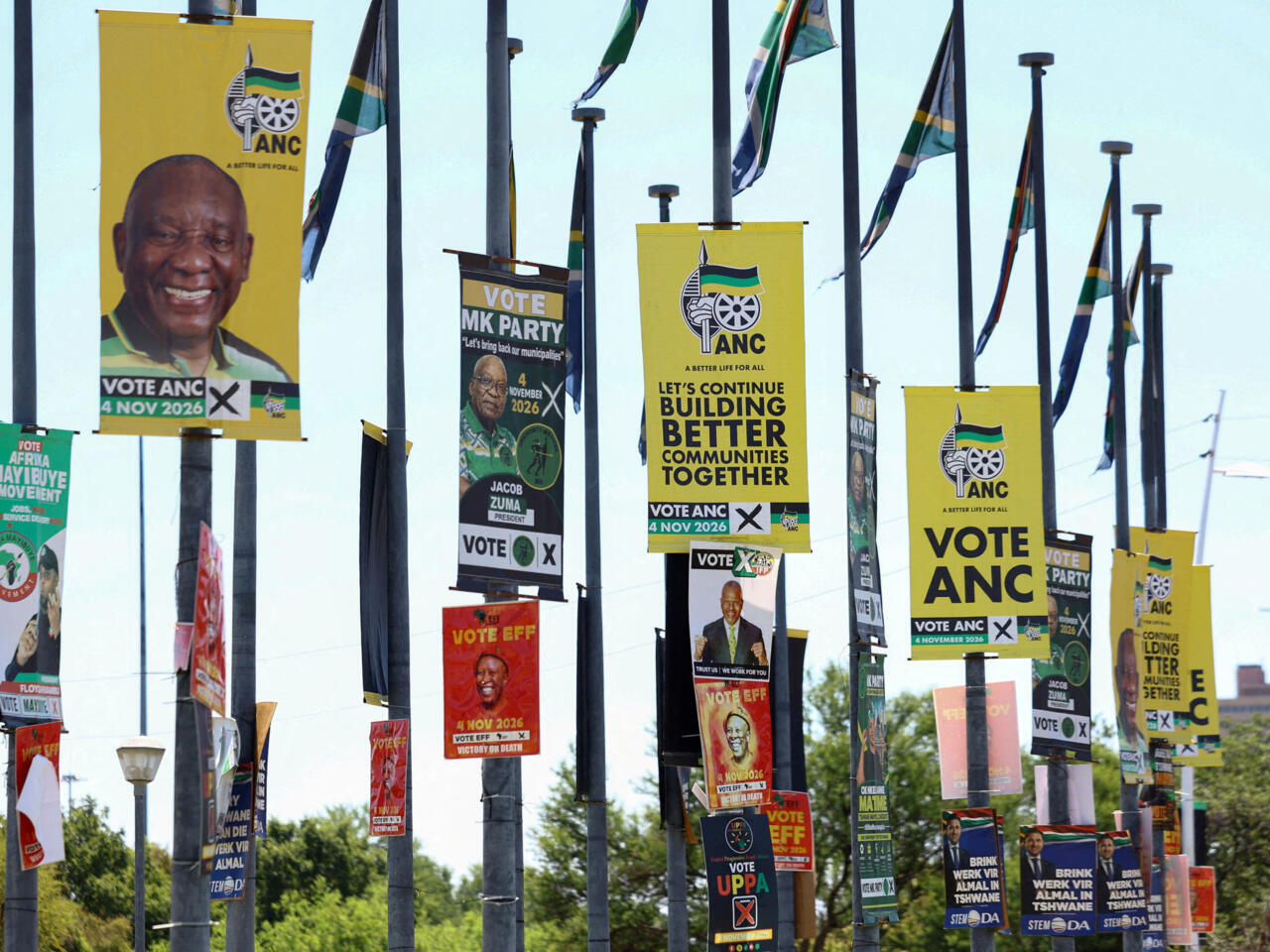
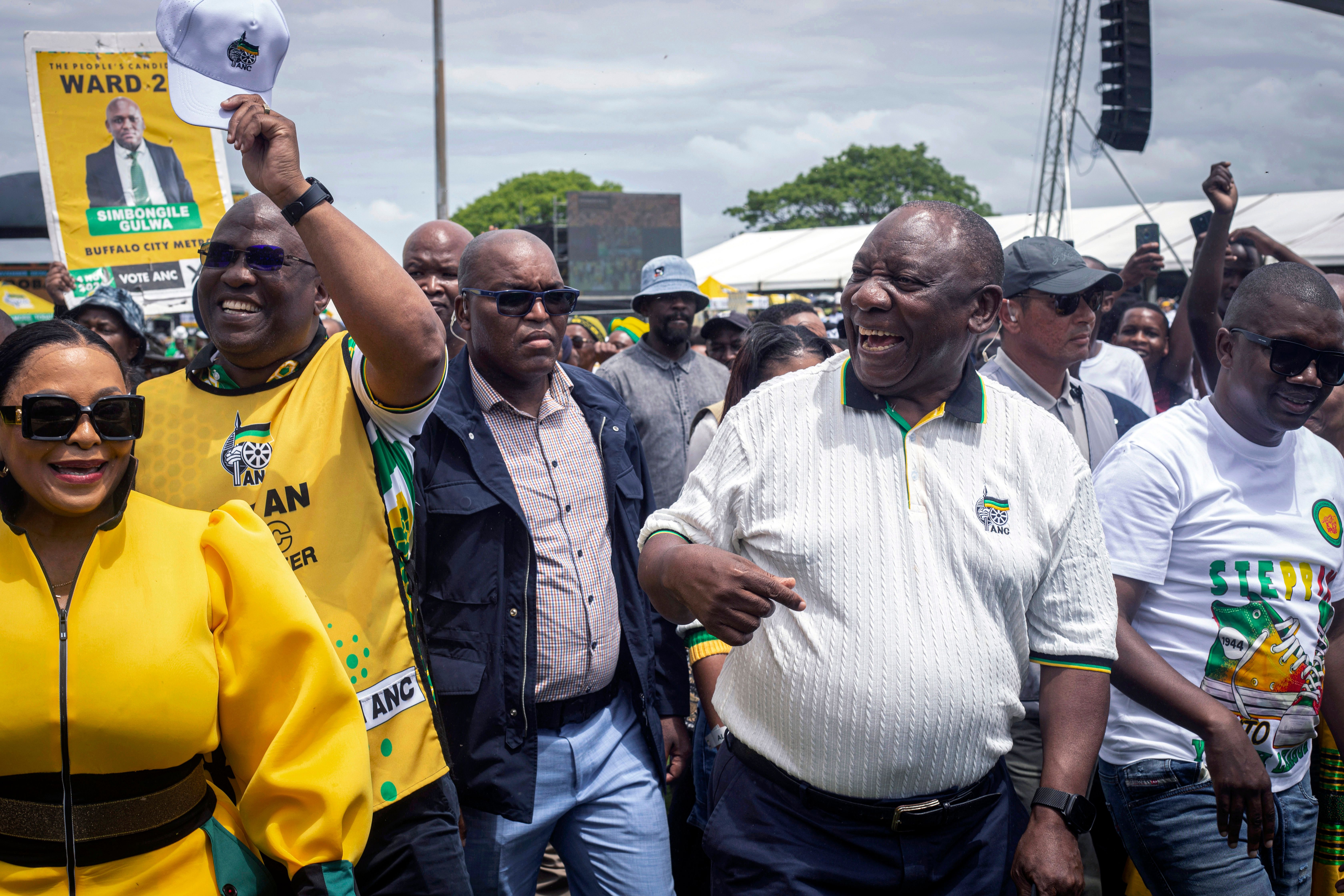
South Africa's African National Congress convenes its National Executive Committee today to decide how to respond to the worst election result in its history, while the Democratic Alliance and ActionSA sit down face to face for the first time since the Nov. 4 municipal vote to bargain over control of the country's economic heartland. With councils in Johannesburg, Tshwane and Ekurhuleni required to hold their first sittings within roughly two weeks, the decisions made in these rooms will shape who governs the cities that generate a large share of the nation's wealth — and offer an early preview of the coalition politics likely to define the run-up to the 2029 general election.
The result itself is no longer in doubt. Final figures declared by the Electoral Commission of South Africa on Sunday, Nov. 8, gave the ANC 30.76 percent of the national vote, down from 45.59 percent in 2021, according to BusinessTech. The DA rose to 24.64 percent from 21.66 percent. Former President Jacob Zuma's uMkhonto weSizwe (MK) party, contesting its first local election, took 9.77 percent; the Economic Freedom Fighters fell to 6.22 percent from 10.31 percent; and ActionSA climbed to 5.67 percent from 2.33 percent. ANC Secretary-General Fikile Mbalula called the outcome "catastrophic," Al Jazeera reported.

A turning point in the metros
The headline numbers understate the scale of the shift in the big cities. According to results compiled by BusinessTech, the DA finished first in five of the eight metropolitan municipalities: Johannesburg, Tshwane, Ekurhuleni, Cape Town and Nelson Mandela Bay. It retained an outright majority only in Cape Town, where it won 56.42 percent and 133 of 235 seats.
In Johannesburg, the DA took 34.79 percent and 91 of 270 seats, against 20.25 percent and 63 seats for the ANC and 16.27 percent and 43 seats for ActionSA. In Tshwane, which includes Pretoria, the DA won 34.37 percent and 74 of 214 seats, with ActionSA second at 22.07 percent and 48 seats and the ANC third at 20.22 percent and 44 seats. In Ekurhuleni, the DA won 30.68 percent and 66 of 224 seats, ahead of the ANC at 22.11 percent and 59 seats and ActionSA at 18.50 percent and 40 seats.
The changes from 2021 are stark. The Star reported that the ANC's Johannesburg caucus fell from 91 seats to 63, its Tshwane caucus from 75 to 44 and its Ekurhuleni caucus from 86 to 59. ActionSA's Tshwane delegation jumped from 19 seats to 48, and its Ekurhuleni delegation from 15 to 40. ActionSA leader Herman Mashaba said the party won 17 wards outright in Ekurhuleni, compared with none in 2021. "This is a remarkable achievement and a clear sign that ActionSA is gaining momentum!" he said, according to The Star.
Elsewhere, the ANC held on as the largest party in Buffalo City with 42.02 percent and narrowly led in Mangaung with 33.91 percent to the DA's 33.49 percent. In eThekwini, which includes Durban, MK finished first with 38.29 percent, ahead of the DA at 25.45 percent and the ANC at 16.43 percent, according to BusinessTech.
Nationally, The Star reported, only 72 of 213 councils produced a party with an outright majority. The ANC won outright control of 51 municipalities, the DA 12, the Inkatha Freedom Party five and MK three.
Participation rose compared with the last local election. The electoral commission estimated turnout at 54.5 percent, with about 15.9 million of 29.2 million registered voters casting ballots, eNCA reported. Turnout in 2021, held during the COVID-19 pandemic, was 46 percent.
Why the ANC is bleeding support
The ANC's decline in local government has been under way for years. The party won 66 percent in the 2006 municipal elections, according to Al Jazeera, and its 2021 result was already its worst local showing since the end of apartheid. Voter frustration with corruption, unemployment above 34 percent and failures in basic services such as water and electricity have steadily eroded its support, Al Jazeera reported.
The 2026 vote was also the first municipal contest since the ANC lost its national majority in 2024 and formed a Government of National Unity with the DA and other parties. EFF leader Julius Malema blamed that decision for the DA's growth. "Helen Zille is more boastful than ever before, and they allowed her to do that," he said, according to The Star.
The DA, now led by Cape Town Mayor Geordin Hill-Lewis, who succeeded John Steenhuisen in April, has claimed a broader base. The party says its modeling shows it won more than one million votes from Black South Africans for the first time, Al Jazeera reported. That claim has not been independently verified.
Analysts quoted by Al Jazeera framed the result as a structural change rather than a one-off protest. Political analyst Ralph Mathekga called it "a referendum on the ANC's capacity to govern and turn the corner." Sandile Mnguni of the University of KwaZulu-Natal said the decline "should serve as a clear warning" to the party, while analyst Sipho Seepe described President Cyril Ramaphosa's leadership as "a total disaster" and said he expected "coalitions to be the new normal."

Today's negotiations
The immediate contest is over Gauteng. Daily Maverick reported that the ANC has centralized coalition decisions in a task team led by Mbalula that includes Parks Tau, Enoch Godongwana and Gwede Mantashe, limiting the power of provincial and regional structures. The party's National Working Committee met on Monday, Nov. 9, and recommended that today's NEC meeting focus on a coalition negotiation framework rather than a broad post-election review.
According to News24 reporting cited by Daily Maverick, the ANC is weighing three options: a formal coalition with the DA; a broader arrangement with ActionSA, the EFF and smaller parties; or a deal with the DA under which each party governs where it is largest and supports the other. The party is internally divided. Gauteng Premier Panyaza Lesufi favors a coalition without the DA, which he has called "anti-transformation," and the ANC Youth League has ruled out the DA and other "right-wing" parties, Daily Maverick reported.
"Since 2016, we've been swimming in coalitions," Mbalula said, according to Daily Maverick, adding that "we are looking for stable councils." He warned that if the party failed to keep reassessing its approach, "we in the ANC will be facing existential crisis and total defeat."
The DA, for its part, has said it will engage parties committed to clean government, fighting corruption, service delivery, the rule of law and non-racialism, and it has floated a "Government of Local Unity" model that would bring several parties into city administrations to clear the 50 percent threshold, Daily Maverick reported.
ActionSA has emerged as the kingmaker. In a letter to Hill-Lewis dated Nov. 7, first reported by the Sunday Times, Mashaba proposed that he withdraw from the Johannesburg mayoral race if the DA's candidate, former Western Cape Premier Helen Zille, also stepped aside. Under the proposal, the DA would keep the Johannesburg mayoralty with an alternative candidate ActionSA could support, and ActionSA would take the deputy mayor post. In Tshwane, DA mayoral candidate Cilliers Brink would give up his council seat, and the DA would back ActionSA's Nasiphi Moya for mayor.
"It is clear from these elections that the support for our two parties is increasing," Mashaba wrote, according to Business Day, adding, "I believe it would be foolish of our respective parties to fail to recognise this."
DA figures responded coolly. An unnamed DA insider told Business Day the party would not begin negotiations "where we are dictated terms by a smaller party," and another said, "we can't have ActionSA dictate to us how we should deal with internal matters." A third DA leader argued that the preconditions appeared designed to make a deal collapse and push ActionSA toward the ANC, though another said the DA would still negotiate in good faith.
ActionSA has not backed away. "There is an openness to work with all parties, including the DA, and that letter is testament to that fact," ActionSA national chairperson Michael Beaumont told Eyewitness News on Wednesday, saying the terms would be discussed at today's meeting. ActionSA has also held talks with the ANC and the EFF.
Analysis: the arithmetic and the risks
The arithmetic explains ActionSA's leverage. In Johannesburg, a majority requires 136 of 270 seats; the DA's 91 plus ActionSA's 43 reaches 134, just short, meaning even a DA-ActionSA pact would need at least one smaller partner. In Tshwane, where 108 of 214 seats are required, the DA and ActionSA together hold 122 seats, a comfortable majority. In Ekurhuleni, the DA's 66 and ActionSA's 40 total 106 of 224 seats, also short of a majority. An ANC-led alternative would require stitching together ActionSA, the EFF and several smaller parties.
The broader risk is a repeat of the instability that has dogged hung councils in recent years. In a Nov. 7 statement, the ANC itself warned that frequent mayoral changes in coalition-run municipalities have disrupted service delivery and budgets, according to The Star. Ramaphosa urged newly elected councillors to put residents first. "The stability of our municipalities cannot be sacrificed to narrow political interests," he said, according to The Star.
For the ANC, today's NEC meeting is about more than the metros. Ramaphosa is expected to step aside as party leader ahead of the ANC's 2027 leadership contest, Al Jazeera reported, and the coalition strategy chosen now will shape the factional battle to succeed him. A deal with the DA in Gauteng would deepen the GNU partnership but could alienate the party's left flank; a pact with the EFF and MK could please Lesufi and the Youth League but strain the national coalition.
What to watch
The key markers in the days ahead are the outcome of today's ANC NEC meeting and whether it authorizes talks with the DA; whether the DA agrees to replace Zille as its Johannesburg candidate or backs Moya in Tshwane; and whether coalition agreements can be concluded before councils sit, around Nov. 22 under the 14-day timeline. The DA has said it will publish detailed coalition frameworks once agreements are concluded, Daily Maverick reported. A durable deal in Gauteng would signal that South Africa's fragmented politics can produce stable government. A breakdown would suggest the instability of the past decade is entering a new and more crowded phase.
Published By | News Editor