Ireland hosts the ninth European Political Community summit, its largest-ever diplomatic event, on the day after U.S.-brokered talks in Abu Dhabi produced a prisoner-swap deal but no ceasefire, and as hybrid threats, budget fights and a weakened Trump administration hang over the room.
World Politics
A Summit in the Shadow of Abu Dhabi
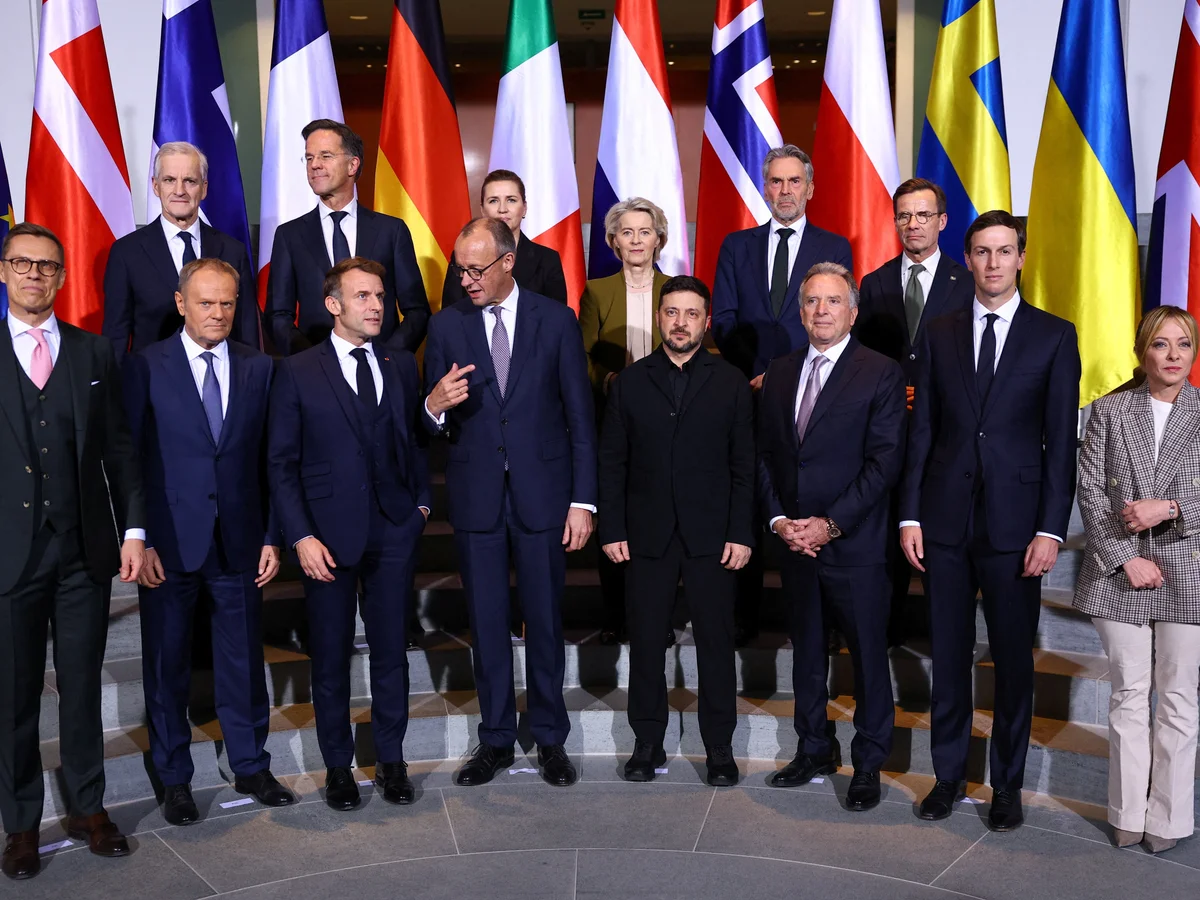
Dublin was turned into a fortress on Thursday as Taoiseach Micheál Martin welcomed up to 50 heads of state and government to the Convention Centre Dublin for the ninth summit of the European Political Community (EPC). Irish officials describe it as the largest gathering of international leaders ever held in the country, and the Garda Síochána is running the largest policing and security operation in its hundred-year history. Reports differ slightly on the final head count: Irish broadcaster RTÉ and the Irish government speak of up to 50 leaders and more than 50 delegations, while the Associated Press describes leaders from "more than 40" European countries. What is not in dispute is the mood. The continent's leaders are meeting at a moment when its security is fragile, its money is tight and the future shape of a settlement in Ukraine is being negotiated largely without them in the room.
The timing could hardly be more charged. The summit opened less than a day after two days of U.S.-mediated talks between Russia and Ukraine in Abu Dhabi ended with agreement in principle on a large exchange of prisoners of war, but with no breakthrough on a ceasefire or on territory. As the leaders assembled in Dublin, the American envoys who ran those talks, Steve Witkoff and Jared Kushner, were in Moscow to meet Vladimir Putin. They are then expected to fly to Dublin to debrief Volodymyr Zelenskyy, turning the Irish capital, for a few hours at least, into a waypoint in Washington's shuttle diplomacy.

Background: What the EPC Is, and Is Not
The European Political Community was launched in 2022 at the initiative of French President Emmanuel Macron, with the backing of then-German Chancellor Olaf Scholz, in the aftermath of Russia's full-scale invasion of Ukraine. It brings together roughly 50 countries, the 27 members of the European Union plus nearly every other European state, from Iceland to Armenia, the United Kingdom, Turkey and the Western Balkans. Russia and Belarus are excluded. The forum meets twice a year, alternating between an EU member state and a non-EU host; the last EU-hosted edition was in Copenhagen, and the next will be held in Switzerland in the spring, with Swiss President Guy Parmelin joining Martin and European Council President António Costa at Thursday's closing news conference.
The format is deliberately loose. EPC summits produce no communiqué, no binding decisions and no agreed action plan. Critics have long dismissed the gathering as a talking shop, and some argue it was designed partly to give aspiring EU members a seat at the table while slowing actual enlargement. Defenders say its value lies precisely in its informality: a rare space where leaders who are otherwise divided by membership, treaties and grievances can meet. "Times of trouble require new opportunities for privileged dialogue," Sébastien Maillard of Chatham House told RTÉ. Side conversations at past summits have touched on frozen disputes such as Armenia and Azerbaijan, Turkey and Cyprus, and Serbia and Kosovo, and similar bilateral encounters were expected in Dublin.
Key Developments: Who Came, and What Is on the Table
The guest list underlined how far the forum now extends beyond the EU. Canadian Prime Minister Mark Carney attended, his second EPC after making his debut in Yerevan in May, part of Ottawa's effort to move closer to Europe after Trump's trade war with Canada and his jibes about making it the 51st state. NATO Secretary-General Mark Rutte, European Commission President Ursula von der Leyen and seven EU institutional leaders in total were present, along with Belarusian opposition leader Sviatlana Tsikhanouskaya. The Irish Times listed Macron, German Chancellor Friedrich Merz and Italian Prime Minister Giorgia Meloni among the attendees. British Prime Minister Andy Burnham, who has sought closer ties with the EU, was also expected; the AP noted that the EPC gives Britain a way into a Europe-wide gathering despite Brexit.
There were notable absences. Turkish President Recep Tayyip Erdoğan stayed in Antalya, where Turkey is hosting the COP31 climate summit. Spain's Pedro Sánchez is campaigning ahead of the country's snap election on November 29, and Belgium's Bart De Wever remained at home for budget negotiations following the political crisis that has engulfed his government.
The formal programme, as published by the Irish presidency, opened with a plenary at 11:30 a.m. addressed by Martin, Zelenskyy and Costa. Leaders then split into round-table discussions, each co-chaired by one EU and one non-EU leader, under the banner "Europe: Strong, Secure and Connected," covering economic security, competitiveness, AI, energy costs and defence, as well as democratic resilience and countering foreign interference ahead of several European elections next year. The afternoon included "Friends of Ukraine" and "Friends of Moldova" meetings before a closing plenary and a dinner at the National Gallery. An informal meeting of EU leaders follows on Friday at the same venue.
Ukraine: A Prisoner Swap, Not a Peace
Ukraine dominates, as it usually does. The Abu Dhabi round on November 10 and 11 was the first direct negotiation between Kyiv and Moscow in nine months, following an inconclusive session in Geneva in February. Kushner announced on Wednesday that the two sides had agreed what he called "the biggest humanitarian release of prisoners," with numbers to be finalised on Thursday. Ukraine's chief negotiator Rustem Umerov and Russia's Vladimir Medinsky confirmed the exchange but gave no details on timing or scale. The figures circulating vary: Euronews reported that Zelenskyy said negotiators had discussed 1,000 prisoners from each side, possibly rising to 1,500, while IrishCentral, citing Irish coverage, reported that Zelenskyy floated a figure of 1,200. Until the final numbers are released, the size of the swap should be treated as unconfirmed.
On the substance of a settlement, the gulf remains wide. Russia continues to insist that Ukraine withdraw from the parts of the eastern Donbas region it still controls; Zelenskyy says territorial questions can only be settled at the level of leaders; and Moscow rejects an immediate ceasefire, saying it wants broader security arrangements agreed first. European representatives were in Abu Dhabi for parallel consultations with the Ukrainian and American delegations but did not take part in the trilateral talks. Medinsky openly questioned their presence. "We don't really understand in what capacity they are here," he said, according to Euronews, adding that Moscow had received no concrete European peace proposals. Washington has signalled that Europeans should eventually join the negotiations, especially on future security arrangements for the continent.
Zelenskyy, on his third visit to Ireland in twelve months, met Martin on Wednesday evening and again on Thursday morning. He thanked Ireland for its "unwavering support for our people, for Ukraine, for our defense," and insisted that ending the war "without Europe's participation would be unjust, and it would be impossible." He also said that progress depends on how hard the United States is willing to press Russia. Martin condemned Russia's strikes on Ukrainian energy infrastructure and cities as "barbarous, and it is vile," and told The Irish Times it remains unclear whether Moscow is serious about peace, calling for "clear, coherent leadership" from the EU. The two governments are discussing a memorandum on co-producing Ukrainian drone technology, particularly for maritime security, though Martin said on Thursday that no deal had yet been reached.
The Hybrid Threat Comes to Dublin
The security operation itself has become part of the political story. A sealed zone around the Convention Centre has been closed to traffic and pedestrians since Tuesday, airspace over the capital has been restricted, and gardaí are flying their own drones around the venue. The Irish Independent reported that more than 5,000 gardaí were deployed, and the presidency says some 15,000 twelve-hour shifts will be worked over 72 hours, with new counter-drone systems acquired for the occasion. The Representative Association of Commissioned Officers accused the government of running the defence side of the operation "on the cheap," a charge the Department of Defence disputes.
The concern is not abstract. In recent weeks hoax bomb threats have targeted Irish media outlets, including RTÉ, and European airlines such as Aer Lingus and Ryanair, while threatening emails have been sent to schools in Ireland, the United Kingdom and Italy, where at least 300 schools were evacuated this week. No government has formally attributed the incidents, and there is no conclusive evidence of who is behind them, but suspicion in Irish and European coverage has fallen on Russian-linked hybrid warfare, the same category of below-the-threshold disruption that dominated last year's Copenhagen summit after unexplained drone incursions over Danish airports and military bases. European Parliament President Roberta Metsola pledged on arrival that "we will be steadfast in our resolve" against such threats.
Reactions and Undercurrents
Beyond Ukraine, several fault lines run through the room even though they are not formally on the agenda. EU governments remain divided over how to finance Ukraine, which faces a funding need of around €70 billion next year, and over the bloc's next seven-year budget. Merz caused alarm in the run-up to the summit by suggesting Berlin might not fund that budget if some eastern European beneficiaries opt out of supporting Ukraine. The EU is also pressing non-members such as Canada, Japan and the UK to contribute more to Kyiv's needs.
The political landscape has shifted in ways that cut in different directions. Populist leaders have recently lost power in Serbia and Hungary, and relations between the EU and Britain are being rebuilt under Burnham. Yet the hard right continues to advance, including in recent German regional elections, and upcoming votes in Spain, France, Italy and Poland could reshape the continent's politics in the months ahead. In Washington, Trump's position has been weakened by the Republican rout in last week's midterm elections; whether that changes his approach to Ukraine, or to the war with Iran that has upended global energy markets, is a question many leaders in Dublin are quietly asking.
What's Next
Because the EPC issues no declaration, its significance will be judged by what follows. The most immediate test is the Witkoff-Kushner debrief with Zelenskyy, which should indicate whether Putin offered anything in Moscow beyond the prisoner exchange, and whether Europe is being drawn into the security-guarantee track Washington has hinted at. The implementation of the swap itself, once numbers are confirmed, will be watched as a rare confidence-building measure. On Friday, EU leaders reconvene in the same building for an informal European Council, where the Ukraine financing gap and the long-term budget fight are likely to surface more openly.
For Ireland, a neutral country that has rarely sought the diplomatic spotlight, the summit is the high point of its EU Council presidency, and Martin has argued it will bring "positives for a long time to come." For Europe, Dublin is another reminder that the continent's leaders can still assemble almost all of their number in one room. Whether they can translate that into a real say over how the war in Ukraine ends remains the open question.
Published By | News Editor