Written By | Business Experts
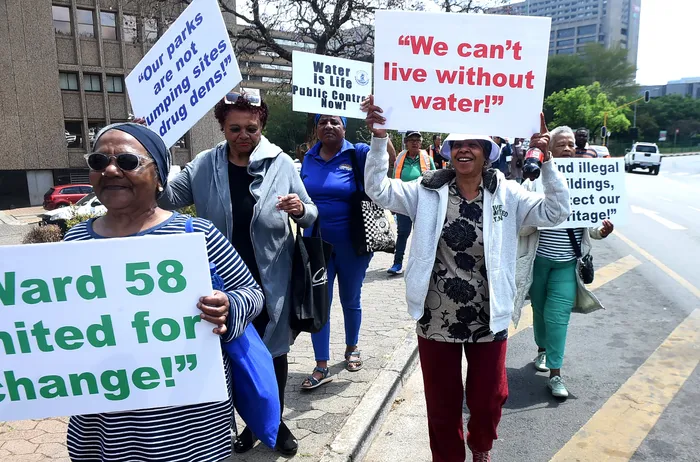
From Lagos to Nairobi, Rabat to Johannesburg, governments are rewriting wage floors — but currency, informality and enforcement decide whether a decree becomes a pay rise
A season of wage decisions
November is when Africa's wage politics come into focus. In Abuja, the federal government and the Nigeria Labour Congress (NLC) agreed on 27 October to set up a Minimum Wage Negotiation Committee after weeks of arguing over whether talks were due now or in mid-2027. In Accra, the current national daily minimum wage of GH¢21.77 expires on 31 December, so the National Tripartite Committee has to set a 2027 rate within weeks. In South Africa, the National Minimum Wage Commission has been consulting on the 2027 adjustment since September. And in Nairobi, employers are still absorbing the 12% increase President William Ruto announced on Labour Day.
These rounds are often reported as one-day stories about a percentage. They are better read as a test of a harder question: can a statutory wage floor protect living standards in economies where currencies move faster than wage boards meet, and where most people work outside any formal contract? The 2026 data give a mixed answer. Floors work where institutions, stable currencies and formal employment line up. Elsewhere, governments are moving away from the headline minimum wage towards allowances, sectoral boards and dollar-denominated floors.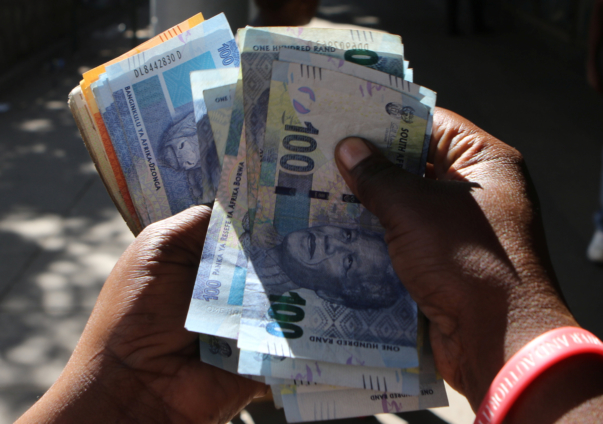
The map: an eight-to-one spread
Comparisons published this year by wage.is (June 2026) and Les Afriques (October 2026) show how wide the gap between floors has become. Mauritius raised its national minimum wage 3.7% to MUR 17,745 a month from 1 January 2026, about US$382. Morocco's industrial SMIG reached MAD 3,422.53 a month in January, the second leg of a two-stage 10% increase agreed in the April 2024 social dialogue, about US$350–366 depending on the exchange rate used. South Africa's national minimum wage rose 5% from R28.79 to R30.23 an hour on 1 March 2026, roughly R5,240 a month or about US$322.
North Africa raised floors too. Algeria's guaranteed minimum wage rose to DZD 24,000 a month under Presidential Decree No. 26-01 of 7 January 2026. Tunisia's Decree No. 67/2026 set the industrial minimum at TND 554.736 a month on a 48-hour week, and Decree No. 66/2026 set the agricultural daily minimum at TND 21.336. In Central Africa, the Democratic Republic of Congo's Decree No. 25/22 of May 2025 raised the daily minimum to CDF 21,500. Les Afriques converts that to about US$207 a month, and it took full effect on 1 January 2026.
The bottom of the table contains some of the continent's biggest labour markets. Tanzania set a general and agricultural floor of TZS 175,000 a month (about US$66) under Government Notice 605A from January 2026. Nigeria's ₦70,000 is worth about US$46. Ghana's GH¢21.77 a day works out to about US$38–47 a month, depending on whether a 26- or 27-day month is assumed. By either measure, the highest working floor on the continent is about eight times the lowest.
Nigeria: a 133% raise that became a cut
Nigeria shows most clearly how currency movements can undo wage policy. The federal minimum wage rose from ₦30,000 to ₦70,000 a month in July 2024, a 133% increase won after a national strike. In dollars it was a cut. At roughly ₦360 to the dollar in 2019, the old floor was worth about US$83. At around ₦1,538 in mid-2026, the new one is worth about US$46, roughly 45% less, according to wage.is calculations.
That erosion is behind this autumn's dispute. Labour Minister Muhammad Dingyadi wrote to labour on 12 October that the law provides for a review every three years, so the next review is due on 1 June 2027 and starting committee work now would be 'premature'. The NLC replied on 13 October, demanded that talks begin by 17 October and warned of industrial action. Conciliation at the Labour Ministry produced a compromise on 27 October. The government agreed to constitute the negotiation committee immediately and to pay a ₦70,000 monthly transport allowance at all levels for six months from November 2026. The allowance has since caused friction between the NLC and the Trade Union Congress, with ThisDay reporting on 10 November that the two centres were 'squaring up' over it.
The transport allowance is a temporary, targeted payment. It does not raise the base on which pensions and other entitlements are calculated, and the government can let it lapse once the 2027 election season has passed. It is a sign of a broader pattern: when the currency is unstable, governments prefer payments they can reverse to a permanent increase in the wage floor.
Kenya: a presidential raise and an employer pushback
Kenya's 2026 round was set at a Labour Day rally in Vihiga County on 1 May. President Ruto announced a 12% increase in general minimum wages and 15% for agricultural workers, effective that day and formalised through Legal Notices 108 and 109 under Labour Cabinet Secretary Alfred Mutua. A general labourer in Nairobi, Mombasa, Kisumu or Nakuru moves from KSh16,113.75 to about KSh18,047 a month. COTU's Francis Atwoli had asked for at least 23%. The Federation of Kenya Employers (FKE) had asked for no more than 5%.
The award landed between those positions but closer to labour's ask. In June, FKE complained publicly that the order had bypassed the established wage-council process and that it arrived as businesses faced rising energy and financing costs. It later told members to comply, after reports that employers who did not pay the new rates risked fines and prosecution. Kenya's floors are tiered by occupation and location. The rural general-labourer rate, about KSh8,596 before the increase, is roughly half the city rate. Data cited by wage.is suggest about 83% of Kenyan employment is informal. For those workers, the Labour Day announcement mainly signals the going rate; it is not a legal entitlement they can enforce.
South Africa: a working floor and a thin inspectorate
South Africa has one of the continent's most developed systems. The National Minimum Wage Commission recommends an annual increase, the minister gazettes it, and breaches can be pursued through labour inspectors and the CCMA. The 2026 increase of about 5% was announced by Employment and Labour Minister Nomakhosazana Meth on 4 February. Workers on the Expanded Public Works Programme have a separate, lower floor, which rose from R15.16 to R16.62 an hour.
Even in South Africa, compliance is the weak point. Meth named affordability and too few departmental inspectors as reasons why some employers do not pay the floor. She welcomed a presidential commitment to strengthen enforcement, and the government has acknowledged that compliance depends on employers choosing to obey the law as well as on inspections. The 2027 consultation now under way will again weigh unemployment above 30% against the cost of living for low-paid workers. The cost of a higher floor is measured in jobs as well as wages.
Ghana, Egypt and Morocco: different speeds, different tools
In November 2025, Ghana's tripartite committee agreed a 9% increase to GH¢21.77 a day for 2026 and exempted the minimum wage from income tax. Each year's increase has been reasonable in cedi terms, but the cedi fell from about 6 to the dollar in 2021 to around 14–15. Wage.is estimates the dollar value of the monthly floor has fallen from about US$59 to about US$38, a drop of roughly a third despite every annual increase. The 2027 talks start from that lower base, and Ghanaian commentators are calling for a living-wage framework.
Egypt shows the opposite outcome. Its large nominal increases outpaced a severe devaluation. The private-sector minimum rose from EGP 3,000 in mid-2023 to EGP 6,000 in 2024 and EGP 7,000 from March 2025. Even with the pound falling from about 31 to over 50 per dollar, the floor's dollar value rose from about US$97 to US$138. On 2 April 2026, Prime Minister Mostafa Madbouly announced that the public-sector minimum would rise to EGP 8,000 from July 2026. A matching private-sector decision has not been confirmed, and labour representatives have questioned whether the National Wages Council can act under the new Labour Law No. 14 of 2025 before it is reconstituted. Morocco has taken a third route: multi-year, negotiated increases that have taken the SMIG from MAD 2,970 in 2023 to MAD 3,111 in 2024 and MAD 3,422 in 2026, with relatively stable inflation.
The floors that are not floors
Part of Africa's wage story is about countries with no working floor at all. Uganda's statutory minimum dates from 1984. A 2019 bill setting UGX 136,000 passed Parliament but was rejected by the president. In April 2026, President Museveni signed a new labour law that creates a board to recommend sector-specific rates instead of a single national figure. No operative rate has yet been set, even as campaigners note that 89.2% of jobs are informal. Rwanda's statutory minimum of RWF 100 a day was set in 1974 and never updated. Ethiopia has no statutory minimum wage for the private sector, despite its industrial-park push.
Zimbabwe has gone the other way. Its floor is set directly in US dollars, US$150 a month under Statutory Instrument 186 of 2024, because a local-currency floor would not survive the country's monetary instability. Sector agreements still undercut it sharply. The lowest agricultural grade is about US$26 a month.
Why informality is the binding constraint
The ILO has long estimated that around 85% of employment in Africa is informal. Wage.is country data put the share at about 80% in Ghana and Tanzania, 83% in Kenya, 85% in Zambia and 89% in Rwanda. A legal floor reaches only workers with a declared employer, and labour inspectors rarely reach the market stall, the farm or the domestic worker's household. That shapes how the minimum wage should be judged as an instrument of social transformation.
What to watch
Over the next six months, the regional pattern will become clearer. Watch whether Nigeria's new committee produces a figure before the 2027 elections or uses the transport allowance to delay. Watch whether Ghana's 2027 rate breaks from single-digit increases, whether Egypt extends the EGP 8,000 floor to private employers, and whether South Africa's Commission recommends another increase above inflation despite high unemployment. Across these cases, governments are adjusting the minimum wage itself less, and paying more attention to the currency, formal employment and enforcement that determine what a floor is worth.