Written By | Staff Writer
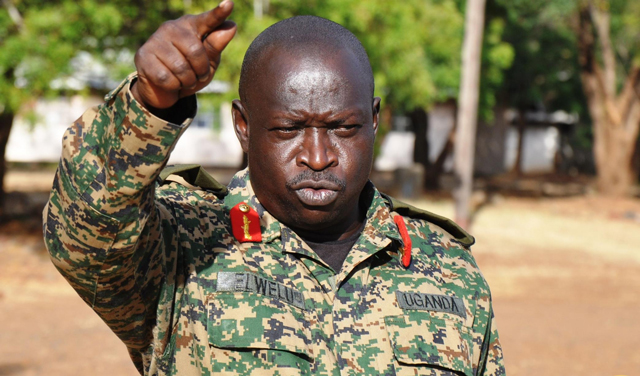
The arrest of former deputy army chief Peter Elwelu, the detention of two ex-intelligence chiefs, and a Speaker's ruling have opened a debate over how far lawmakers may question the army.
POLITICS
What is happening
A cluster of arrests of senior retired army officers, and a fight over whether Parliament may even discuss them, has become the most closely watched political story in Uganda this week. On the evening of Monday, 2 November 2026, the Uganda People's Defence Forces (UPDF) announced that retired Lt Gen Peter Elwelu, a former Deputy Chief of Defence Forces, had been arrested in Soroti City. Acting Director of Defence Public Information Col Chris Magezi described him as a "renegade UPDF General" and said he would be charged and prosecuted in the courts.
The arrest followed days of public accusations by the Chief of Defence Forces, Gen Muhoozi Kainerugaba. According to reporting by Eagle Online, Muhoozi accused Elwelu of treachery, stripped him of his military ranks, reducing him to private, and demanded that he surrender. The army says Elwelu was involved in subversive activities and in an alleged plot to destabilise the Teso sub-region. Magezi said security forces recovered 15 firearms, military fatigues and two pickup trucks in an operation linked to him. On 29 October Muhoozi had said Elwelu's driver was arrested and a vehicle tied to him recovered, and he later announced the arrest of former soldiers said to be associated with the general.
Elwelu's family disputes the account. His wife, Patricia Apolot, rejected claims that he was organising an armed rebellion and said he had gone to Kampala to pray. Relatives questioned the reports about the weapons allegedly recovered. As of Monday evening the army had not published the evidence, specified the charges, disclosed where he is held, or confirmed a first court date. None of the allegations has been tested in a legal process.
The parliamentary dimension
The arrest landed on top of an earlier and quieter controversy. According to The Observer, two other retired officers, Maj Gen Abel Kandiho and Brig Gen Charles Bakahumura, both former heads of military intelligence, were detained in early September. They were among 19 generals retired on 20 August 2026. The detentions are reportedly part of a wider military investigation into alleged false intelligence reporting and related offences, linked to directives from Gen Muhoozi. Other senior intelligence officers have reportedly also been held.
On 3 November, the chief opposition whip, Paul Mwiru, rose in Parliament to invoke Article 23 of the 1995 Constitution, which governs personal liberty and requires, among other things, that detainees be held in lawful places, be told the reasons for arrest, have access to legal representation and, in most criminal cases, appear in court within 48 hours. He said the families and the public had not been told where the two retired generals were held or why, and he asked the Speaker for clarification.
Speaker Jacob Oboth-Oboth declined to allow an open debate. "Matters of military are never discussed in the plenary of any parliament," he ruled, adding that UPDF members operate under a distinct legal framework. He did acknowledge that the Defence minister could be invited to address the concerns raised by the officers' families. Internal Affairs Minister Ephraim Kamuntu said he would make a statement on the arrests if the order of business the next day permitted.
Then came the warning. According to Kaab TV, on 5 November Gen Muhoozi posted on social media that legislators need approval before speaking publicly about the military and security agencies, that violators would face consequences, and that this was a "final warning to politicians against involving themselves in military affairs." He also said political interference would not shape military decisions. His statement did not name the detained officers. There was one conciliatory note: on 31 October Muhoozi announced Bakahumura's release and said relations would be repaired, though Kandiho's status remained unclear at the time of the parliamentary session.
Key players
Gen Muhoozi Kainerugaba, as Chief of Defence Forces, is the central figure: the investigations are linked to his directives, and it is his public statements that have set the terms of the dispute. Peter Elwelu is a veteran who joined the National Resistance Army in 1987, commanded the UPDF Second Division, became Commander of Land Forces in January 2017 and served as Deputy Chief of Defence Forces from June 2021 to March 2024, before presidential advisory roles and retirement from active service in August 2025. He also commanded the November 2016 operation at the Rwenzururu Kingdom's palace in Kasese in which more than 100 people died, and the United States sanctioned him in May 2024 over alleged violations connected to it.
In Parliament, Speaker Oboth-Oboth, elected to lead the 12th Parliament, is under pressure from both directions: opposition legislators who say scrutiny of detentions is a constitutional duty, and a military leadership that says the matter is outside their remit. Mwiru leads the opposition's challenge. Teso-region MPs, including some from the ruling NRM, have expressed unease about the security situation there and have asked for an urgent meeting with President Yoweri Museveni and Gen Muhoozi.
Why it matters
At its core the episode is a test of civilian oversight. Parliament has a constitutional duty to scrutinise security institutions and to protect citizens' rights; the military argues that operational details and ongoing investigations must remain confidential and that its personnel fall under a separate justice system. That system is set out in the UPDF Act, which provides for military custody and courts-martial and was amended in 2025 to further define military jurisdiction. Retired officers can in some circumstances remain subject to military law, depending on the allegations and when the alleged offences took place. So the legal question of where these men can lawfully be held and tried is genuinely contested, not simply a matter of one side ignoring the law.
Human rights observers have called for greater transparency about the detainees' whereabouts, the legal basis for their detention and its likely length. Security officials counter that confidentiality protects the investigations and military discipline. The Article 23 guarantees cited by the opposition are not obviously suspended by military status, which is why the unanswered questions about location and access to lawyers carry weight.
There is also a regional dimension. Teso is a politically sensitive sub-region, and an allegation that a prominent son of the area planned to destabilise it has drawn concern across party lines. A narrative of plotting without public evidence can inflame local sentiment as readily as it can reassure, particularly when the family offers a flatly different account.
What to watch next
Several developments will indicate where this goes. The first is whether Elwelu is charged and, critically, in which forum: a court-martial or a civilian court. The army has said he would be prosecuted in the courts, but no charge sheet or date had been confirmed at the time of the reports consulted for this article. The second is whether the government delivers a ministerial statement to Parliament, as Kamuntu indicated, and whether the Speaker follows through on inviting the Defence minister. The third is the status of Kandiho, given Bakahumura's reported release. The fourth is whether Teso leaders secure their requested meeting with Museveni and Muhoozi, and what assurances emerge.
Finally, watch whether Muhoozi's "final warning" is tested. Opposition members have framed scrutiny as a constitutional obligation, and some ruling-party MPs share concerns about Teso. If lawmakers keep raising the detentions, the contest between parliamentary privilege and military authority could move from rhetoric to a formal confrontation, potentially reaching the courts.