Written By | Fashion and Design Desk
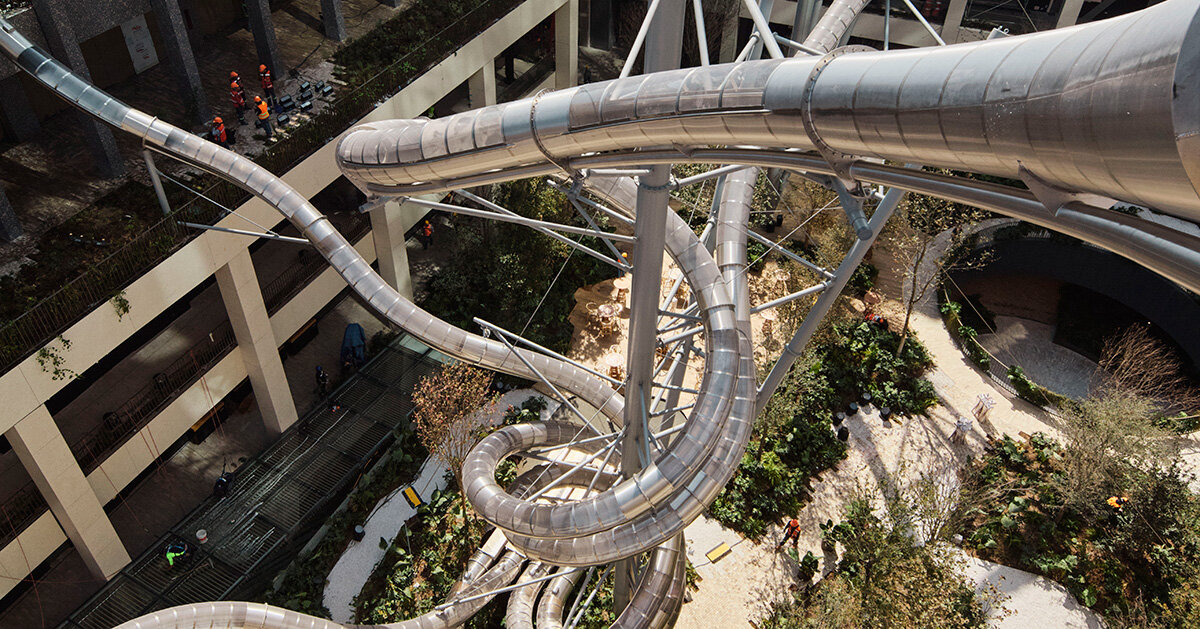
Carsten Höller's Mexico City Slides, opening in December at Arte Abierto Polanco, link restaurants, offices and a future hotel by gravity and joy.
MEXICO CITY
Most public art asks you to stand back. Carsten Höller's newest work asks you to climb on and let go. Reported by designboom on November 6, 2026, Mexico City Slides is a set of four monumental spiral slides rising from different points across the Arte Abierto Polanco complex, part of the Antara expansion in Mexico City's Colonia Granada. The installation is due to open in December 2026 and will be free to the public.
The work
The four slides range from 12 to 38 metres high and from 31 to 90 metres long, according to designboom. Each descends from a different point in the complex, and all converge at a shared landing area. Each slide seats one person, so four riders can arrive at the same time. The images appear to show stainless steel construction.
The practical connections are striking. The slides link restaurants, Google's offices, the future Rosewood Mexico City hotel and Arte Abierto's new cultural venue. That means an office worker and a hotel guest could leave very different spaces and arrive side by side. Höller describes the work as an equalising gesture, and calls slides "a sculpture with people inside."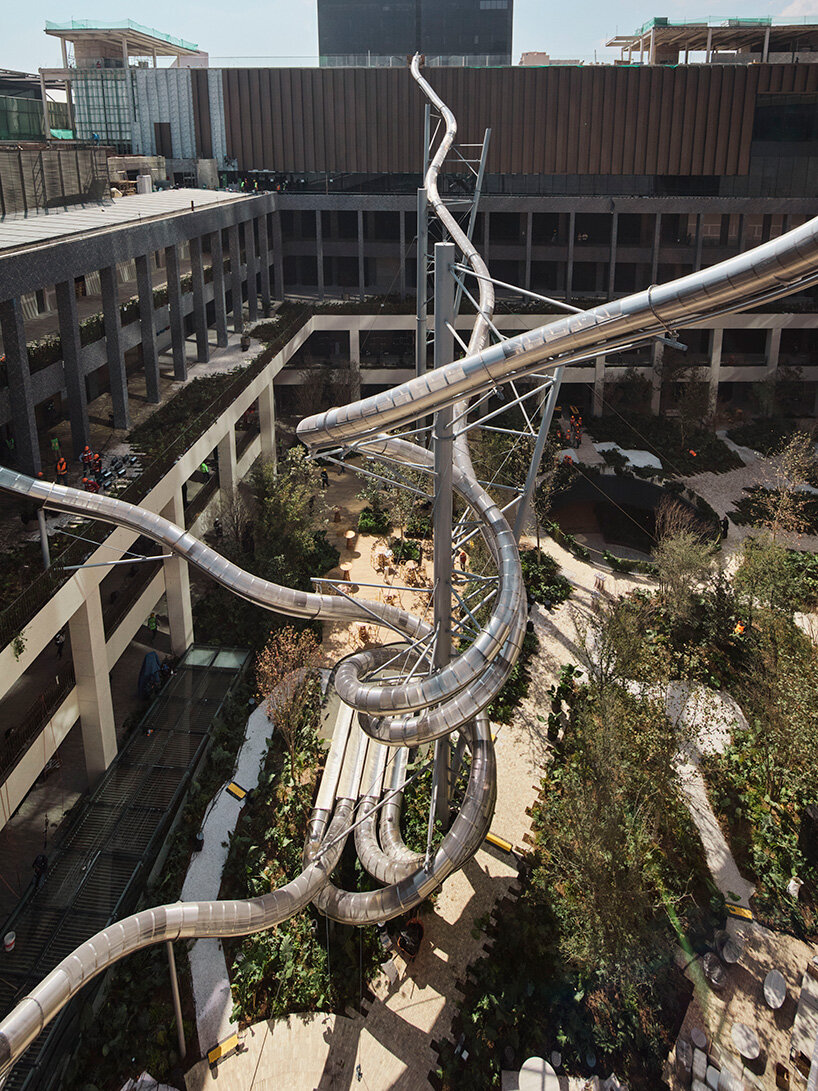
Who is behind it
The project was commissioned by Arte Abierto and developer SOMA, with architectural collaboration from Sordo Madaleno. Höller, a German-Belgian artist and former scientist, is well known for turning playgrounds into art. His slides have appeared in museums and public spaces in several countries, and he has previously shown in Mexico City, with an exhibition at the Museo Tamayo in 2019 titled Sunday, which also featured slides.
What is new here is scale and integration. Instead of a gallery installation, the slides are woven into a working commercial and cultural district, acting as both circulation and spectacle.
Why a slide?
Höller's practice rests on a simple provocation: that experience, not observation, is the point. A slide produces a brief, involuntary mix of fear and delight, and it demands that the rider give up control. In an office and retail environment, where behaviour is predictable, that is a radical interruption.
The "equalising" idea matters. Gravity treats everyone the same, and in a district where a tech company, luxury hotel and restaurants coexist, a ride that ends in a common space brings people together who might otherwise never meet. Whether that happens in practice will depend on how the landing area is designed and how much the public actually uses it, but the intent is clear.
Design questions
Practical issues loom, and the sources reviewed do not address them. Slides of up to 38 metres raise questions about safety systems, speed control, accessibility for people who cannot climb or slide, queuing, and maintenance. The reports do not detail these, and they will determine whether the work is a lasting civic amenity or a novelty. Similar large-scale slides elsewhere have required timed access and staff supervision; whether Mexico City Slides will do likewise has not been reported.
There is also the broader debate about art commissioned by developers. Privately developed public spaces can offer generous cultural amenities, but they also serve commercial goals, attracting visitors to a district that sells hospitality and office space. Free public access, as announced, helps balance that tension.
The location adds another layer. Antara's expansion is a mixed-use district in Colonia Granada, and Arte Abierto's new cultural venue anchors its arts programme. Placing a work of this scale at the junction of work, dining, hospitality and culture makes the slides less an ornament than a piece of connective tissue, the thing that stitches the separate pieces of the development into one experience. For a developer, it is also a way to give a new neighbourhood an instantly recognisable identity, the sort of image that travels well on social media and in guidebooks.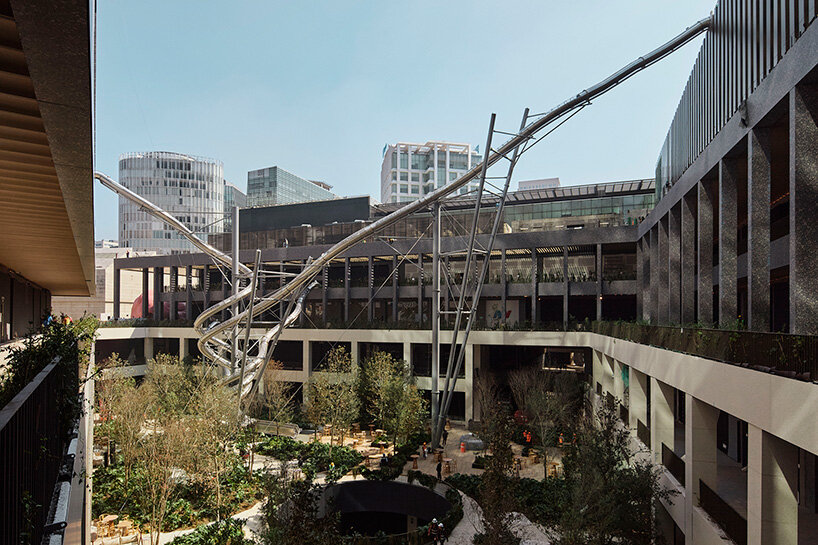
The wider trend: play as architecture
Höller's project fits a wider movement in which architects and designers add play to the built environment. Playful circulation, from slides replacing stairs to climbable sculptures, appeals in a period when cities compete to be memorable and when many workplaces are trying to coax people back into shared spaces. A slide is a surprisingly effective piece of urban marketing: it produces photographs, stories and repeat visits.
It also makes a quiet argument about adulthood. Slides are overwhelmingly associated with childhood, and offering them to everyone challenges the idea that play belongs in a particular age bracket.
What this means for you
If you are visiting Mexico City after the December opening, put the complex on your list, since the slides are free. Check the site for rules on age, height and footwear before you go. If you work in design, development or urban planning, the project is a case study in how art can serve as infrastructure, linking spaces and users that would otherwise stay separate. And if you simply like the idea of a city that lets you whoosh from the top of a building to a plaza, this is one to watch.
The landing
Public art rarely changes how a district feels in a single afternoon. A 38-metre spiral slide might. Höller's Mexico City Slides turns circulation into sculpture and strangers into neighbours, if only for a few seconds of descent. When it opens in December, the best review will be the one you give by riding it.