Written By | International News Agencies
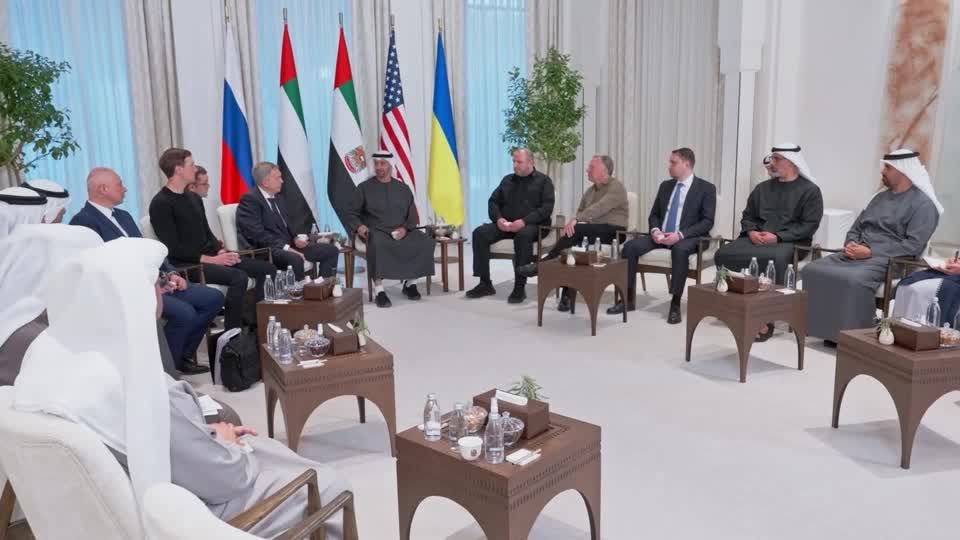
The first trilateral peace talks since February opened Tuesday in the United Arab Emirates.
World Politics
Introduction
Delegations from Russia, Ukraine and the United States sat down in Abu Dhabi on Tuesday, November 10, for two days of talks that resume a US-brokered negotiating format that had been dormant for nine months. The last trilateral round took place in Geneva in February 2026 and produced no breakthrough. Since then, as Kyiv Independent and ABC News describe it, progress has been limited to prisoner exchanges and brief localized ceasefires, while fighting has continued along a front of roughly 745 miles and the war approaches its fifth anniversary.
US officials briefing reporters, quoted by Radio Free Europe/Radio Liberty, called the meeting a real shot at serious progress, while also saying they expected it to clarify positions and identify remaining disagreements rather than deliver a final settlement. President Donald Trump went further, saying the war could end soon and crediting himself with the effort. Reporting from several outlets suggests a wide gap between that optimism and the positions each side has brought to the table, and European governments, uneasy about being sidelined, have organized their own presence in the city.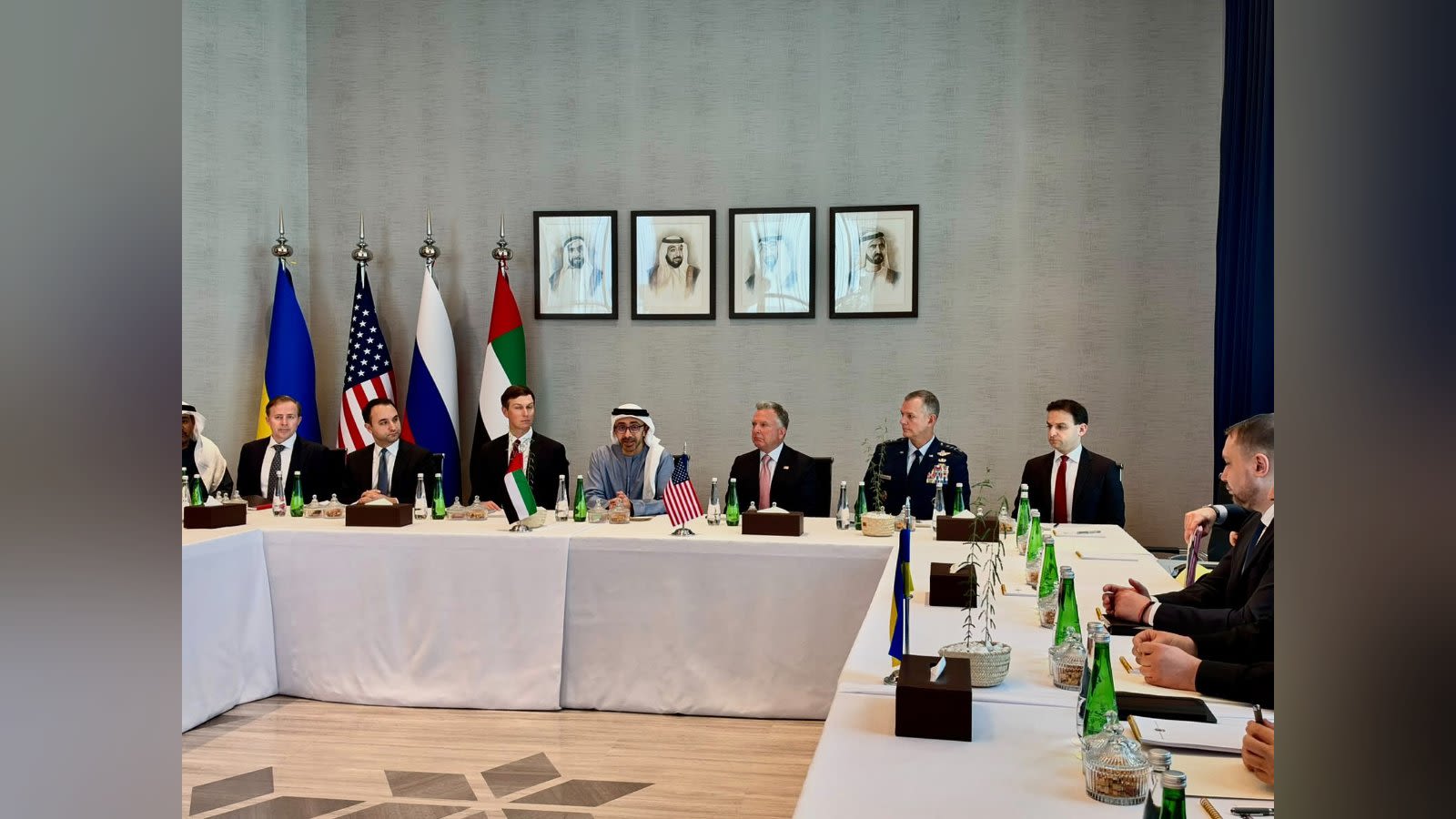
Who Is in the Room
The American side is led by envoys Steve Witkoff and Jared Kushner, with US Air Force General Alexus Grynkewich, NATO's Supreme Allied Commander Europe, also reported in the US group by RFE/RL. Ukraine's team is headed by Rustem Umerov, chief of Foreign Intelligence, and includes Kyrylo Budanov, who heads President Volodymyr Zelenskyy's office, deputy head of the presidential office Serhii Kyslytsia, parliamentary faction leader David Arakhamia, and military intelligence deputy chief Vadym Skibitsky. Russia's delegation is led by Kremlin aide Vladimir Medinsky, who took part in earlier rounds in 2022 and 2025 and in Geneva, and includes deputy foreign ministers Sergei Ryabkov and Mikhail Galuzin and military intelligence chief Igor Kostyukov. ABC News also lists Yuri Ushakov among the Russian attendees, a detail not echoed in the Kyiv Independent list, so the exact membership may vary by report.
The format itself was a point of friction. ABC News reported that the French and German foreign ministers said they would take part, but Kremlin spokesman Dmitry Peskov insisted the format remains trilateral. In the end, according to the Kyiv Independent, national security advisers from France, Germany, the United Kingdom and Italy, plus NATO and EU officials, are meeting Ukrainian and US officials in Abu Dhabi in a separate track. The United Arab Emirates, as host, has played the role of facilitator, with its foreign minister reported to be present.
What Each Side Wants
Moscow's demands have changed little. The Kyiv Independent summarizes them as Ukrainian withdrawal from Donbas, a ban on NATO membership, limits on Ukraine's military, and the lifting of restrictions on the Russian language and the Moscow-linked Ukrainian Orthodox Church, along with Russian-defined security guarantees that likely imply a rollback of NATO's presence in Eastern and Central Europe. ABC News adds that Russia demands Ukraine leave not only Donetsk and Luhansk but also Zaporizhzhia and Kherson, regions Moscow claims to have annexed. RFE/RL notes that Russia claims all of Donetsk but does not fully control it, which makes the future of the remaining Ukrainian-held part of the region the central territorial dispute. Moscow has also rejected an unconditional ceasefire. Medinsky said ending the war is in both countries' interests, and US officials described Russian signals on a postwar security framework as positive, although Medinsky largely repeated Moscow's demands at the Geneva round.
Kyiv rejects withdrawing from territory it holds and refuses to recognize Russian occupation or accept military limits. Its negotiators say a ceasefire along current front lines could serve as a basis for talks, and Ukraine has long sought an unconditional truce as a first step. It wants guarantees that include continued Western military support, a European-led reassurance force and Article 5-style protections, and it wants European participation in any discussion of European security. For this round, Budanov said humanitarian issues, including more prisoner exchanges, would be the focus, and Ukrainian officials have also floated a maritime and energy ceasefire and groundwork for a future summit of leaders. Arakhamia told reporters he did not expect a breakthrough in the first round, was more hopeful about the second, and called the resumption of talks an achievement in itself.
Washington sits between the two. US officials said the central challenge is convincing each side that a ceasefire would not let the other rearm for a new conflict. They described exploring security consultations, crisis communications, military transparency and reciprocal de-escalation, and said they asked Moscow to accept guarantees for Ukraine modeled on NATO's Articles 4 and 5, though any US guarantee would ultimately depend on Trump and Zelenskyy and Trump wants Europe to bear the financial burden. Sanctions relief could come gradually, with snap-back provisions if Russia violates a deal. Officials also said that territorial and security arrangements must be negotiated in parallel and finalized together.
Trump's Role and the Pressure on Kyiv
Trump's public remarks have leaned toward optimism. ABC News reports he said Ukraine and Russia are weary of fighting, that the talks were going well, and that Ukraine's final borders could look somewhat different, a phrase Kyiv is unlikely to welcome. He identified the deep hostility between Vladimir Putin and Zelenskyy as the main obstacle. The Kyiv Independent adds that on November 5 he announced a big agreement after meeting Russian envoy Kirill Dmitriev but released no details.
The background to those statements is uneven. ABC News notes that Trump has suspended direct US financial and military aid to Ukraine, has not carried out threatened sanctions and tariffs against Russia, and struck a deal with Putin to import Russian diesel. Relations with Kyiv have been strained, including Trump's criticism of Zelenskyy and his call for elections that Ukraine's martial law prevents. Those facts sharpen Ukrainian worries that American mediation will shade toward Moscow's preferences, even as US officials insist they are pursuing a lasting peace rather than a quick but fragile deal. A Ukrainian lawmaker, Oleksandr Merezhko, was quoted as expecting no substantive result beyond possible prisoner exchanges and as accusing Putin of stalling to avoid sanctions.
Europe's Uneasy Seat at the Table
The European Commission and European Council are sending a joint team of senior officials, led by Bjoern Seibert, Ursula von der Leyen's chief of cabinet, and Anna-Maria Boura, chief foreign policy adviser to Council President Antonio Costa, according to Euronews. Commission spokesperson Paula Pinho argued that any European security framework falls within EU competence and that the bloc needs to be present. Both institutions signalled willingness to engage directly with the Russian delegation, which has not happened in this process, though it was unclear whether such a meeting would occur. Von der Leyen stressed freedom of navigation in the Black Sea and backed Zelenskyy's call for a ceasefire covering food and energy infrastructure.
Behind the formal presence lies considerable irritation. Kushner's social media post setting out principles for reframing Europe's post-war security architecture drew pushback from allies, and Zelenskyy called it dangerous, Euronews reports. Italian Prime Minister Giorgia Meloni wrote to Costa criticizing the disarray in diplomatic formats and urging a special European envoy; Costa agreed to raise the issue at an informal summit in Dublin that follows the talks. Polish Foreign Minister Radoslaw Sikorski supported her and warned that the last thing Eastern Europe wants is for Western Europe to deal with Russia over its head. RFE/RL reports that EU foreign policy chief Kaja Kallas said on November 9 that Russia was pretending to negotiate, a view that reflects broad European doubt that Moscow is ready to concede on territory or on Ukraine's future security.
The Battlefield and the Winter
The talks open under fire. Ukraine's air force said that overnight before the meeting Russia launched 162 drones and one ballistic missile, with most intercepted, and the Kyiv Independent reports renewed Russian attacks on Ukraine's energy grid ahead of winter. ABC News describes slow and costly Russian advances alongside Ukrainian counterattacks in the Dnipropetrovsk, Donetsk and Zaporizhzhia areas that Kyiv says have recovered hundreds of miles of territory, a claim that the sources do not independently verify. Both sides continue to expand long-range drone and missile strikes. A six-day ceasefire in Oleshky, in the Kherson region, allowed civilian evacuations and aid deliveries, which US officials cited as evidence that limited arrangements are possible.
What Comes Next
The sessions run through Wednesday, and the realistic yardsticks of success are modest: another prisoner exchange, perhaps a limited energy or maritime ceasefire, and an agreement to continue. US officials said further meetings, including with Putin and Zelenskyy, could follow depending on the outcome, and Kushner said a multilateral format with Europe would be organised if progress is made. A World Bank-led workstream is also examining Ukraine's postwar economic reforms, including financing, reconstruction and anti-corruption measures.
The harder questions are structural. Russia insists on all of Donetsk and a neutral, limited Ukraine; Ukraine refuses to cede held ground and wants binding guarantees; the United States wants a deal and wants Europe to pay; and Europe fears a settlement of its own security arranged without it. Analyst Sam Greene argued that negotiations may be a route for Putin to win the war rather than end it, while Trump has said a settlement is within reach. The next two days will indicate which of those readings is closer to the truth, but few of the people involved expect the answer to arrive in Abu Dhabi this week.