Written By | International News Agencies
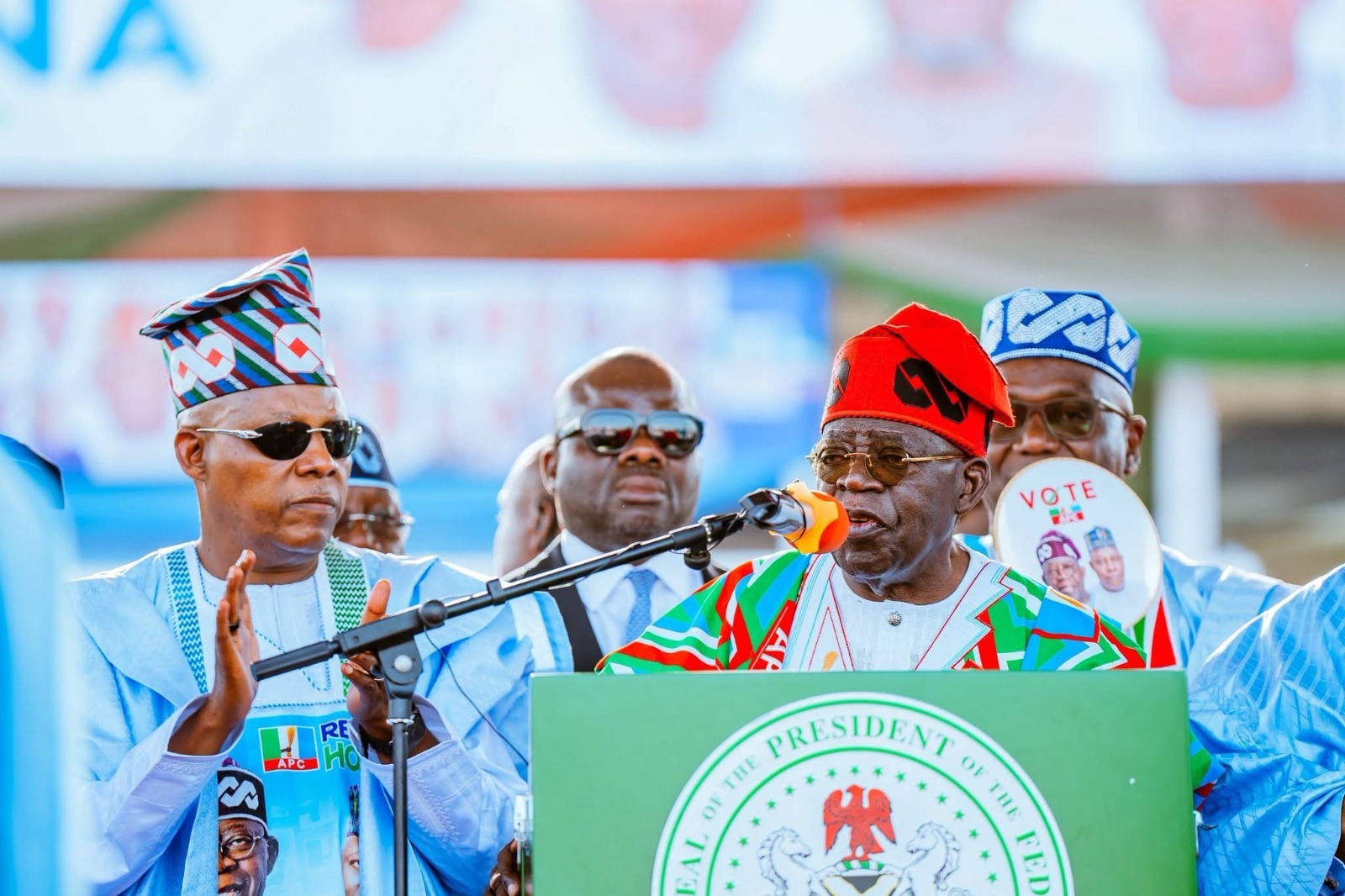
The same day, at a rally in Jigawa State, Tinubu declared that Nigeria's fuel subsidy would never return.
ABUJA, Nigeria
President Bola Tinubu's All Progressives Congress (APC) unveiled its manifesto for the 2027 election on Tuesday, Nov. 10. It is a four-pillar plan for a second term titled "Renewed Hope Agenda 2.0." The same day, at a rally in Jigawa State, Tinubu declared that Nigeria's fuel subsidy would never return. "To those who say subsidy is coming back, it's a lie," he told supporters in Dutse. That message puts him in direct conflict with his main challenger, former Vice President Atiku Abubakar of the African Democratic Congress (ADC), who has promised to reinstate a subsidy from his first day in office. With the presidential and National Assembly elections set for Jan. 16, 2027, just over nine weeks away, the campaign is turning into a referendum on the economic reforms that have defined Tinubu's presidency.
The manifesto
The APC Presidential Campaign Council presented the document at the Musa Yar'Adua Conference Centre in Abuja under the theme "From Reforms to Prosperity." According to Daily Champion's account, it covers 2027 to 2031 and is organized around four pillars.
The first pillar, a "secure and resilient nation," promises four new army divisions in Makurdi, Ilorin, Jalingo and Benin City, 28,000 additional military personnel and 50,000 newly recruited police officers. It also sets a goal of one police officer for every 400 citizens, along with body cameras, digital policing and electronic surveillance of mapped borders.
The second pillar promises a "better quality and more affordable life." It pledges to halve the number of out-of-school children by 2031 and recruit 20,000 additional teachers. It aims to raise health insurance coverage to 40% and cut out-of-pocket health spending from 71% to below 50%. It also proposes a Tinubu Mass Social Housing Scheme across all 774 local government areas, targeting 200,000 homes, and promises to halve youth unemployment by 2031.
The third pillar covers energy, infrastructure and growth. It aims to scale electricity generation toward 10,000 megawatts, set up a flagship industrial hub in each of the six geopolitical zones and more than double non-oil export earnings. Its headline target is annual economic growth of 6%.
The fourth pillar, on "effective and accountable governance," promises nationwide court digitalization by 2029 and publication of allocations to all 774 local councils. It also promises a public delivery tracker on which each commitment would carry a baseline, target, cost, responsible official and reporting date. "A manifesto is only as strong as the promises a citizen can check," the document states.
In a message attached to the manifesto, Tinubu framed the plan as a continuation rather than a new start. "When you entrusted me with the mandate to renew hope in 2023, I offered honesty over easy promises," he wrote. "The work is far from complete, and I ask once more for your partnership."
Defending the reforms
The campaign is choosing to run on its most painful policies rather than away from them. Tinubu announced the end of the petrol subsidy when he took office on May 29, 2023, and unified the naira's exchange rates weeks later. Both moves pushed up living costs sharply. At the launch, campaign spokesperson Dele Alake, who is also minister of solid minerals, presented them as acts of political courage. "Removing fuel subsidy might superficially look simple to everyone, but it is not," Alake said, according to Punch, as republished by Parrot Nigeria. "It takes a man of courage, a man of grit, brains and brawn, to withstand the pressure of the cabal." He alleged that powerful interests had profited from the subsidy through smuggling and fraudulent claims.
The campaign also cited economic indicators it says show the reforms are working. These were foreign reserves of $55.3 billion as of September 2026, gross domestic product growth of 4.43% in the second quarter of 2026 and inflation of 14.63% in September. It also cited distributions from the Federation Account Allocation Committee of 18.72 trillion naira in the first half of 2026, compared with 6.76 trillion naira in the same period of 2023. Those figures were presented by the campaign as achievements, and voters will weigh them against their own household budgets.
In Dutse, Tinubu turned that defense into a pledge. "It is not going to come back," he said of the subsidy, according to PRNigeria. "The money must be invested in areas that will create prosperity and opportunities for all Nigerians." He promised interest-free loans for smallholder farmers and mechanized farming service centres in all six geopolitical zones. He also promised that funds recovered by the Economic and Financial Crimes Commission would go to the Nigerian Education Loan Fund. On electricity, a central promise of his 2023 campaign, he said, "We will provide reliable power, not the whole privatisation that is not working," according to First Daily. Vice President Kashim Shettima, his running mate again, pointed to northern infrastructure projects, including the Kano-Maiduguri road and the Kano-Maradi railway.
The opposition's case
Atiku's campaign has built its platform around the opposite proposition. In a statement on Nov. 7, issued through ADC campaign spokesman Phrank Shaibu, Atiku addressed Tinubu directly. "You say Nigeria will never return to subsidised petrol prices. You are wrong," he said, according to Sahara Reporters. "You created poverty, then insult the people suffering from it." He described Tinubu's leadership as a "calabash of pepper," a Yoruba image of hostile rule, and said, "After three and a half years in office, you have no achievements to campaign on."
Atiku's proposal is a production-based subsidy tied to locally refined fuel, not a return to the old system. At the inauguration of his campaign council in Abuja on Oct. 9, he described a subsidy that would be capped, included in the national budget and independently audited. It would exclude imported finished products, and the government would publish its costs and savings, according to Premium Times. His campaign's director-general, Sen. Austin Akobundu, said an Atiku administration would introduce it on its first day. Atiku also mocked a 30-day petrol discount the government had proposed, calling it a "temporary palliative" and asking, "What happens on day 31?"
The ADC campaign council dismissed Tinubu's rallies in Kaduna, Rivers and Jigawa as "dominated by personal attacks and recycled promises, offering nothing new to Nigerians." It also reminded voters of his 2023 pledge that Nigerians should not re-elect him if he failed to improve power supply. Atiku has separately urged the World Bank to reject a proposed $500 million loan to an infrastructure financing platform. The loan's estimated approval date is May 25, 2027, four days before the next inauguration. "No outgoing president has the right to burden his successor with fresh debt days before handing over power," he said in a statement.
The ADC campaign has also drawn on the cost-of-living crisis in its argument. At the October launch, ADC council chairman Kashim Ibrahim-Imam cited National Bureau of Statistics food inflation figures for August 2026 of 38.85% in Adamawa, 37.96% in Zamfara and 36.20% in Bayelsa. He also said public debt had risen from 87.38 trillion naira when Tinubu took office to 166.79 trillion naira as of June 30, 2026.
A crowded field
Atiku is not Tinubu's only serious rival. The Independent National Electoral Commission (INEC) has cleared 18 presidential candidates. They include Peter Obi, the 2023 Labour Party candidate, now running on the NDC ticket with former Kano Gov. Rabiu Musa Kwankwaso as his running mate, according to BusinessDay. Atiku's running mate is former Rivers Gov. Rotimi Amaechi. In 2023, Atiku, Obi and Kwankwaso split the opposition vote. Their partial consolidation into two tickets, an Atiku-Amaechi ADC ticket and an Obi-Kwankwaso NDC ticket, is one of the main differences from the last election. Defections are also shaping the race. The Nation reported on Wednesday that a former chief of staff to Oyo Gov. Seyi Makinde and 32 other chieftains of the APM, the party fielding Makinde for president, had defected to the APC.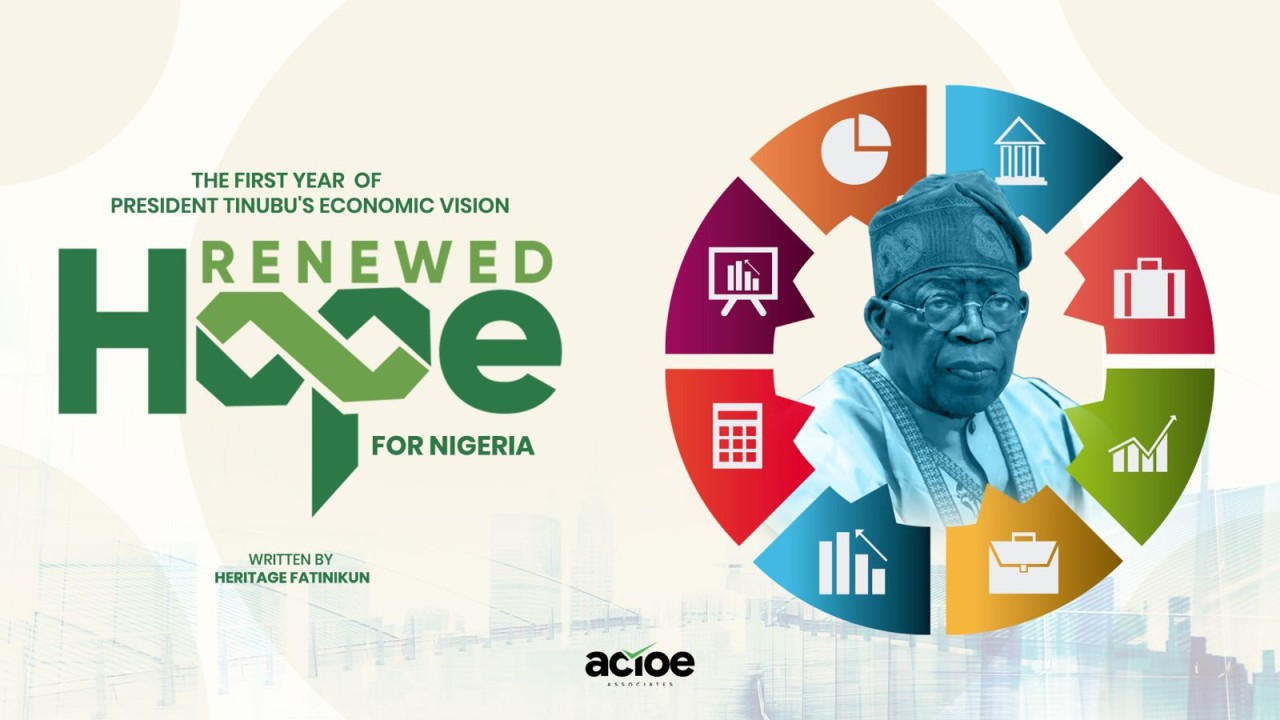
Analysis: a bet on credibility over relief
Tinubu's strategy is a calculated gamble. Most incumbents facing a cost-of-living crisis would soften or blur their most unpopular policy. Tinubu has instead made the subsidy's permanence a core campaign message and framed it as proof of seriousness. The manifesto's emphasis on measurable targets and a public delivery tracker follows the same logic: it asks voters to judge the government on verifiable delivery rather than promises of quick relief. The risk is that the benefits the campaign cites, such as larger allocations to states, higher reserves and falling headline inflation, are abstract to households still struggling with food prices. The ADC's state-level food inflation figures are aimed at exactly that gap.
Atiku's production subsidy is an attempt to offer relief without returning to the open-ended, import-linked subsidy that Tinubu's allies associate with fraud. Its credibility depends on details his campaign has not yet costed in public, such as the size of the cap and how it would be financed. The government's own short-term 30-day discount also complicates its message. It allowed Atiku to argue that the administration had quietly conceded the case for relief.
The north will matter a great deal. Rallies in Jigawa and Kaduna, and Atiku's decision to flag off his campaign in Sokoto, reflect a contest for northern votes that Tinubu cannot take for granted. Insecurity, which the manifesto addresses first, remains acute there. UNHCR reported this week that more than 64,000 people have fled violence in northern Nigeria into Niger.
What to watch
Watch first whether Atiku's campaign publishes a costing for the production subsidy, and whether the APC responds with detail of its own on financing the manifesto's promises. Second, watch the ADC's claim that Tinubu wants Atiku "off the ballot," which points to possible legal or procedural fights before Jan. 16. Third, watch the northern rally circuit and the defection flow between parties as the campaign enters its final two months. Finally, watch the World Bank loan dispute, which has turned a technical financing question into an election issue about the transition of power.