Written By | International News Agencies
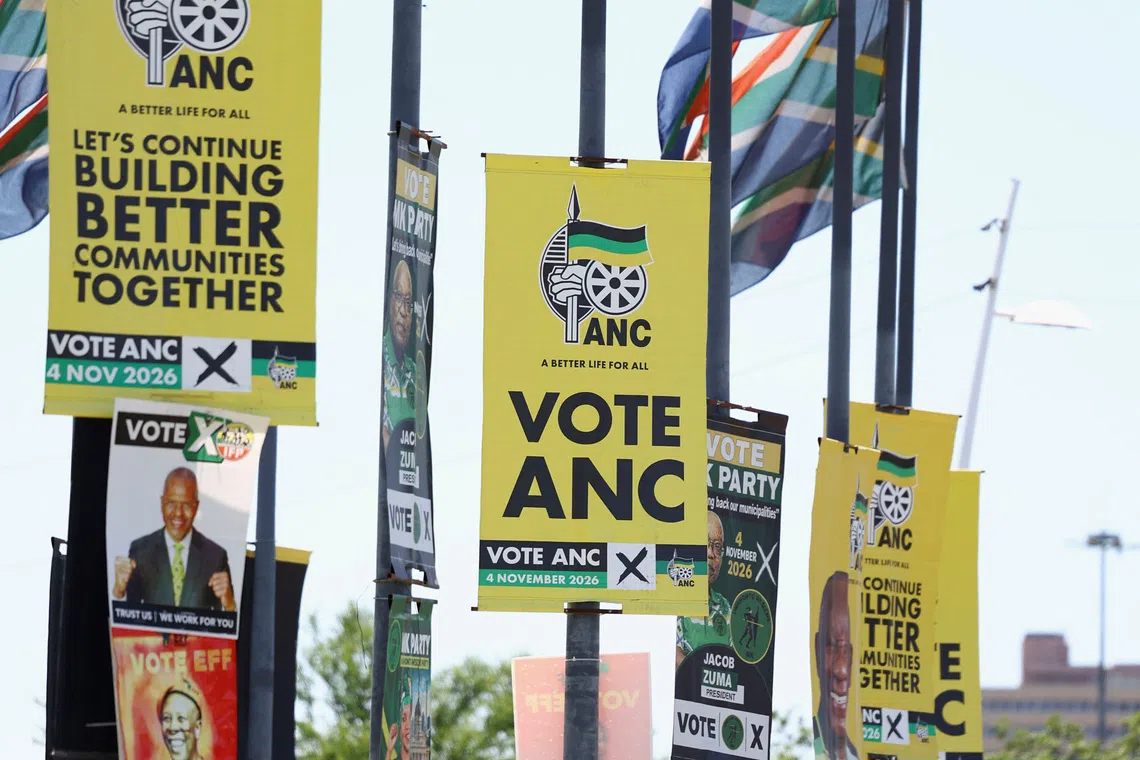
Final results confirmed by the Electoral Commission of South Africa (IEC) on Sunday, Nov. 8, gave the ANC 30.76% of the vote, down from 45.59% in 2021
South Africa
South Africa's governing African National Congress has recorded the weakest local-election result in its post-apartheid history, and the scramble to assemble councils from the wreckage has already begun. Final results confirmed by the Electoral Commission of South Africa (IEC) on Sunday, Nov. 8, gave the ANC 30.76% of the vote, down from 45.59% in 2021. The Democratic Alliance (DA) finished second with 24.64%, and the uMkhonto weSizwe (MK) Party, in its first municipal contest, took 9.76%. With only 74 of the country's 213 municipal councils won outright by a single party, the next fortnight of bargaining will decide who runs Johannesburg, Tshwane, Ekurhuleni and Durban's eThekwini, and how stable they will be.
What the numbers show
The IEC's final count, reported by the Mail & Guardian and The Citizen, gave the ANC 3,246 council seats, the DA 1,695, the MK Party 785, the Economic Freedom Fighters (EFF) 588 and ActionSA 313. The EFF took 6.22% of the vote and ActionSA 5.67%. Parties and independents outside the top five collectively received 22.97%, a figure quoted by IEC chairperson Mosotho Moepya. The ANC's 14.83-percentage-point drop from 2021 is, according to Inside Politics, its lowest local-election share since democracy. The DA, by contrast, improved from 21.66% in 2021.
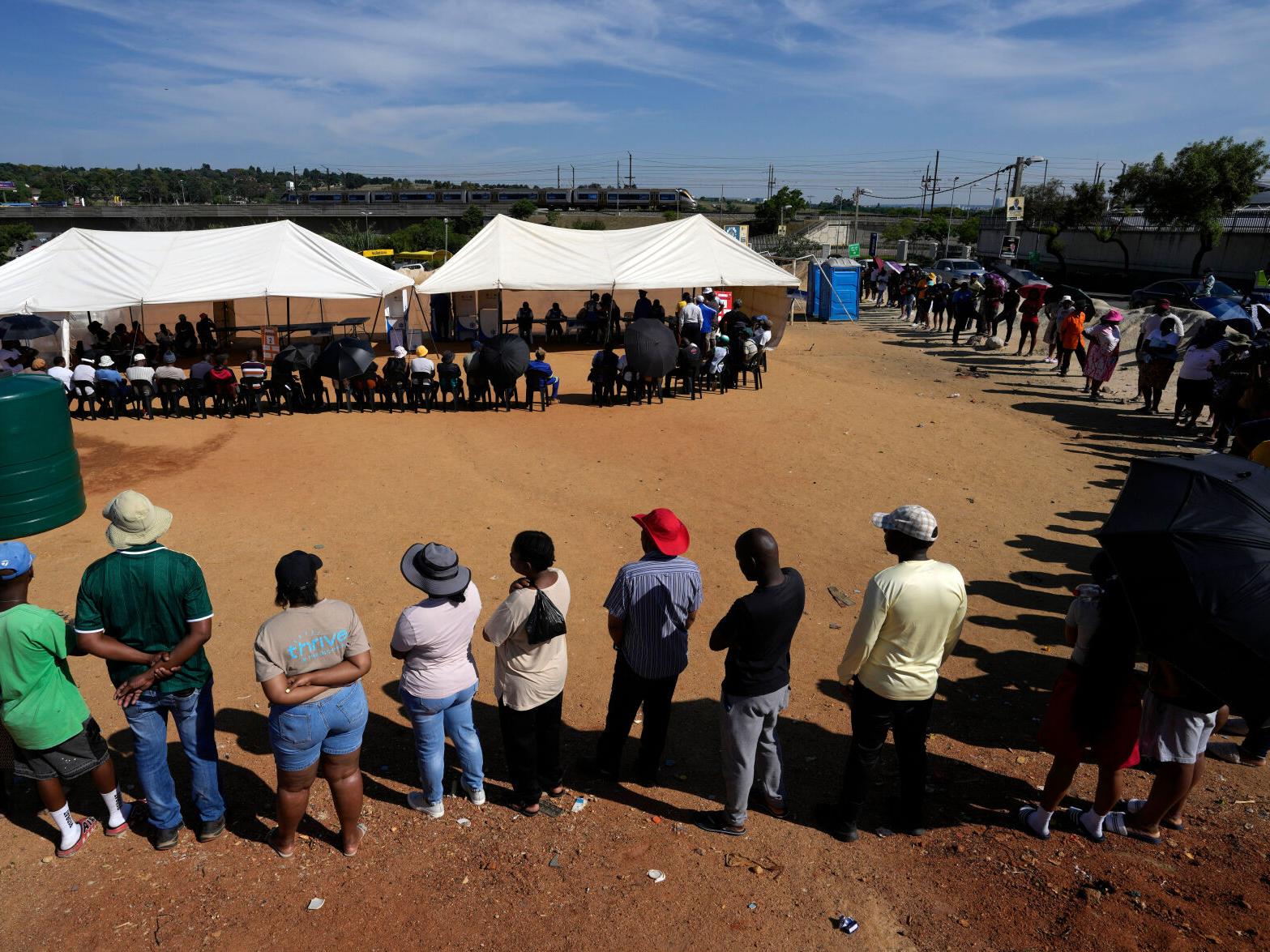
Turnout figures differ between reports. The Mail & Guardian cited 15.6 million voters, while The Citizen reported about 14.9 million of 29.2 million registered voters. The discrepancy has not been reconciled in the sources reviewed for this report. The IEC fielded about 188,000 personnel across 23,696 voting stations, according to the Mail & Guardian, and chief electoral officer Sy Mamabolo said the commission's voter management devices were "the technological backbone of our voting operations." A Human Sciences Research Council survey cited by SAnews, and relayed in a Rio Times briefing, found that 90% of voters were confident procedures were free.
The election was not free of incident. In Douglas, in the Northern Cape, activists of a political party destroyed ballot papers before counting, and the IEC will hold a re-vote there, The Citizen reported. A Constitutional Court order had earlier allowed the ANC to reinstate 181 councillor candidates excluded after the party missed the IEC's candidate submission deadline; the commission later extended reinstatement to 32 candidates from other parties.
A map of fragmentation
The headline national figure understates how thoroughly the ANC's municipal base has eroded in the cities. Inside Politics reported that the ANC failed to finish first in six of the country's eight metropolitan municipalities. The DA led in five: Cape Town (56.42%, the only metro where any party won an outright majority), Nelson Mandela Bay (44.17%), Johannesburg (34.79%), Tshwane (34.37%) and Ekurhuleni (30.68%). The MK Party led eThekwini with roughly 38.3%, against about 25.5% for the DA and 16.4% for the ANC. The ANC held first place only in Buffalo City, with 42.02%, down from 59.43% in 2021, and in Mangaung, where it edged the DA 33.91% to 33.49%, a margin of 0.42 of a percentage point.
Across the country, the ANC retained outright control of 53 municipalities and led in 128, while the DA controlled 12 outright and led in 32. The Inkatha Freedom Party controlled five and led in 19, and the MK Party controlled three and led in 19. The Mail & Guardian's report carries two inconsistent figures for hung councils (142 in a subheadline, and about 139 implied by its body text); the count of 74 outright majorities out of 213 councils is the firmer number. Either way, roughly two-thirds of councils will have to be governed through some form of coalition or minority arrangement.
Ramaphosa's appeal and the parties' opening bids
President Cyril Ramaphosa, speaking on Nov. 8 at the Gallagher Convention Centre in Midrand, argued that hung councils should not be read as a failure of democracy. "People did not cast their vote so that their representatives could spend the next five years fighting amongst themselves," he said, urging parties to "negotiate in good faith to elect office-bearers so that councils can get to work," The Citizen reported. ANC chairperson Gwede Mantashe had earlier, on Nov. 4, urged the party to accept the outcome, according to a Rio Times briefing.
The parties' public positions, however, suggest a hard bargaining round. ANC secretary-general Fikile Mbalula said the party would assess each municipality separately and might choose opposition benches over agreements "at any cost," according to The Witness. DA leader Geordin Hill-Lewis told reporters his party would take coalition talks case by case and that committing to a single model would be premature, as Inside Politics reported. He argued that parties with the most seats should have a proportionate say in government, including mayoral posts. EFF leader Julius Malema, for his part, called for closer cooperation among the ANC, MK, EFF and the South African Communist Party, with agreements aligned to EFF policies, The Witness reported.
Johannesburg, Tshwane and Ekurhuleni: ActionSA's leverage
The sharpest bargaining is in Gauteng, where ActionSA's modest vote share translates into outsized influence. According to The Citizen, ActionSA opened talks with the ANC on Sunday and with the EFF on Monday, and is awaiting dates for meetings with the DA, MK and others. In Johannesburg, the DA holds 91 seats and ActionSA 43; together that is 134, two short of the 136 needed for a majority in the 270-seat council, according to seat figures reported by The Citizen citing North-West University professor Joseph Sekhampu. In Tshwane, the same pairing would reach 122 seats against a threshold of 108. In Ekurhuleni, they would hold 106 seats, seven short of the 113 required. An alliance of the ANC, ActionSA, EFF and MK would hold 138 seats in Johannesburg, 109 in Tshwane and 128 in Ekurhuleni, per the same analysis.
ActionSA leader Herman Mashaba has set conditions. Speaking to Radio 702 on Sunday, he said, "I've got the cards," and told the DA that "we've got to remove Helen Zille," the DA's Johannesburg mayoral candidate. He said he could not morally support people his party regards as racist, and he floated a package in which ActionSA takes deputy positions, Tshwane Mayor Nasiphi Moya stays on, the DA drops Cilliers Brink in Tshwane and the DA takes Ekurhuleni. "If you are not prepared to do this, there's no reason whatsoever to waste your time and mine," he said. ActionSA national chairperson Michael Beaumont told EWN that the party has communicated its concerns over Zille's "track record of her destabilising and collapsing working coalition."
The Witness, however, reported that Mashaba distanced himself from reports that ActionSA would insist on keeping Moya in Tshwane while blocking Zille in Johannesburg, and that the party has not ruled out renewed talks with the DA. EWN reported Tuesday that ActionSA remains open to a Johannesburg coalition with the DA if Zille is not its mayoral candidate, and that the DA remains determined to secure the city.
Sekhampu cautioned that "ActionSA cannot claim an exclusive right to determine the outcome." A DA–ANC agreement would command a majority in all three metros without ActionSA, though the two parties' rivalry makes such a deal politically fraught, and any pact carries costs for each party, he said.
KwaZulu-Natal and the MK question
In KwaZulu-Natal, no party won an outright majority in 32 municipalities, The Witness reported. In the 223-seat eThekwini council, where 112 seats are needed for control, IEC projections gave the MK Party 86 seats, the DA 57, the ANC 37 and other parties 43. In Msunduzi's 81-seat council, MK holds 31 seats, 10 short of a majority, with the ANC and DA on 17 each. The DA had initially ruled out a coalition with MK, and Hill-Lewis said the party would announce its position after analysing seat allocations. MK says it is open to talks with all parties but prefers those sharing its values and will not compromise on transformation.
Analysis: coalitions at the point of exhaustion
The results confirm a structural shift that began with the ANC's loss of its national majority in 2024: South African politics has fragmented into a handful of mid-sized parties, none able to govern alone, in a system whose local councils elect mayors by simple council majority. The problem is that local coalitions have a poor record. Municipal governments in Johannesburg and elsewhere have cycled through mayors in earlier terms, and analysts quoted by The Witness warned of the consequences. Local-government expert Dr Lungelwa Kaywood called for coalition agreements to be written and public, with dispute-resolution mechanisms and safeguards for administrations, asking, "When we have a political leadership that is not (working), can we at least ensure that refuse removal happens?" Political analyst Prof. Bhekuzulu Mngomezulu said parties "should not use coalitions for self-aggrandisement at the expense of democratic consolidation."
There is also a legitimacy question embedded in the data. Independents and small parties together drew nearly a quarter of the vote, and the turnout reported by the two outlets, whichever figure is correct, represents roughly half of registered voters at most. Bloomberg's opinion desk argued Tuesday that South Africa needs its coalition model to succeed, a view that reflects investor attention to municipal service delivery, though that article could not be accessed in full for this report.
What to watch
Newly elected councils must hold their first meetings within 14 days of being declared elected, according to Inside Politics, which sets a hard clock on the talks. Watch first for whether the DA moves on Zille or finds another route to Johannesburg, and whether ActionSA accepts a deal that leaves the DA as the senior partner. Watch also whether the ANC follows through on Mbalula's suggestion that it might sit in opposition in some councils, a notable break from its instinct to govern. In eThekwini, the question is whether the MK Party, as the largest party but well short of 112 seats, can find partners, or whether the DA and ANC close ranks to keep it out. Finally, South Africa's data calendar offers a market read: unemployment figures are due Tuesday, with a forecast of 32.5%, and the central bank's next rate decision is on Nov. 19, according to a Rio Times briefing.