Written By | Staff Writer
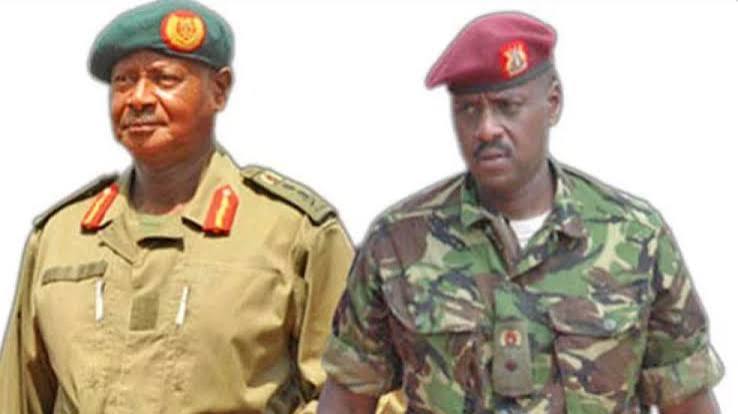
Museveni, who has led Uganda since 1986, was sworn in for a seventh term on 12 May after the 2026 general elections
POLITICS
What is happening
A proposal to bring Uganda’s ruling National Resistance Movement (NRM) and opposition parties into a formal power-sharing arrangement has become the country’s dominant political talking point. The idea, described by its advocates as consociational democracy, was publicly voiced on Friday 30 October by Gen. Caleb Akandwanaho, better known as Salim Saleh, the younger brother of President Yoweri Museveni and his senior adviser on defence and security. Speaking at Kapeeka in Nakaseke District to more than 100 legislators, mostly from the ruling party, who were touring factories, he reportedly urged power sharing between the NRM and the opposition and said Museveni had used similar approaches with former opponents and armed groups. According to reporting by The Rio Times, he added: “I hope we can convince each other in the next three or six months.” No official text of the speech has been released.
By 5 November the Daily Monitor reported that the proposal was drawing mixed reaction. Opposition parties, it said, want wider consultations, a guarantee of their independence and fair play before they consider the plan. The debate follows earlier attempts by the NRM and opposition groups to establish formal political cooperation.
Background: from elections to a retreat in Jinja
Museveni, who has led Uganda since 1986, was sworn in for a seventh term on 12 May after the 2026 general elections. In the aftermath, party leaders gathered at a mid-October retreat in Jinja organised by the Netherlands Institute for Multiparty Democracy, focused on how to manage political diversity after the polls. Historian Prof. Ogenga Otunnu reportedly presented a proposal that was passed to the National Consultative Forum; its full text has not been published.
Justice Minister Norbert Mao, who is also president of the Democratic Party (DP), reportedly said the plan would require legal and constitutional changes and that Museveni had read the proposals and was comfortable with them. Mao entered the cabinet under a 2022 cooperation agreement between the NRM and the DP, a deal that is itself contested within his party.
The Besigye factor
Any talk of national reconciliation in Uganda quickly runs into the case of Dr Kizza Besigye, a veteran opposition leader and former Museveni ally. A four-time presidential candidate, he has been on remand since his November 2024 arrest in Nairobi and is on trial for treason at the High Court in Kampala with two co-accused. Prosecutors allege a plot to overthrow the government; all three deny the charges.
Saleh has said he arranged for Besigye to be moved to a medical facility after he reportedly fell ill in the dock, and The Independent carries a headline quoting Saleh saying he found his friend Besigye “almost dead” in prison. Around 28 October, Minister Balaam reportedly said Saleh was leading talks to secure Besigye’s release. Saleh declined to confirm this, and Besigye’s family, allies and the Peoples Front for Freedom (PFF) deny taking part in any bargaining with the government. On 20 October Mao said Museveni had directed consultations on the cases of Besigye and another opposition figure, Erias Lukwago.
Who is saying what
Opposition leaders at the Jinja retreat called for the unconditional release of all political detainees and the safe return of exiled politicians, describing this as an “indispensable prerequisite for meaningful engagement in any national dialogue.” Mao reportedly called the demand legitimate but not a precondition, arguing that the cases are before the courts, and proposed adding the issue to the dialogue agenda. That disagreement over sequencing — release first, or talk first — is the central fault line.
Inside the DP, a faction known as DP at Heart has objected strongly. On 31 October it reportedly demanded that members be consulted and a referendum held before any deal, and its leader Ismail Kiirya criticised what he called secrecy. The faction warned that a weakened opposition would mean less scrutiny of government bills and that the framework could open the door to Parliament choosing the president rather than a direct vote. It says party leaders were given two weeks to consult members and report back. The Daily Monitor has also run commentary asking whether consociational democracy can offer an alternative to Uganda’s governance problems, and one columnist has floated 2031 to 2036 as a possible transition period in which new arrangements take shape.
Why it matters
Consociational systems, in which major groups share executive power by agreement, have been used in divided societies elsewhere, but they sit uneasily with Uganda’s current constitutional design of a directly elected president and a competitive multiparty Parliament. Critics fear a formal pact could normalise the absence of an effective opposition; supporters argue that decades of winner-takes-all politics have produced detentions, exile and mistrust, and that a negotiated settlement could ease tensions and open the way for the release of political prisoners.
The proposal also reveals how power operates inside the ruling system. That the idea was floated by a senior security adviser who is the president’s brother, before an audience of NRM legislators rather than through a formal party or parliamentary process, has fuelled questions about who is driving the plan and how binding it is. As of the latest reporting there was no formal endorsement by Museveni or the NRM beyond Mao’s reported remarks, and no public response from the main opposition parties had been found in early November.
What to watch next
Several indicators will show whether the proposal gains traction. The first is whether the NRM formally adopts the framework or tables constitutional amendments, which Mao has said would be needed. The second is the response of the major opposition parties, and whether the DP at Heart faction’s call for member consultation or a referendum is heeded. The third is the Besigye trial: any bail, release or medical development would be read as a signal of the government’s sincerity. Finally, Saleh’s own three-to-six-month window suggests that clarity, one way or the other, could arrive by early to mid-2027.
It is worth stressing what remains unconfirmed: the full text of Saleh’s remarks, the full text of the Jinja proposal, and whether Besigye would participate in any talks. Readers should treat several details, which rest on press accounts, with caution until official documents emerge.