Written By | Health News Agencies
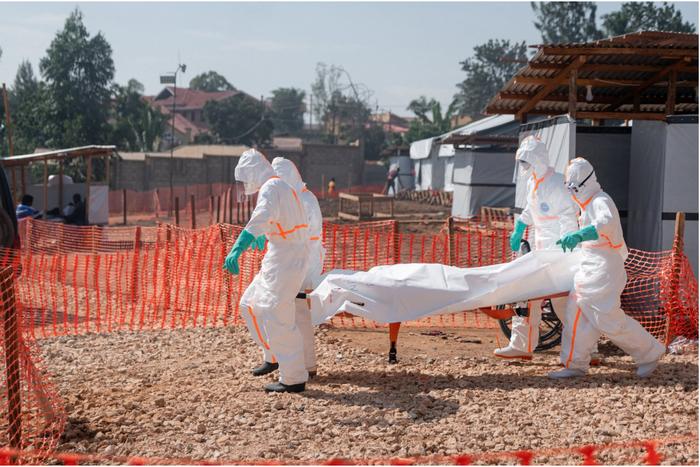
Bundibugyo virus has claimed over 5,000 lives, leapt borders into Kenya and Nigeria, and sent patients to hospitals in London and Switzerland
Bundibugyo virus has claimed over 5,000 lives, leapt borders into Kenya and Nigeria, and sent patients to hospitals in London and Switzerland. The WHO says it is the biggest Ebola outbreak ever recorded in the DRC.
LONDON/KINSHASA
It began as a rumour of a mystery fever in the forests of eastern Congo. Six months later it is a full-blown global health emergency, with more than 10,600 confirmed cases, more than 5,100 deaths, and a virus for which the world's doctors have no approved vaccine and no approved cure.
The Bundibugyo virus, a rarer and less-understood cousin of the Ebola strain that terrorised West Africa a decade ago, is still spreading across the Democratic Republic of the Congo (DRC). According to the World Health Organization's latest Disease Outbreak News bulletin, published on 6 November, the country had logged 10,668 confirmed cases by 3 November, including 5,198 deaths. That is a crude fatality rate of 48.7 per cent. Nearly one in two people who catch it are dying.
The numbers are not just grim. They are growing. In the space of a single reporting window, health teams recorded 964 new confirmed cases and 511 new deaths. And the European Centre for Disease Prevention and Control (ECDC) has warned that the real toll is probably higher than the figures show, because of gaps in data and patchy follow-up of the people who have been in contact with the sick.
A six-month timeline of a crisis
The outbreak was declared on 15 May 2026 in the DRC and neighbouring Uganda. Within two days, on 17 May, the WHO's Director-General determined that it amounted to a Public Health Emergency of International Concern, the highest alarm the organisation can sound. Africa CDC followed a day later by declaring a Public Health Emergency of Continental Security.
By 20 August, a WHO rapid risk assessment said the outbreak had "expanded rapidly" since it was first detected. The agency's Emergency Committee met again in August and concluded the emergency was far from over. Today, the UK Health Security Agency describes it as the largest recorded Bundibugyo outbreak in history and the second-largest Ebola-type outbreak ever, behind only the West African epidemic of 2014 to 2016.
The WHO also says it is the largest Ebola outbreak ever recorded in the DRC itself, a country that has battled the disease repeatedly since 1976.
Where the virus is hitting hardest
Eight of the DRC's provinces are affected, covering 67 of its 178 health zones. Transmission is still active in 51 of them. The epicentre is Ituri province, which accounts for 7,485 cumulative cases and 3,532 deaths. Neighbouring Nord-Kivu has recorded 2,593 cases and 1,422 deaths, and the highest provincial fatality rate in the country at 54.8 per cent.
In the most recent 21-day window, 1,463 new cases were reported: 710 in Ituri, 640 in Nord-Kivu, 77 in Haut-Uélé, 31 in Tshopo and 5 in Nord-Ubangi. The newest health zone to be hit is Yakoma, in Nord-Ubangi, which borders the Central African Republic, raising fears about yet another country joining the list.
There is a little encouraging news. Bas-Uélé, Sud-Kivu and Sud-Ubangi reported no new cases in the last 21 days. And 2,881 people have recovered, proof that survival is possible with early care.
The hidden killer: deaths at home
Perhaps the most worrying detail in the WHO's latest report is where people are dying. Of 512 deaths reported since 21 October, 335 happened in the community and only 177 in treatment centres. The WHO notes that many of those community deaths, especially among young children, reflect gaps in early detection and access to care.
In plain English: too many sick people are not reaching help in time, or are not being found at all. Every unreported death at home is also a missed chance to trace who else was exposed. Contact follow-up has averaged 86 per cent over 14 days, below the 95 per cent target. In Tshopo it is just 71 per cent, in Nord-Kivu 82 per cent.
The WHO says the response is working against a daunting backdrop: a humanitarian crisis, insecurity, a remote and densely populated region, and heavy movement of people and trade. Donor funding gaps, it adds, remain a concern. Commercial flights at Bunia airport have been suspended since 6 June, and the DRC has restricted the movement of people who have been in affected provinces.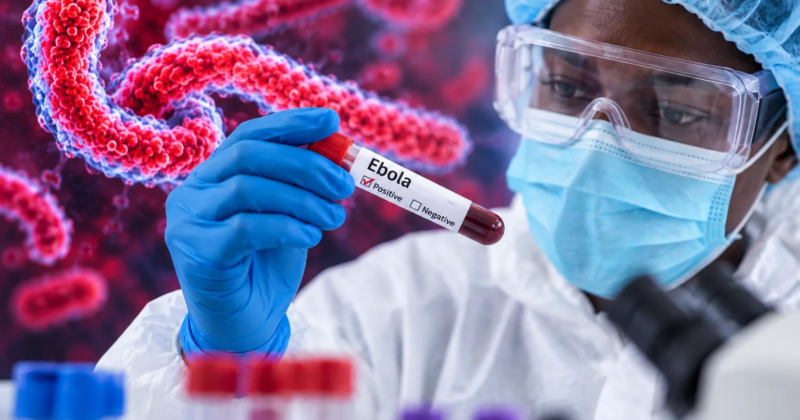
The virus goes global
Although the overwhelming majority of cases are in the DRC, this outbreak has not stayed put. In Kenya, the Ministry of Health reported its first case on 6 October, imported from the DRC. The patient had already died the day before. Kenya now counts nine confirmed cases and two deaths, with eight secondary cases linked to that single traveller. There have been no new cases since 19 October, and the WHO says follow-up of contacts is expected to wrap up on 11 November. Kenya has screened 760,415 travellers at points of entry.
In Nigeria, a woman who had travelled from Uganda tested positive in the capital, Abuja, on 20 October. She was medically evacuated to Switzerland on 26 October, and her husband, a close contact, is also being treated there. Sixty-two contacts were identified in Nigeria, and investigations into the likely source of her infection are continuing. ECDC has sent three experts to Abuja to help.
On 5 November the UK reported that a health and care worker from the DRC, a confirmed case, had been evacuated and is now being treated in London. Over the course of the outbreak, other patients and contacts have been flown to the Netherlands, Germany, France and Czechia for treatment or monitoring, including aid workers and US citizens.
Uganda, one of the two countries where the outbreak was first declared, has had better news. It recorded 20 confirmed cases, including two deaths, and the WHO and Africa CDC declared its outbreak over on 27 August. France, which had an imported case in a returning humanitarian doctor, has also brought its outbreak under control.
Why there is no vaccine
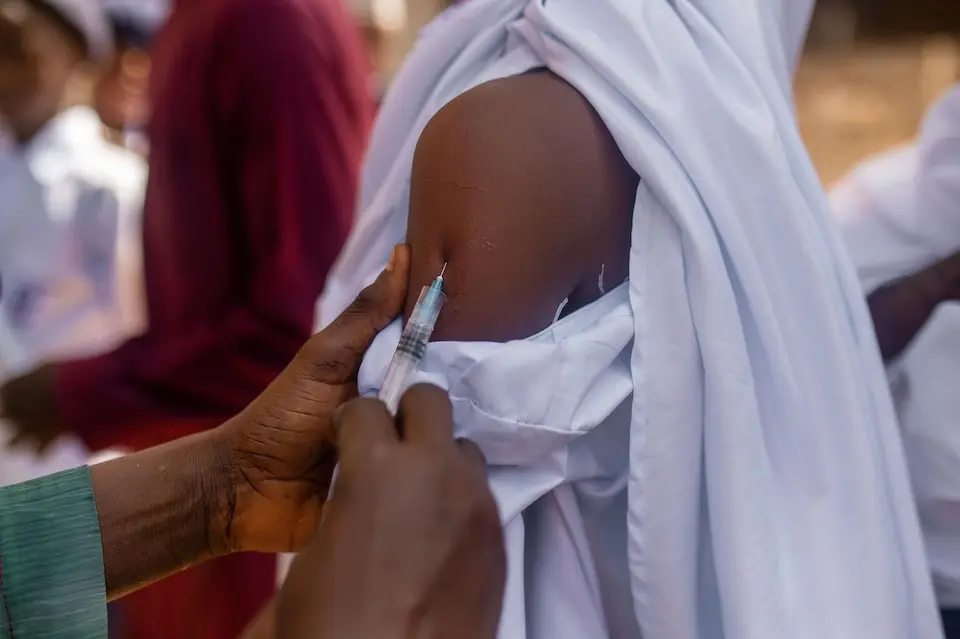
Most people have heard of the Ebola vaccine that helped end the last big epidemics. The catch is that it was designed for the Zaire species of Ebola, not Bundibugyo. The WHO states plainly that Bundibugyo has no vaccine or specific treatment. The only licensed vaccine, Ervebo, is being used as a stopgap: WHO guidance issued on 31 August recommends its use within a research protocol, and the DRC began vaccinating frontline workers in Kisangani on 27 August.
The race for something better is now on. A Phase 2/3 trial called Tumaini began on 23 October in Bunia, with the first volunteers enrolled. On 4 November the WHO announced that two new candidate vaccines would join the trial, and its expert groups recommended adding the Oxford and Serum Institute of India candidate known as ChAdOx1 and Moderna's mRNA-1469, pending national approvals. Other candidates in the pipeline include rVSV-based vaccines from IAVI and PHV and an MVA-based candidate from Minapharm, though most are still at preclinical or early clinical stages.
Until something works, doctors are left with what they call optimised supportive care: fluids, oxygen, treating complications and isolating patients. The WHO says early recognition, testing and good supportive care can reduce deaths. In the DRC, 961 patients were in isolation at the time of ECDC's latest update.
What is Bundibugyo, exactly?
Bundibugyo virus disease is a severe form of Ebola disease. Fruit bats are the suspected natural reservoir. The incubation period runs from two to 21 days, and the early symptoms, such as fever, weakness and aches, are non-specific, which makes it easy to mistake for malaria or other common illnesses and delays diagnosis. The virus is spread through direct contact with the blood or body fluids of someone who is sick or has died of the disease.
Bundibugyo is named after the Ugandan district where it was first identified in 2007. Previous outbreaks were far smaller and less deadly than this one, with fatality rates of roughly 30 per cent in Uganda in 2007 and 50 per cent in the DRC in 2012. The current outbreak is, by a very wide margin, the biggest in the virus's history.
Expert perspective: how worried should the world be?
The official risk assessments paint a picture of a crisis that is severe at its centre and contained at its edges. The WHO rates the risk as very high in the DRC, high for neighbouring countries that share land borders with it, and low for the rest of the African region and the world. ECDC says the overall risk for the general EU and EEA population is very low, and that the risk of sustained transmission following an imported case is also very low, because imported cases are likely to be spotted and isolated quickly. The UKHSA rates the risk to the UK population as low.
Health authorities are also keen to dampen the instinct to shut borders. The WHO advises against any restriction of travel to or trade with the affected countries, recommending targeted entry screening instead. ECDC goes further, stating that screening returning travellers from the DRC and Uganda would not be effective in preventing the virus from reaching Europe, and recommends clear information for travellers instead. The WHO also stresses that "community engagement will be key", a reminder that trust on the ground matters as much as tests and tents.
The WHO has said it is revising its rapid risk assessment, which was last updated in mid-August, so the official picture could shift.
What this means for you
For the vast majority of readers in the UK, Europe and North America, the chance of coming into contact with this virus is extremely small. The evacuated patients are being treated in specialist isolation facilities, and the health agencies that track these events say the risk to the public is low.
There are still sensible steps. If you are planning travel to affected parts of the DRC or its neighbours, check official travel health advice before you go, such as that from TravelHealthPro in the UK. Avoid contact with sick people and with bats, bushmeat, and the bodies of people who have died of unexplained illness. If you have been in an affected area and develop a fever or other symptoms within 21 days of returning, call your health service before turning up at a clinic, and tell them where you have been.
For those wanting to help, humanitarian groups and the WHO continue to flag funding gaps. The response needs money for surveillance, lab testing, protective equipment and community outreach as well as for the vaccine trials.
The road ahead
The next few weeks are pivotal. A WHO webinar on the outbreak is scheduled for 12 November, and Kenya expects to close out its contact follow-up the day before. If Kenya and Nigeria can hold the line, the story of this outbreak outside the DRC may be one of rapid containment. Inside the DRC, the challenge is much tougher: finding the sick before they die at home, tracing every contact, and keeping the trial vaccines moving.
A death toll of more than 5,000 in six months is a stark reminder of how quickly an outbreak of a poorly-understood pathogen can escalate when it takes hold in a fragile region. It is also a reminder that the tools which finally tamed earlier Ebola epidemics, vaccines and treatments matched to the virus, simply do not yet exist for this one. The scientists racing to build them are running against the clock, and so is everyone on the front line.
This story is developing and figures change daily. Readers are urged to follow updates from the World Health Organization, ECDC and their national public health agencies.