United States
Overview
One week after a midterm election that stripped them of both chambers of Congress, Republicans in Washington spent Tuesday, November 10, doing two things at once: protecting the most embattled member of President Donald Trump's cabinet and choosing the people who will lead them through two years in the minority. On the House floor, the Republican majority voted 211-204 to refer an eight-article impeachment resolution against Defense Secretary Pete Hegseth to the House Judiciary Committee, a procedural maneuver that effectively kills the measure for the remainder of the 119th Congress. Behind closed doors, House Republicans elected Rep. Jim Jordan of Ohio as their minority leader for the incoming Congress, defeating Majority Leader Steve Scalise 106-73, while Senate Republicans re-elected John Thune as their leader by acclamation.
The two events are tightly linked. The impeachment push was driven by the Iran war, which a number of Republicans, including Vice President JD Vance, have blamed for the party's losses on November 3. The leadership elections, meanwhile, will determine who speaks for a chastened party when Democrats take control of the House and Senate in January, and who will be standing in the way if a Democratic majority decides to revive the case against Hegseth.

Background: How the Impeachment Effort Began
The articles were the work of Rep. Thomas Massie of Kentucky, a libertarian-leaning Republican who has spent much of the year at odds with the White House. According to the Daily Caller, Massie first filed the articles on September 15, but the House left for its October recess before a floor vote could be forced. He reintroduced them on the House floor on Monday afternoon, November 9, using a privileged procedure that obliged leadership to respond within days.
The eight articles accuse Hegseth of directing U.S. forces into hostilities with Iran without congressional authorization and of violating three provisions of the War Powers Resolution of 1973. They also target the administration's campaign of lethal strikes on boats allegedly smuggling drugs in the Caribbean and the eastern Pacific, which Massie characterizes as extrajudicial killings. As summarized by the Daily Caller, Massie alleges that Hegseth oversaw the killing of at least 221 people in international waters, waged an unlawful war in Yemen, intimidated Sen. Mark Kelly for urging service members to refuse illegal orders, and continued hostilities after Congress passed a concurrent war powers resolution. Because concurrent resolutions lack the force of law, the administration was not legally bound to obey that measure, a point that underscores how little leverage Congress has had over the conflict.
Massie's personal position is unusual. He lost his Kentucky primary earlier this year to Ed Gallrein, a challenger endorsed by Trump, and so will leave Congress in January. Trump had sought his ouster over his criticism of the Iran operations and his push to release the Jeffrey Epstein files. That gave Massie little to lose in pressing the case, and he told colleagues that if the motion to refer failed, he would seek separate votes on each article, saying he had heard from several members who agreed with some articles but not all of them.
Key Developments: The 211-204 Vote
The vote itself was narrow and almost perfectly partisan. ABC News reported that Massie was the only Republican to vote against the motion to refer, and that every House Democrat also opposed it. ABC stressed that the vote was procedural, not a vote on the merits of impeachment, but the practical effect is the same: the resolution now sits in a Republican-controlled Judiciary Committee that has no intention of acting on it before the new Congress convenes.
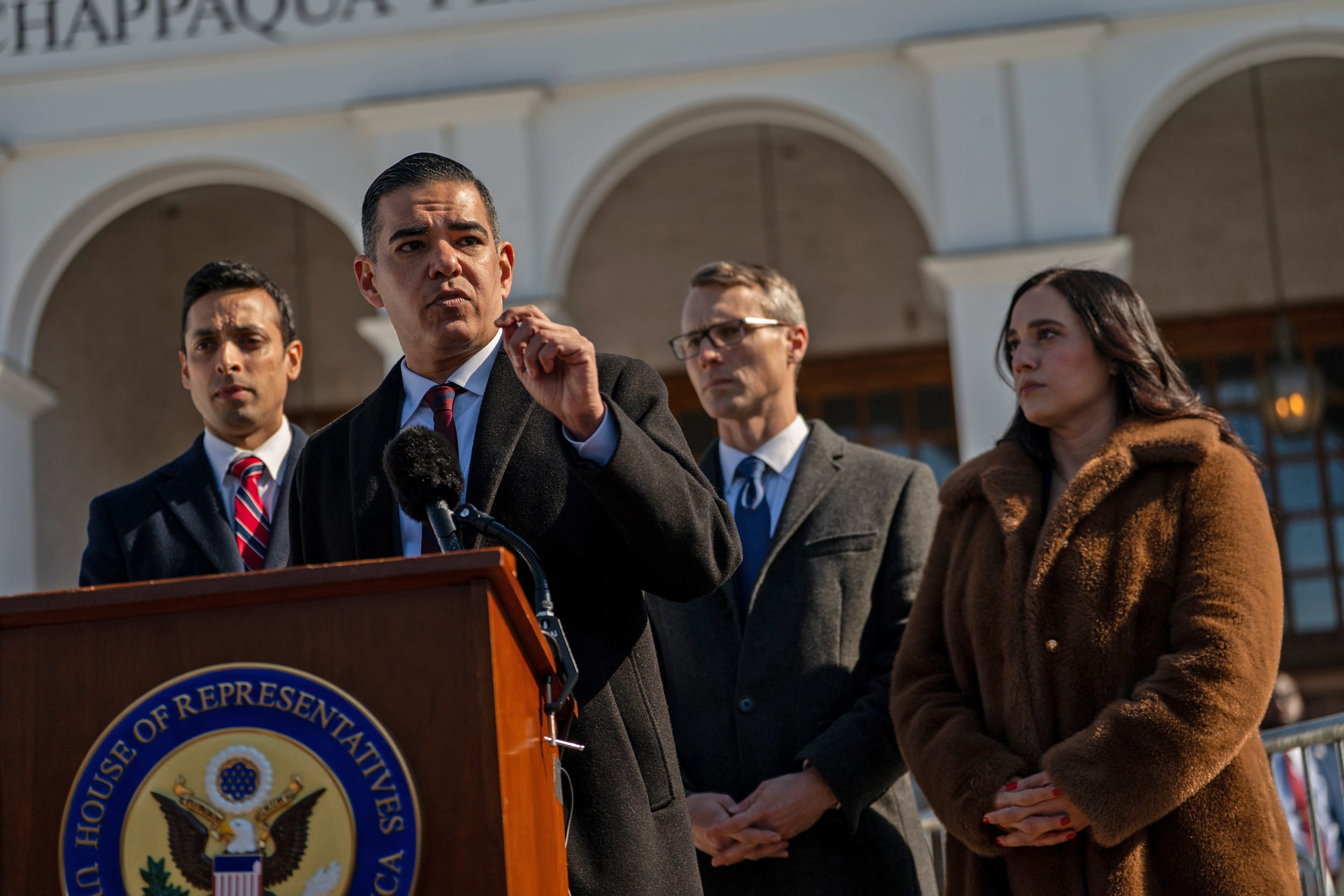
House Speaker Mike Johnson, who opposed the articles, was blunt about leadership's intentions, saying the House would "dispense with the impeachment gambit." House Minority Leader Hakeem Jeffries, by contrast, described himself as a "hard yes" on impeachment, and both House and Senate Democrats backed the effort, according to the Daily Caller.
The timing mattered. The vote came against the backdrop of a political environment transformed by the midterms. Democrats won the House decisively, and ABC News reported the chamber's projected makeup at 254 Democrats to 166 Republicans, with 15 races still undecided. Republicans lost at least seven Senate seats, with two contests still outstanding. Several Republicans have argued publicly that the Iran war, with its disruption of oil markets and shipping through the Strait of Hormuz, was the decisive factor in the rout. That argument gave the impeachment push more oxygen than a lone dissident's resolution would ordinarily receive.
Hegseth and the White House Respond
Hegseth answered the effort at a Pentagon news conference on Tuesday, dismissing it as "a political spectacle, a personal manifesto driven by ego and resentment." He argued that none of the eight articles alleges high crimes, misdemeanors or treason, that the military operations in question were lawful actions directed by the president, and that the resolution amounted to an attack on American service members. He attributed Massie's motives to "policy disagreements."
Trump celebrated the result on social media, claiming that Democrats had "FAILED" to impeach his defense secretary even though the effort had been led by a Republican. "Every single Republican, except Thomas Massie, a major LOSER, voted in favor of Pete," the president wrote, according to ABC News. Pentagon spokesman Sean Parnell declared "total victory" for Hegseth on X, and Secretary of State Marco Rubio defended him, saying Hegseth had carried out a direct order from the commander-in-chief.
Cracks in the Senate
Yet the House vote may not be the final word on Hegseth's future, and the clearest signs of trouble come from the Senate. The Daily Caller reported that at least six Republican senators appeared open to holding a trial if articles ever reached the chamber. Among them was Sen. Bill Cassidy of Louisiana, who like Massie lost his primary to a Trump-endorsed challenger. Sen. Thom Tillis of North Carolina, who is not seeking re-election and had already called on Trump in early September to fire Hegseth over turmoil in the Pentagon's leadership ranks, said he would vote to remove the secretary if given the chance. Sens. John Curtis, John Boozman and Shelley Moore Capito said they would examine the evidence.
A widely circulated news digest also reported that Sen. Ted Cruz of Texas said he expects Hegseth either to resign or to be dismissed. That remark could not be independently confirmed against a primary transcript for this article, but it fits a broader pattern of Republican senators openly wondering about the defense secretary's future in the wake of the election. Hegseth's tenure has been marked by repeated departures among senior officers and civilian officials, including the resignation of Army Secretary Dan Driscoll at the start of September, and by reports that he extended Middle East deployments into 2027.
A New Republican Leadership for the Minority
While the impeachment drama played out on the floor, House Republicans met to choose their leaders for the 120th Congress. Speaker Johnson had announced the previous week that he would not seek the post of minority leader, leaving a two-way race between Scalise and Jordan. Jordan, a founding member of the House Freedom Caucus and chairman of the Judiciary Committee, won comfortably, 106-73, according to ABC News. After the vote he pledged that Republicans would "fight for American families" in the new Congress.
The rest of the House leadership team stayed largely intact. Majority Whip Tom Emmer of Minnesota held off a challenge from Rep. August Pfluger of Texas to become minority whip, and told Democrats to enjoy their "honeymoon phase" before the new Congress convenes. Conference Chair Lisa McClain of Michigan defeated Reps. Erin Houchin of Indiana and Greg Steube of Florida.
In the Senate, Thune was re-elected Republican leader by acclamation after a closed-door discussion of the election results. No challenger emerged, although ABC reported that some Republicans were uncertain about keeping him. Sen. John Barrasso stays on as whip and Sen. Tom Cotton remains conference chair, while Sen. Bernie Moreno of Ohio was elected to chair the National Republican Senatorial Committee, replacing Sen. Tim Scott.
The elections went ahead despite pressure to slow down. Dozens of Republican National Committee members signed a letter urging both chambers to postpone leadership votes by 30 days so the party could take stock of its losses, CBS News and ABC News reported. In the Senate, a group led by Sen. Ron Johnson of Wisconsin pushed for a delay; Thune said, "I don't know if that solves anything," and left the decision to the conference. In the House, Rep. Jason Smith of Missouri argued for a postponement and for rules changes, saying, "Our rules must never again permit a Leader to be taken hostage to the whims of an individual member." Speaker Johnson rejected a delay as logistically impractical. Johnson also declined to commit to serving out a full term in leadership, saying only, "we'll see how all that develops."
Reactions and Analysis
The choice of Jordan signals that House Republicans intend to be a combative minority rather than a conciliatory one. Jordan built his reputation on aggressive oversight, and his election over Scalise, a more traditional leadership figure, suggests the conference is betting that confrontation with a Democratic majority will serve it better than compromise in the run-up to the 2028 presidential cycle. It also keeps the conference closely aligned with Trump at a moment when a minority of Republicans, particularly in the Senate, are beginning to distance themselves from the administration's war policy.
For Democrats, the shelving of the Hegseth articles is a short-term defeat but potentially a long-term opportunity. The Daily Caller noted that the referral keeps the effort stalled only for the rest of the current Congress; once Democrats hold the gavel in January, they could revive impeachment, hold hearings on the Iran war and the boat strikes, and force Republicans to take more votes on the record. Jeffries' public support suggests that option is very much on the table.
What's Next
Several questions now hang over Washington. The first is whether Hegseth survives until January at all. With Republican senators such as Tillis openly supporting removal and others signaling uncertainty, the pressure on Trump to make a change at the Pentagon may grow, particularly as the White House reshapes its senior staff after the election, including the recent installation of Stephen Miller as chief of staff.
The second is whether a Democratic House will make impeachment an early priority or focus instead on oversight hearings and war powers legislation. Impeachment requires only a simple majority in the House, but conviction requires two-thirds of the Senate, a threshold that would demand significant Republican defections even in a Democratic-controlled chamber.
The third is how Jordan and Thune manage a party divided over the lessons of its defeat. Republicans who blame the Iran war will want a change of course; those loyal to Trump will resist any suggestion that the president's foreign policy cost them their majorities. Tuesday's votes showed that, for now, loyalty still prevails in the House. Whether it holds once the new Congress convenes, and once Democrats begin issuing subpoenas, is the central political question of the winter.
Published By | News Editor