Behind closed doors in Washington, international health experts are deciding whether the United States has let the world's most contagious disease take root again, 26 years after it was declared beaten. Cases have more than doubled, children have died, and the verdict could land as soon as next week.
HEALTH
It took America decades of needles, school mandates and painstaking detective work to drive measles out. It may have taken less than two years to let it back in.
This week, in a closed-door meeting room in the nation's capital, a panel of outside experts convened by the Pan American Health Organization (PAHO) is poring over case files, genetic sequences and outbreak maps to answer one blunt question: has measles been spreading inside the United States, without a break, for a full year or more?
If the answer is yes, the country will lose the "measles elimination" status it has proudly held since 2000, joining its northern neighbor Canada, which was stripped of the same title just a year ago. The commission is meeting from November 10 through November 13, alongside PAHO's annual gathering, and the final call will be made by PAHO Director Jarbas Barbosa. A public announcement is expected early in the week of November 16.
"Measles is the great indicator of where the cracks are in our foundation," Demetre Daskalakis, a former senior official at the Centers for Disease Control and Prevention who resigned after Health Secretary Robert F. Kennedy Jr. took office, told Reuters. Right now, those cracks are showing everywhere.

A Record Nobody Wanted to Break
The numbers are staggering by modern American standards. According to the CDC, the United States had logged 4,852 confirmed measles cases in 2026 as of October 29, and the week ending that day alone added 264 new infections. Later tallies compiled by ABC News put the 2026 total at at least 5,182 confirmed cases spread across 45 states and the District of Columbia.
That is more than double the 2,289 cases reported in all of 2025, which was itself a shocking year. Before 2025, the country had not topped 2,000 measles cases in a single year since 1992. Put the last two years together and state and federal officials have now reported nearly 7,500 cases and 11 measles deaths since early 2025, according to Reuters.
When the United States declared measles eliminated in 2000, the country recorded just 85 cases that entire year.
The human toll goes far beyond the headline figures. Roughly one in ten people infected this year has ended up in hospital, and among children under five the figure climbs to about 16 percent. Around 96 percent of this year's cases were in people who were unvaccinated or whose vaccination status was unknown, and roughly 96 percent were linked to outbreaks rather than isolated travel cases.
Children Are Dying
Behind the statistics are grieving families. On November 2, New York reported the death of a child from measles, the state's first measles death in more than 30 years, according to the Associated Press. Two days later, on November 4, Pennsylvania confirmed its sixth measles-associated death of the year.
The official national count tells a slightly different story: the CDC lists three measles deaths for 2026, because it uses a stricter federal method for attributing deaths to the virus. But public health experts warn that the gap between the state and federal numbers should not distract from the bigger picture. Measles kills, and it is killing again in America.
The current crisis can be traced to January 2025, when cases were first confirmed in a small town in West Texas. The outbreak tore through a close-knit, under-vaccinated community and spread to neighboring counties, and in February 2025 it claimed the life of a school-aged child, the first American measles death in a decade. From there the virus seemed to pop up everywhere. Utah and Arizona, South Carolina and Pennsylvania each reported their own outbreaks.
The 12-Month Test That Decides Everything
So how does a country actually "lose" elimination? The rule is technical but simple to state. PAHO defines re-established endemic transmission as "uninterrupted circulation of the same virus genotype and lineage for 12 months or more in a specific geographic area."
In other words, it is not enough for a country to have a lot of measles. Investigators have to show that one chain of infection, the same strain, has been passed from person to person continuously for at least a year. For the United States, the analysis period begins on January 20, 2025, the start of the West Texas outbreak. For Mexico, which is also under the microscope, it begins on February 1, 2025.
That is why the experts are reportedly examining full viral genome sequences. If the strains circulating in Texas, Utah, Arizona, South Carolina and Pennsylvania turn out to be genetically identical and linked in time, the case for endemic spread becomes very hard to dispute.
"They may look at whether or not the strains that are circulating in those different communities are the same strains," Dr. Paul Offit, director of the Vaccine Education Center at Children's Hospital of Philadelphia, told ABC News.
Some experts believe the threshold has already been crossed regardless. Noel Brewer, a public health professor at the University of North Carolina who chairs an independent U.S. advisory panel on measles, presented the CDC's status report and his group's assessment to the PAHO experts on Tuesday. He did not reveal details, but he told Reuters that the Arizona-Utah outbreak, which began in June 2025 and is still going, likely meets the 12-month criterion on its own.
The review was originally supposed to happen at a special session in April. In a March 2 update, PAHO said the U.S. and Mexico reviews were being pushed to November because American authorities were still analyzing data, including the genome sequencing. Canada Went First. Spain and Britain, Too.
If America loses its status, it will not be alone. Last November, the same PAHO commission found that endemic measles transmission had been re-established in Canada. That meeting ended on November 7, 2025, and the announcement came on November 10. With Canada's fall, the Americas as a whole lost its standing as a region free of endemic measles, a status it had fought for over generations.
Across the Atlantic, Spain and the United Kingdom have also recently lost their measles-elimination status after reviews by World Health Organization experts. Mexico and Bolivia are on PAHO's watch list this year because of their own prolonged outbreaks.
The United States formally left the WHO but remains a member of PAHO, which is why its fate is being decided by the regional body.
"It feels really concerning, as though everything is falling apart," Helen Bedford, a professor of children's health at University College London, told Reuters.
The Political Firestorm
The review is unfolding against a bitterly divided debate over vaccines in America. Many public health experts say that Health Secretary Robert F. Kennedy Jr.'s efforts to scale back childhood immunizations have fueled vaccine hesitancy and contributed to the highest U.S. measles infection rate in more than three decades. Reuters reported that Kennedy has spread doubts about measles vaccine safety without scientific evidence.
The Department of Health and Human Services pushes back, pointing out that national vaccination rates were already sliding before Kennedy took office. That much is true: kindergarten MMR coverage had dipped below the 95 percent level experts say is needed to stop measles in its tracks even before the current administration, and exemptions had been climbing for years.
CDC Director Dr. Erica Schwartz said the agency is working with states to contain outbreaks, focusing on communities where vaccination rates have long been lower. She stressed that losing elimination status would not change the government's response and that the MMR vaccine remains the main way to prevent the disease.
Expert Perspective: 'Measles Is Back'
For many infectious disease specialists, the PAHO verdict is almost beside the point.
"Whether or not the US loses its measles elimination status, we have a huge problem with measles," Brewer told Reuters.
Dr. Peter Hotez, dean of the National School of Tropical Medicine at Baylor College of Medicine and co-director of the Texas Children's Hospital Center for Vaccine Development, made the same argument to ABC News. Even if investigators cannot string every outbreak together into one unbroken chain, he said, the scale of transmission matters more than the paperwork. His bottom line: "Measles is back."
Offit, who has spent his career defending vaccines, sees a possible silver lining in a painful ruling. "At best, losing the elimination status would be a call to arms," he said. He also reminded Americans what they stand to lose: "We should be proud as a nation that we were able to eliminate the world's most contagious infectious disease."
To understand that pride, look back at what life was like before the vaccine. The CDC estimates that before the measles vaccine arrived in 1963, three to four million Americans caught the disease every year, around 48,000 were hospitalized, and 400 to 500 died. Confirmed cases fell from 385,165 in 1963 to 26,686 just a decade later. Generations of parents have never had to fear measles because of that achievement.
Why Measles Is So Dangerous
Measles is not just a rash and a few days off school. It is one of the most contagious viruses known to science. The virus lingers in the air of a room for up to two hours after an infected person has left, and about nine out of ten unprotected people exposed to it will catch it.
The illness can lead to pneumonia, brain swelling (encephalitis), and death, and young children are at the greatest risk. Measles can also wipe out part of the immune system's memory, a phenomenon scientists call "immune amnesia," leaving survivors more vulnerable to other infections for months or even years afterward.

What This Means for You
A PAHO ruling will not change the medical advice one bit. Here is what families need to know right now.
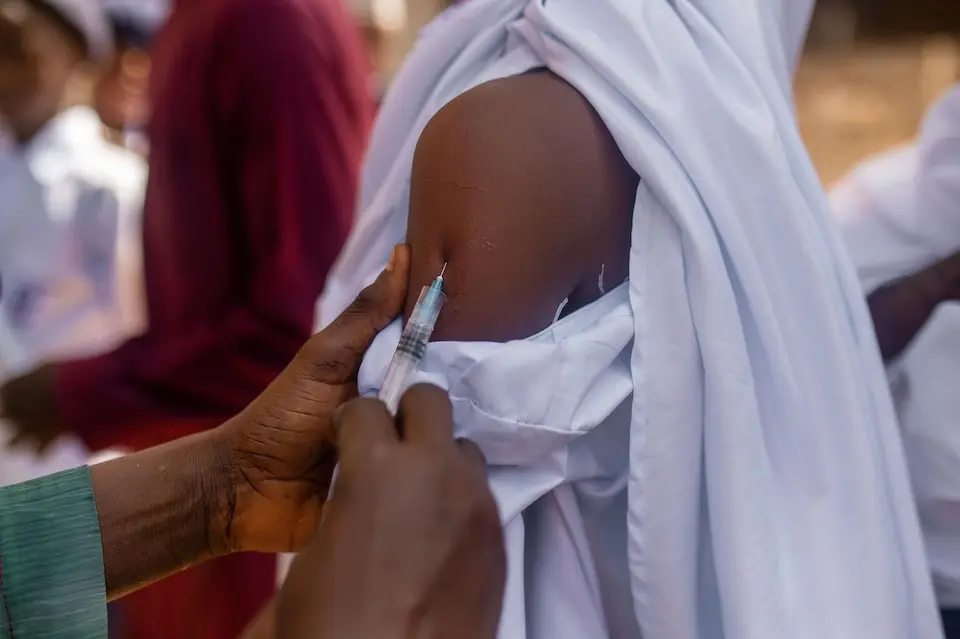
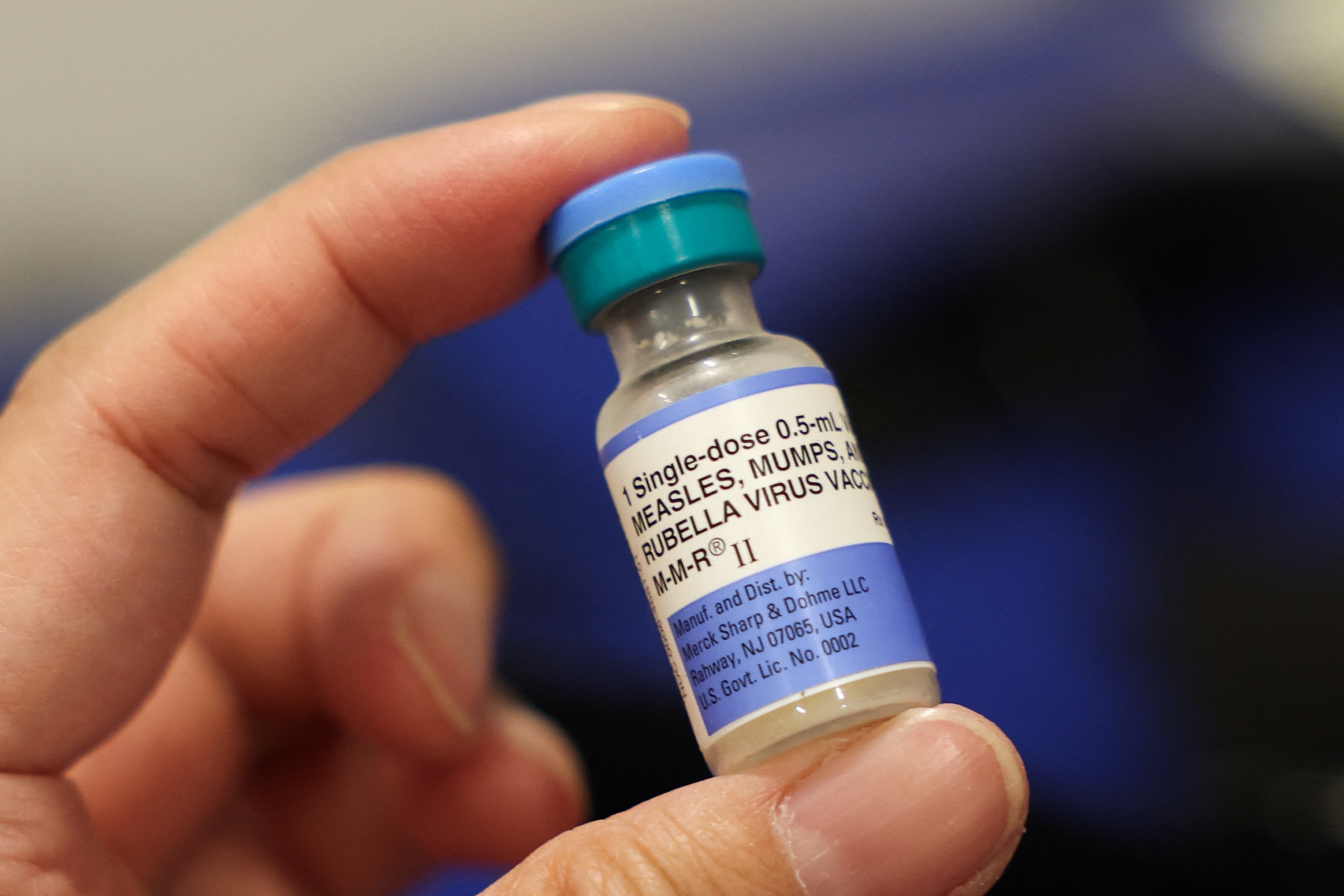
The MMR vaccine works. Two doses, usually given at 12 to 15 months and again at 4 to 6 years, are about 97 percent effective at preventing measles. If you are not sure whether you or your children are fully protected, check your records or ask your doctor. Adults who have never had two documented doses can be vaccinated too.
Traveling with a baby? Infants aged 6 to 11 months who are going abroad can get an early MMR dose. It does not count toward the routine two-dose series, so they will still need their regular shots later, but it offers important protection in the meantime.
Know the signs. Measles usually starts with a high fever, cough, runny nose, and red, watery eyes, often several days before the telltale rash appears. If you suspect measles, call your doctor or clinic before showing up, so staff can protect other patients in the waiting room.
Do not wait in an emergency. Trouble breathing, confusion, or seizures in someone with measles symptoms require emergency care immediately.
If the United States does lose its status, the road back will be long. A country cannot regain elimination until it goes at least 12 consecutive months without endemic spread, backed by strong surveillance and vaccination data.
The Verdict Is Coming
By the end of this week, the PAHO commission will hand its recommendations to Director Barbosa. Within days, Americans will learn whether their country has officially slipped back into the ranks of nations where measles is a homegrown threat rather than an imported rarity.
Either way, the doctors, nurses and epidemiologists on the front lines already know what the verdict cannot change: a disease that America once conquered is spreading through its schools, churches and neighborhoods again, and children are paying the price.
For a generation that grew up believing measles was a disease of the history books, the next few days could deliver a harsh reminder. The virus never really left the world. It was simply waiting for a door to open. And in 2025 and 2026, America opened it.
Published By | Features Editor