Written By | Health News Agencies
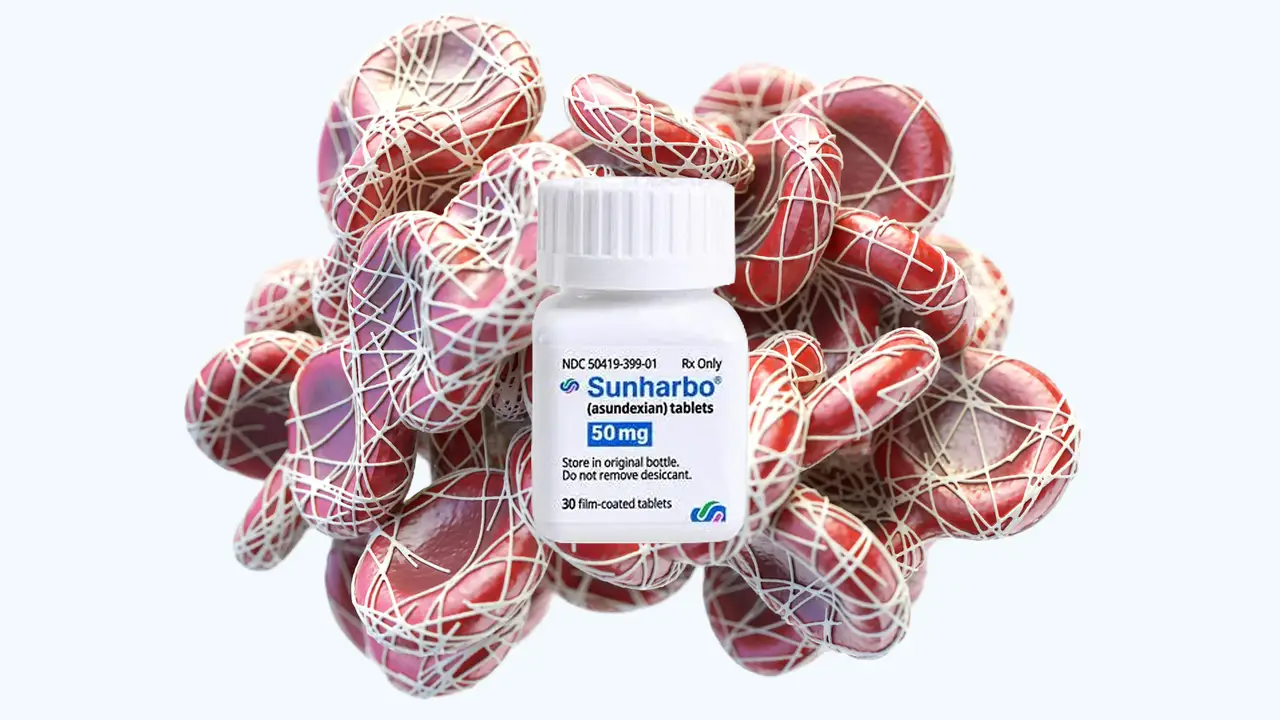
Bayer's Sunharbo (asundexian) cut repeat strokes by 26 percent in a trial of more than 12,000 patients without raising the risk of major bleeding
NEW YORK
For decades, doctors trying to prevent strokes have faced a brutal trade-off. Thin the blood enough to stop dangerous clots, and you risk causing dangerous bleeding. Hold back, and the clots win.
This week, regulators gave doctors a new weapon designed to break that trade-off.
On Monday, November 9, the U.S. Food and Drug Administration approved Sunharbo (asundexian), a once-daily 50-milligram tablet from German drugmaker Bayer, to reduce the risk of stroke in adults who have recently suffered a certain type of ischemic stroke or a high-risk "mini-stroke," known as a transient ischemic attack (TIA). It is the first approved drug in an entirely new class of medicines called Factor XIa inhibitors.
"This is an important advance in secondary stroke prevention," Dr. Ashkan Shoamanesh of the Population Health Research Institute at McMaster University in Canada, a co-principal investigator of the pivotal trial, told the cardiology news site TCTMD. Asundexian, he said, "offers physicians a new opportunity to provide greater protection against recurrent stroke."
A Second Stroke: The Danger Nobody Talks About
Stroke is one of America's biggest killers and a leading cause of long-term disability. More than 795,000 people in the United States have a stroke every year, and about a quarter of them have already had one before.
That is the cruel arithmetic of stroke: surviving the first one puts you at higher risk of another, and a second stroke is often more disabling than the first. Today, most survivors of the most common type of stroke are sent home on antiplatelet drugs such as aspirin or clopidogrel, which make blood cells called platelets less sticky. They help, but many patients still go on to have another stroke.
Stronger blood thinners have long been tempting, but they come with the risk of bleeding, including bleeding inside the brain, which is exactly what doctors are trying to avoid.
How the New Pill Works
To understand why scientists are so excited, you need to know a little about how blood clots.
Clotting is a chain reaction, a cascade of proteins called "factors" that activate one another in sequence. Older blood thinners such as warfarin, and the newer pills like Bayer's own blockbuster Xarelto (rivaroxaban), hit central links in that chain. That makes them powerful clot-stoppers, but it also blunts the body's ability to seal a cut or a burst blood vessel.
Factor XI is different. It plays only a minor role in the normal sealing of damaged blood vessels, but it acts like an amplifier that turbo-charges the clotting cascade once it gets going, the kind of runaway clotting that can block an artery in the brain. Researchers were inspired in part by people born with a natural deficiency of Factor XI, who appear to have lower rates of stroke and blood clots without suffering severe spontaneous bleeding.
The theory behind asundexian is simple: turn down the amplifier, leave the basic repair system largely intact. Prevent the harmful clots while preserving the body's ability to stop dangerous bleeding.
The Trial That Made the Case
The approval rests on a large global study called OCEANIC-STROKE, whose main results were presented at the International Stroke Conference in February 2026.
The trial enrolled more than 12,000 adults who had either suffered a TIA, sometimes called a "warning stroke," or an ischemic stroke caused by a clot that did not originate in the heart. Every participant received standard antiplatelet therapy. On top of that, roughly half took a daily asundexian tablet and half took a placebo.
The results, according to Bayer and TCTMD:
Asundexian cut the risk of ischemic stroke by a relative 26 percent compared with placebo over two years, an absolute reduction of 2.2 percentage points.
There was no increase in major bleeding as measured by the standard ISTH definition used in blood-thinner trials.
Subanalyses suggested that when strokes did happen in the asundexian group, they tended to be less severe, and that the benefit was consistent across patients with different levels of baseline vascular risk.
There were trade-offs. The most common side effect was diarrhea, reported in 3.4 percent of patients on asundexian versus 2.8 percent on placebo. Gastrointestinal bleeding was somewhat more frequent, at 2.7 versus 2.1 events per 100 patient-years. Elevated liver enzymes were also seen, though Bayer says about three-quarters of those cases were mild.
A Comeback Story
The win is all the sweeter for Bayer because asundexian nearly became a cautionary tale.
In November 2023, Bayer halted a major late-stage trial called OCEANIC-AF, which was testing asundexian against the established blood thinner apixaban (Eliquis) in patients with atrial fibrillation, an irregular heart rhythm that causes clots to form in the heart. The study was stopped early because asundexian was not working as well as the older drug. Investors took fright, and many observers wrote off the entire Factor XI approach.
Bayer pressed on with the stroke trial, a different group of patients whose strokes are not caused by clots from the heart. That bet has now paid off. Reflecting the history, the new approval is specifically for non-cardioembolic stroke and high-risk TIA, and the drug is not approved for patients with atrial fibrillation.
The stakes for Bayer are enormous. Xarelto, the company's previous anticoagulant star, is facing generic competition: its sales were 738 million euros (about $860 million) in the first six months of 2026, a drop of roughly 43 percent from a year earlier, according to BioPharma Dive.
Sebastian Guth, chief operating officer of Bayer Pharmaceuticals, said the drug offers "very significant utility for the patients they serve," speaking of the stroke specialists expected to be first to prescribe it.
Who Can, and Cannot, Take It
According to the label details reported by TCTMD, Sunharbo is approved for adults with a recent non-cardioembolic ischemic stroke of mild-to-moderate severity (an NIH Stroke Scale score of 15 or less) or a high-risk TIA, taken alongside antiplatelet therapy.
It is not recommended for patients taking drugs that are combined P-glycoprotein and strong CYP3A4 inducers, which can interfere with how the body processes asundexian, or for people with moderate or severe liver impairment. Shoamanesh noted it would also be unsuitable for patients with end-stage kidney disease.
The drug was approved in China last month and is under review by regulators in Europe and Japan.
The $748 Question
There is a catch, and it is a big one for patients: cost.
A Bayer spokesperson said the list price for a 30-day supply is $748.50, which works out to roughly $9,000 a year at list price. Bayer says the actual amount patients pay will vary depending on their health plan, and some eligible patients may be able to get the drug free through the Bayer US Patient Assistance Foundation. The company says it has a "very robust" patient support program.
Even so, doctors expect insurance hurdles. Bayer itself has acknowledged access as the main potential "limiting factor." Dr. Cheryl Bushnell of Wake Forest University School of Medicine told TCTMD earlier, discussing the drug's prospects, that cost is "probably going to be the main limiting factor."
Shoamanesh agreed that new drug classes often face what he called initial inertia, reflecting doctors' unfamiliarity with them, safety questions, prescribing complexity, and cost and reimbursement barriers. His priorities now, he said, are getting the findings written into treatment guidelines, educating physicians, and securing fair reimbursement so patients can actually get the drug.
Expert Perspective: A Race Is On
Asundexian may be first, but it will not be alone for long. Factor XI has become one of the hottest targets in cardiovascular medicine.
Bristol Myers Squibb and Johnson & Johnson are developing milvexian, another oral Factor XIa inhibitor. It has hit several clinical setbacks, but two large trials, one in stroke and one in atrial fibrillation, are ongoing, and analysts at Leerink Partners still model $2.5 billion in risk-adjusted sales by 2032. Novartis is developing an injectable antibody it acquired in its $925 million purchase of Anthos Therapeutics in 2025, and the newly public City Therapeutics has an RNA-based candidate in early testing.
For stroke specialists, the arrival of an entirely new mechanism after years of incremental changes is a genuine moment. Stroke neurologists, who often see patients first, are expected to drive the initial rollout, with primary care doctors becoming more important over time. Stefan Oelrich, head of Bayer's pharmaceuticals division, predicted on an earnings call in August that physicians would "broadly welcome" Sunharbo.
What This Means for You
If you or a loved one has had an ischemic stroke or a TIA, this approval could matter to you. Here is what to know.
Ask the right question. Not every stroke is eligible. Sunharbo is for strokes caused by clots that did not come from the heart, and for high-risk TIAs. Ask your neurologist what caused your stroke and whether you fit the approved group.
It is an add-on, not a replacement. In the trial, asundexian was taken on top of standard antiplatelet therapy. Do not stop or change any of your current medicines without talking to your doctor.
Atrial fibrillation patients are not included. If your stroke risk comes from an irregular heartbeat, this drug is not approved for you, and your existing anticoagulant remains the standard of care.
Check your coverage. With a list price near $750 a month, call your insurer and ask whether the drug is covered and what your share will be, and ask about Bayer's patient assistance program if you are uninsured or underinsured.
Know the warning signs. Whatever medicine you take, act fast if you notice a drooping face, arm weakness, or slurred speech. Call 911 immediately. Every minute counts.
The Bottom Line
For anyone who has survived a stroke, the fear of the next one never quite goes away. Sunharbo will not erase that fear, but it offers something stroke medicine has not had in years: a genuinely new way to lower the odds, without the bleeding penalty that has haunted blood thinners for generations.
The science has delivered. Now comes the harder part, getting the pill from the pharmacy shelf into the hands of the patients who need it, at a price they can afford.