Written By | International News Agencies
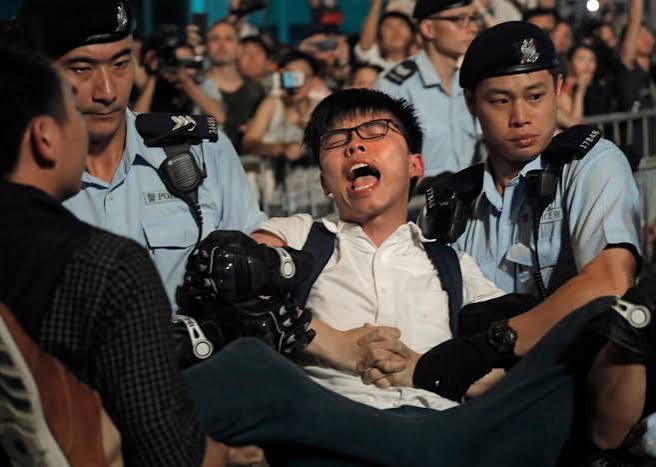
Hong Kong's High Court has sentenced pro-democracy activist Joshua Wong to a further ten years in prison for conspiring to collude with foreign forces under the city's National Security Law
World Politics
Overview
Hong Kong's High Court has sentenced pro-democracy activist Joshua Wong to a further ten years in prison for conspiring to collude with foreign forces under the city's National Security Law. The ruling, reported on November 4 and 5, 2026, is the second national security case in which Wong has been convicted, and it reshapes what had been an imminent release. Wong, now 30, was serving a four-year-and-eight-month sentence in the city's largest national security case and had been expected to walk free in early 2027. Under the new sentence he is now not expected to be released until 2036, when he would be about 40.
The decision drew swift condemnation from exiled activists, human rights groups, Taiwan's Mainland Affairs Council and a senior United States congressman, while Hong Kong police and the authorities in Beijing and Hong Kong defended it as a lawful response to a serious offence. The case is a vivid illustration of how the 2020 security law is used not only to prosecute street protest but also to criminalize international advocacy, and it lands at a moment when relations between China and the West are already strained on trade and security.
Background: From Teenage Activist to Repeat Prisoner
Joshua Wong rose to international prominence as a teenager. He co-founded the student group Scholarism and was a leading figure in the 2014 Umbrella Movement, the mass sit-ins that demanded genuine universal suffrage for the election of Hong Kong's chief executive. His story was told in a 2017 Netflix documentary, and he became one of the most recognizable faces of Hong Kong's democracy movement abroad. He has been jailed repeatedly since 2017, in connection with various protest-related offences, according to coverage of the case.
The National Security Law, imposed by Beijing in June 2020 after the mass protests of 2019, criminalizes secession, subversion, terrorism and collusion with foreign forces. Critics say its definitions are broad and its procedures, including restrictions on bail and the use of specially designated judges, tilt the system toward conviction. The government says the law restored stability and that prosecutions are based on evidence, not political views.
Wong was among 45 opposition politicians and activists convicted in 2024 of conspiracy to commit subversion over an unofficial democratic primary held in 2020. That case produced the four-year-and-eight-month term he was serving when the second charge, filed in 2025, reached sentencing. Reports say only about two months of that earlier term remained, and the court ordered that remaining time to run concurrently with the new sentence.
The Case and the Ruling
Wong pleaded guilty in September to conspiracy to endanger national security with foreign or external forces. According to prosecutors, between July 1 and November 23, 2020, he conspired with exiled activist Nathan Law and others to ask foreign governments or organizations to impose sanctions, blockades or other measures regarded as hostile to China and Hong Kong. Prosecutors argued that Wong and Law had agreed around 2016 to lobby internationally for democratic self-determination, that after the security law took effect Law met foreign politicians and ran petition drives, and that Wong supported the effort from Hong Kong by sharing content through foreign media and social media and drawing the attention of foreign governments.
The sentencing judge, identified in reports as Tam of the High Court (outlets differ on the full rendering of his name), described the offence as serious and said Wong was a mastermind of the conspiracy alongside Law. He began from a starting point of 13 years, which the law sets for offences of this gravity, and reduced it to ten years in recognition of the guilty plea and mitigation. In his reasoning the judge pointed to real-world measures of the kind the pair had sought, including the United States' revocation of Hong Kong's special trading treatment and sanctions on Chinese and Hong Kong officials, and said the punishment had to fit the gravity of the crime and serve as a general deterrent. One report quotes him saying that the punishment must fit the gravity of the crime committed.
The defence, led by lawyer Derek Chan, had sought a term of roughly four and a half years and asked that Wong be given some hope of caring for his parents after release. The court rejected the argument that his role was limited. Reports differ slightly on the date of the hearing, with some outlets dating the sentencing to Wednesday, November 4 and one noting a reference to Thursday, so the exact day should be treated with caution. The release date also appears in different forms: Wong had been expected to leave prison in January, which one report places in 2027, and the new term pushes that to 2036.
Wong's Own Words
From prison, Wong made a statement to the court that is notable for its tone. He said his activism was never driven by hatred and that he bears no resentment toward the Chinese or Hong Kong governments. He said he never advocated Hong Kong independence and had believed he was acting lawfully, but had later come to realize his judgment was wrong. He added that he had taken university courses and read hundreds of books while in custody. Such statements are common in national security mitigation, and observers outside Hong Kong are likely to read them as made under duress, while the authorities are likely to cite them as evidence of reflection. Hong Kong police national security chief Steve Li welcomed the ruling and said he hoped Wong would reflect on his wrongdoing.
Reactions
Reaction from outside Hong Kong was sharply critical. Wang Dan, the Tiananmen Square student leader now living in exile in the United States, called the sentence utterly shameless and said the real culprits were the authorities who pushed young people onto the streets. Phil Robertson of Asia Human Rights and Labour Advocates said that meetings, media work and petitions should not be criminalized and noted the irony of China sentencing Wong for seeking international solidarity. Eric Lai of Georgetown's Center for Asian Law said national security charges can be repeatedly weaponized to keep a political prisoner jailed.
In Washington, Representative John Moolenaar, who chairs the House Select Committee on China, called the charges baseless, argued that Wong pleaded guilty because of the erosion of Hong Kong's judicial independence, and demanded his immediate release. Taiwan's Mainland Affairs Council condemned the sentence as political prosecution and called for the release of those detained for exercising basic rights. The sources reviewed for this article did not report a response from the British government or the United Nations, and neither did they report an appeal, so those questions remain open.
Within Hong Kong, the picture is harder to read. Supporters in court included former Scholarism member Tiffany Chin, who was reported in tears, and others who said they needed time to process the ruling. One resident told a reporter that Wong should not have spent a single day in wrongful imprisonment. Beijing and Hong Kong officials, meanwhile, maintain that enforcement is based on evidence and law, unrelated to political views, and necessary to keep the city stable after 2019. Beijing regards Wong as an anti-China figure who supports independence, a characterization he rejects.
Why the Case Matters
The legal significance lies in the theory of the offence. Wong was not accused of violence or of organizing a protest in this case; he was convicted of seeking sanctions and other measures from foreign governments, largely through media engagement and advocacy. That interpretation turns lobbying of foreign legislatures, an activity routine in democracies, into a crime carrying a decade or more in prison. The judge's explicit reliance on subsequent American policy as proof of harm suggests that prosecutors can point to the eventual outcome of advocacy as evidence of its seriousness.
The case also shows how successive prosecutions can extend a prisoner's detention. Wong's earlier sentence was nearly complete, and the second conviction, built on conduct from the same year as the primary, resets the clock. Georgetown's Lai described exactly this risk. For other detained activists and for those who have left Hong Kong, including Nathan Law, whom police publicly urged to return and surrender, the message is that advocacy abroad does not place a person beyond reach.
The ruling also arrives as Hong Kong tries to market itself as a stable international financial centre. The city has argued that the security law has allowed business to flourish; its critics counter that a string of high-profile sentences, including those handed to the leaders of the now-dissolved Hong Kong Alliance in September, undermines confidence in the rule of law. Each new case gives Western legislators grounds to press for additional measures, which in turn feeds the narrative that prosecutors cite about foreign hostility.
What Comes Next
Several questions will determine how far the story travels. The first is whether Wong appeals; his guilty plea limits the grounds, and the sources reviewed did not mention an appeal. The second is whether Western governments move beyond statements. The United States has already used sanctions and trade measures against Hong Kong officials, and congressional critics such as Moolenaar are likely to push for more, though the current administration's priorities in its dealings with Beijing are crowded by trade and security issues. The third is the position of Britain and the European Union, which were not reported to have responded in the material reviewed.
For Hong Kong, the path ahead is likely to involve further national security cases and continued pressure on those abroad. The police appeal to Nathan Law signals that exiled activists remain targets. For Wong, the immediate future is a decade in custody, with release at about 40 years old, and the long-term question of whether his example continues to resonate with a generation of Hong Kongers who have few avenues left for open political expression.