Written By | International News Agencies
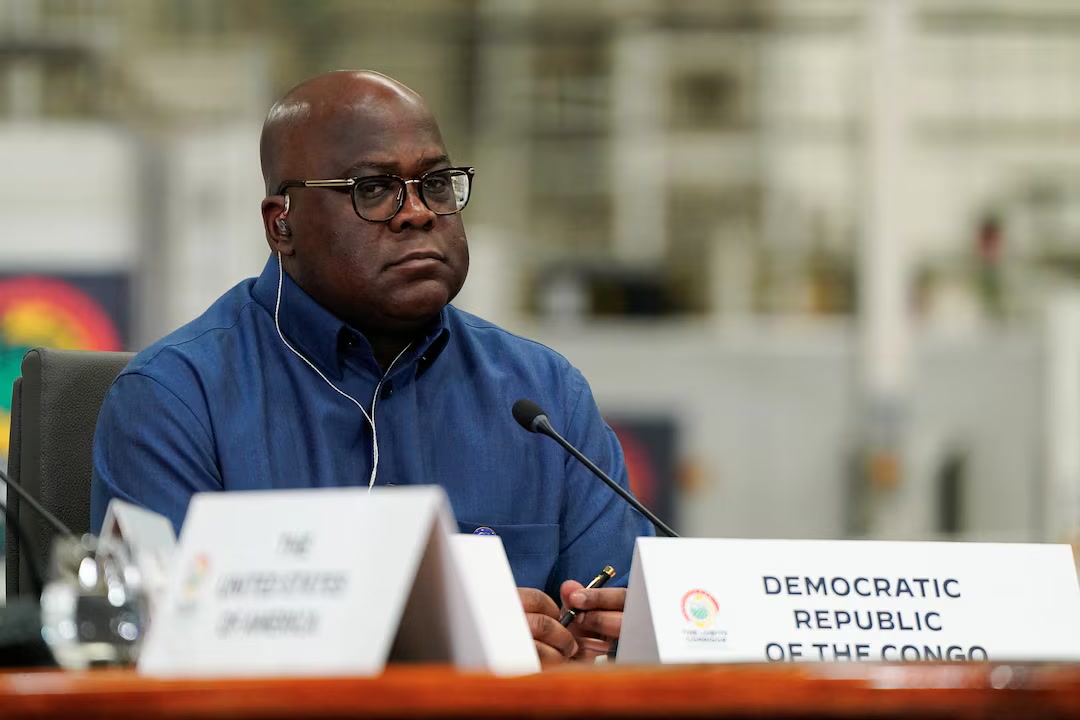
President Félix Tshisekedi of the Democratic Republic of Congo has signed into law a measure that eases the rules for holding a constitutional referendum
KINSHASA
President Félix Tshisekedi of the Democratic Republic of Congo has signed into law a measure that eases the rules for holding a constitutional referendum, a step his opponents say is designed to clear the way for him to stay in office beyond the end of his second and final term in 2028. The law was signed on Monday and announced on state television late on Tuesday, Reuters reported. It arrives as the country is fighting a rebel movement now led by Tshisekedi's own predecessor, Joseph Kabila, and as an Ebuteli analyst warned this week that holding elections in 2028 is already hard to envision.
The development matters now because it converts a long-running suspicion into a concrete legal instrument. Tshisekedi has said he has not planned to seek a third term, but he has also said he would accept one. The new law does not set a referendum date, and it does not itself change the constitution. What it does is build the machinery by which the constitution could be rewritten.
What the law does
According to Reuters, the legislation, approved by parliament last month, sets out how a new constitution could be drafted and put to a referendum, and how existing constitutional provisions could be changed. Reuters reported that the law has fuelled fears that a referendum could be used to scrap the two-term presidential limit and alter the length of presidential terms. Both are protected from revision by parliament under the current constitution, which is why a referendum route matters to critics. No date has been announced for a possible vote.
Jean-Baptiste Kasekwa, a member of the newly formed C64 coalition of the main opposition parties, told AFP that the law aims to "grant an unlimited number of terms" by unlocking certain articles of the constitution. He said Tshisekedi "openly declares that he wants to remain in power until someone strong enough can drive him out." The C64 platform has condemned "any seizure of power by force" as well as "any change to the constitution, any third term, any postponement of the elections scheduled for 2028," Africanews reported.
Background: a president, a limit and a promise
Tshisekedi, 63, has been in power since 2019, and under the current constitution he must step down at the end of his second five-year term at the end of 2028, according to AFP reporting carried by Africanews. At a rare news conference in early May he said he had not planned to seek a third term but added: "If people want me to have a third term, I will accept." Nation Africa, citing Reuters reporting, noted that in the same period Tshisekedi said elections scheduled for late 2028 might not take place as planned if the conflict in eastern Congo continues and territories in North and South Kivu remain under rebel control.
The opposition, weakened and fragmented after Tshisekedi's landslide victory in the 2023 election, has struggled to rally large crowds, AFP reported. Demonstrations against what protesters call a "constitutional coup" were nonetheless held in June and September in Kinshasa and other cities. The United Nations said at least one person was killed at the June protests in Kinshasa, while the opposition said one of its supporters was killed in September. Tshisekedi has also offered a national dialogue, which the main opposition parties have rejected.
The war in the east, and a rebel ex-president
The legal fight is unfolding against an armed conflict that gives each side a different argument. AFP reported that the Rwanda-backed M23 group seized swathes of eastern Congo, including the provincial capitals of North and South Kivu, in a lightning offensive early last year. The front line has been relatively stable since then, with several mediation efforts under way but none having ended the fighting.
The picture grew more complicated last month. Kabila, who ruled from 2001 to 2019, became head of the renamed eastern rebellion, the Front for the Refoundation of the Nation (FRN), which has taken over from M23, according to AFP. Kabila has criticized what he called the government's "stubborn insistence" on changing the constitution and has vowed to "put an end to tyranny by all means, including force." AFP noted that Kabila, 55, was sentenced to death in absentia just over a year ago for treason on the grounds that he colluded with M23, and that he is subject to US sanctions over financial and political support for the group. On Nov. 10, Africanews reported that the FRN has intensified its offensive, putting the Congolese army under pressure on multiple fronts.
This overlap creates a trap for the opposition. Diplomatic sources and observers have expressed fears that any political opposition could be equated with support for Kabila's rebellion, AFP reported. Opposition parties have sought to distance themselves from the former president, and the C64's statement condemning any seizure of power by force reads in part as an effort to draw that line. The result is that the government's most vocal domestic critics must oppose a constitutional change while also disowning the armed movement that opposes the same change.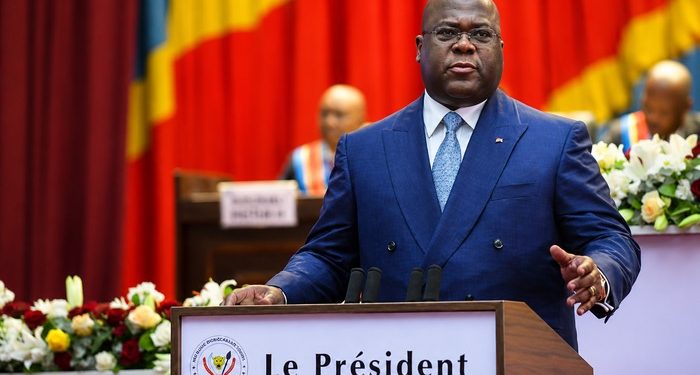
A crisis on several fronts
The political timetable also competes with a public-health emergency. MSF has warned that funds meant to fight the Ebola outbreak in the DRC are not reaching frontline workers and affected communities, allAfrica reported on Friday. According to that report, more than 5,400 people have died and 11,000 have been infected since the outbreak was declared in May, and Africa CDC has raised concerns that $700 million of the $962 million disbursed to response organizations remains unaccounted for. In late October the United States imposed sanctions on the Rwandan defense ministry over links to Congolese rebels, Africanews reported, a sign that outside pressure on the conflict is intensifying even as mediation stalls.
For a government facing an armed insurgency, an Ebola epidemic and a hostile opposition, the argument for stability and continuity is an easy one to make. It is also the argument that critics say may be used to justify delaying elections.
Analysis: room to maneuver
Tresor Kibangula, a researcher at the Congolese institute Ebuteli, offered one of the sharper assessments of what the law means. "I think this is an announcement or a decision that does not help to ease tensions. On the contrary, it adds fuel to the fire of the government's critics," he said, according to Africanews. He argued that opponents "will now have an argument to say, 'Look, this is no longer just an intention, the current government really wants to cling to power.'" He also said that by enacting the law, Tshisekedi "grants himself additional room for manoeuvre among the options he already has on the table to stay in power."
Kibangula's final point may matter most. "In today's security context," he said, "it is difficult to envision holding elections in 2028." That statement describes the second path to an extended mandate that critics fear: not a referendum that scraps the term limit, but a delay of the vote on security grounds. The two routes are not mutually exclusive. A government could hold a referendum to rewrite the rules and cite the war to justify timing, or it could postpone elections while the constitutional question remains open.
Three features of the situation make a quick resolution unlikely. First, the law is permissive rather than prescriptive. It makes a referendum easier without scheduling one, which allows the president to keep his options open and to deny any decision has been made. Second, the opposition is fragmented and, as AFP noted, has struggled to turn street protests into large turnouts. Third, the war has changed the political calculation. If the conflict continues, the government can argue that elections are impractical; if it ends, the argument for delay weakens, but so does the president's pretext for emergency measures.
What to watch next
Several markers will show where the process is heading. The first is whether the government announces a timetable or a drafting commission for a new constitution, which would signal a shift from enabling legislation to action. The second is how the C64 coalition responds: whether it calls another round of street protests, challenges the law before the Constitutional Court, or accepts a version of the national dialogue Tshisekedi has offered. The third is the battlefield. A further advance by the FRN would strengthen the case for security-driven delay, while a negotiated settlement would remove it. The fourth is outside reaction. Regional organizations, and the Western governments, including the United States, that have engaged on the Rwanda-DRC track, may have to decide how much weight to give a constitutional process that critics call a personal power grab.
For now, what is established is limited and clear. The law exists. A referendum has not been called. The president says he will accept a third term if the people want it. His opponents say they will resist any change, and an armed former president says he will end what he calls tyranny by force. The coming months will test whether Congolese politics can settle this dispute at the ballot box before the battlefield settles it first.