Economic & Social Transformation
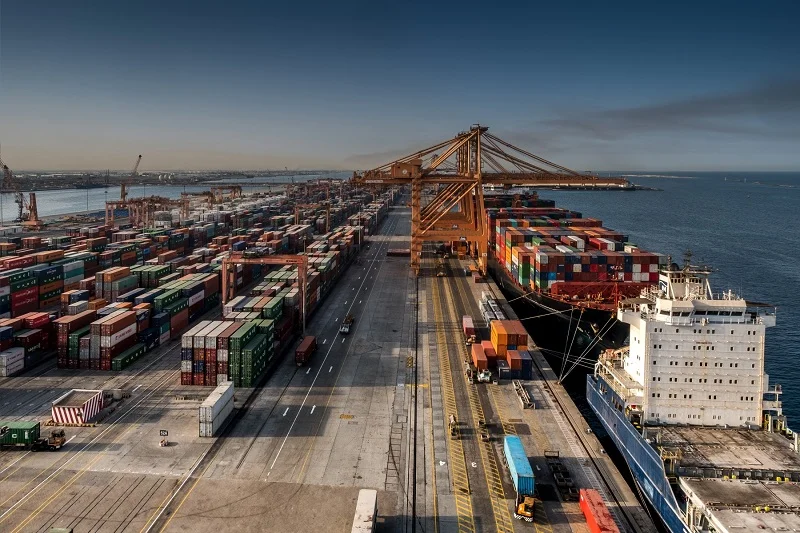
For most of the past decade, the story of African ports was told in days lost. Ships queued for weeks off Durban and Dar es Salaam, cranes broke down faster than they could be repaired, and importers in landlocked Zambia, Rwanda and the Democratic Republic of Congo paid a congestion premium that showed up in the price of fertiliser, fuel and phones. In 2025 and 2026 that story began to change, and quickly. Waiting times have collapsed at several of the continent's busiest gateways, throughput records have fallen, and the World Bank's latest port index named an African port the most improved in the world.
The common thread is not a single technology or a single investor. It is a governance choice: governments that long insisted on running terminals through state-owned port authorities are handing day-to-day operations to private and foreign operators under long concessions. The efficiency dividend is now visible. The harder question, which this article examines, is who captures that dividend — shippers and consumers, the state, workers, or the concessionaires themselves — and whether the gains survive once the ships reach the land side of the quay.
Durban: From the World's Worst to Its Most Improved
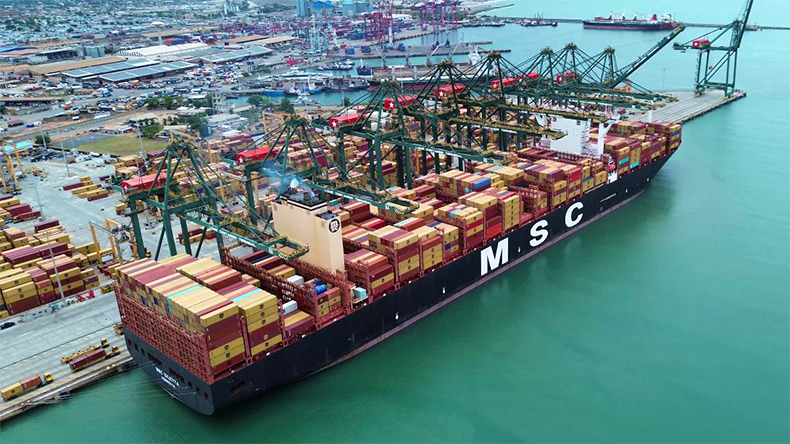
South Africa offers the clearest before-and-after. In the World Bank's Container Port Performance Index (CPPI) for 2025, released in June 2026, Durban's score jumped by 479 points, from -721 in 2024 to -242, the largest single-year gain of any of the roughly 400 ports assessed. The Bank linked the improvement to shorter vessel waiting times — reporting cited the queue of waiting ships falling from about 20 to effectively zero — and berth utilisation rising from 52% to 76%. Ngqura, near Gqeberha, gained 165 points to sit among the five most improved ports globally.
The structural shift behind those numbers is the 25-year partnership between Transnet and the Philippine operator International Container Terminal Services Inc. (ICTSI) for Durban Container Terminal Pier 2, the country's largest container facility, which reportedly handles around 70% of Durban's throughput and more than 40% of South Africa's container volumes. The concession took effect on 1 January 2026. ICTSI has committed roughly R11 billion to raise Pier 2 capacity from 2 million to 2.8 million twenty-foot equivalent units (TEUs) and targets gross crane moves per hour rising from 18 to 28.
The financial effect on the state operator has been striking. Transnet's annual report, published on 10 September 2026, showed a return to profit for the first time in four years, driven largely by the sale of a 49.999% stake in the terminal — now trading as Durban Gateway Terminal — for R10.5 billion, which generated a profit on disposal of about R12.5 billion. Operationally, Transnet's eight commercial ports handled about 304 million tonnes in the 2025/26 financial year, their best performance in 15 years, with container volumes up 7.1% and citrus up 22%.
Two caveats matter. First, a one-off asset sale flatters the income statement; it is not recurring earnings. Second, the transition has not been smooth: ICTSI's initial six-month handover period was extended to the end of December 2026 after operational setbacks. And South Africa's improvement is uneven — Cape Town ranked last of the 400 ports in the same CPPI edition, a reminder that one concession does not reform a system.
Dar es Salaam and Mombasa: East Africa's Gateway Rivalry
In Tanzania, DP World took over operations at Dar es Salaam's container berths in April 2024 under a controversial agreement that triggered parliamentary and public protest over sovereignty. Two years on, the government and Tanzania Ports Authority (TPA) point to results: average anchorage waiting reportedly fell from 46 days in May 2024 to around seven days overall, with container-ship turnaround halved from roughly seven days to three, and DP World claims discharge times have been cut by more than 90%. TPA data show the port handled 13.97 million tonnes between July and November 2025, against 10.4 million tonnes a year earlier. These figures are self-reported by the operator and the authority and have not been independently audited, but shippers serving Zambia and the DRC have broadly corroborated faster clearance.
Kenya has so far kept Mombasa under the Kenya Ports Authority (KPA) while modernising it. The port handled a record 45.45 million tonnes in 2025 and 2.11 million TEUs, up 5.5% from 2.00 million in 2024. Transit cargo — the regional business most exposed to competition from Dar es Salaam — rose 19.5% to 15.88 million tonnes, and vessel calls rose to 1,995 from 1,873. Lamu, long dismissed as a white elephant, handled 799,161 tonnes against just 74,380 tonnes in 2024. KPA's next phase focuses on berths 19B, 23 and 24, a new terminal operating system and gate automation.
The rivalry is healthy for the region's landlocked economies. When one gateway improves, the other is forced to respond, and transit tariffs and dwell times become competitive variables rather than fixed costs. The risk is duplication: both countries are financing standard-gauge rail and port capacity on the assumption of winning the same hinterland cargo.
West Africa: New Capacity Meets Old Bottlenecks
Nigeria's Lekki Deep Sea Port, a roughly US$1.5 billion project operated by a CMA CGM-led consortium, has an installed capacity of about 1.2 million TEUs. In July 2025 it was reported to be running at around 20% of projected throughput; later reporting put utilisation closer to half. According to Nairametrics' analysis of Nigerian Ports Authority data, Lekki accounted for about 40.6% of national cargo throughput, while the country's ports handled 32.38 million tonnes in the first quarter of 2026. Lekki has also moved more than 40,000 TEUs of transhipment cargo to neighbouring West African ports since mid-2023. The constraint is now the land side: road access along the Lekki-Epe corridor and the absence of a functioning rail link limit how fast cargo can leave the quay.
In Ghana, Meridian Port Services (MPS), the Tema terminal joint venture of APM Terminals, Africa Global Logistics (formerly Bolloré Africa Logistics) and the Ghana Ports and Harbours Authority, passed 2 million TEUs for the first time on 18 November 2025. GPHA data showed Tema handling 1,299,873 TEUs between January and August 2025, up from 1,053,037 in the same period of 2024 — growth of more than 23%.
Tanger Med: The Benchmark
North Africa shows what scale looks like. The Tanger Med port complex in Morocco handled 11,106,164 TEUs in 2025, up 8.4% on 2024, aided by the latest extension of the APM Terminals-operated TC4 terminal, and ranked 17th globally by container traffic on Alphaliner data. Total tonnage reached 161 million tonnes, and group revenue was reported at about MAD 13 billion, up 16%. Tanger Med's model combines a state-owned authority with multiple private terminal operators competing inside one complex, integrated industrial and free zones, and a transhipment role on the Strait of Gibraltar. It is a hybrid, not a privatisation.

Who Captures the Efficiency Dividend?
UNCTAD's Review of Maritime Transport 2025 notes that public-private partnerships in ports tend to improve the clearance of vessels and cargo, and that digital tools offer least-developed countries significant room for efficiency gains. The African evidence of 2025–26 supports that. But faster quays are a means, not an end. Four distributional questions will determine whether the concession wave becomes broad-based development:
- Tariffs: Lower waiting times eliminate congestion surcharges, but concessionaires recover investment through handling tariffs. Regulators need independent tariff-setting powers and published benchmarks, or efficiency gains will accrue to operators rather than importers.
- Fiscal terms: Up-front concession fees, such as Transnet's R10.5 billion, can repair balance sheets, but a 25-year asset is being monetised once. Revenue-sharing and royalty terms over the life of a concession matter more than the headline price.
- Labour: Automation and productivity targets — Durban's 18-to-28 crane moves, Mombasa's gate automation — change job content. Skills transfer and redeployment commitments should be written into concession agreements and monitored publicly.
- The hinterland: A ship turned around in three days gains little if containers then wait a week for a truck or a train. Durban's gains depend on Transnet's freight-rail recovery; Lekki's on road and rail; Dar es Salaam's on the standard-gauge railway to Lake Tanganyika.
Outlook
The next twelve months will test the model. Durban's extended transition ends in December 2026, and the performance of a fully privately managed Pier 2 will appear in the 2026 CPPI. Kenya faces a choice about whether to bring private operators into Mombasa's new berths. Nigeria needs rail into Lekki to justify its capacity. Across the continent, the opportunity is real: if the African Continental Free Trade Area is to raise intra-African trade, ports must work as connectors, not choke points. The concession wave has shown that African ports can move fast. Whether the gains are shared fairly is now a question for regulators, not engineers.
Published By | Business News Editor