Written By |
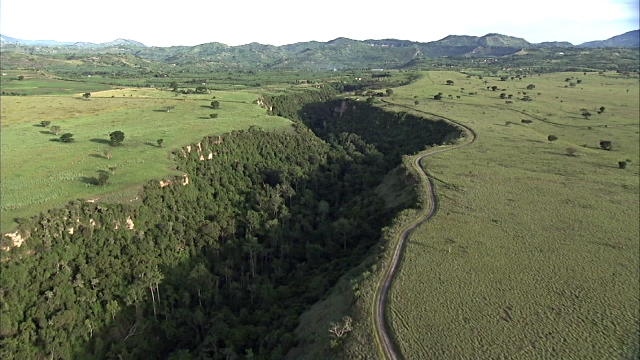
Rift valley
Tourism
The road drops out of the Kichwamba escarpment in long, dust-colored switchbacks, and then, all at once, the floor of the Great Rift Valley opens beneath you: a flat green immensity stitched with crater lakes, threaded by a silver channel, grazed by buffalo herds that from this height look like scattered pepper. This is Queen Elizabeth National Park, and the view from the top of the escarpment has been stopping traffic — literally, there's a pullout for it — since long before "safari" became a marketing word. Below, somewhere among the euphorbia trees and the elephant grass, a leopard is probably watching the road too.
Queen Elizabeth is, by visitor numbers, Uganda's most popular national park, and it earns that popularity honestly. Spread across nearly 2,000 square kilometers of western Uganda between Lakes George and Edward, it is less a single park than a patchwork of ecosystems stapled together by the Rift: open savanna, papyrus swamp, tropical forest, crater fields, and one of the most productive wildlife waterways on the continent. It was gazetted in 1952 as Kazinga National Park before being renamed for the British monarch's 1954 visit, and in 1967 it absorbed the Ishasha sector to the south — the stretch of riverine forest and fig trees that would eventually make the park famous for a very specific reason: lions that climb.
The Channel, the Gorge, and the Lions in the Trees
If Queen Elizabeth has a heart, it is the Kazinga Channel, a natural waterway roughly 32 to 40 kilometers long that links Lake George to Lake Edward and concentrates wildlife along its banks with almost unfair efficiency. A boat cruise here — the single most popular activity in the park — glides past pods of hippo grunting in the shallows, Nile crocodiles laid out like driftwood, and a shoreline that hosts one of Africa's largest hippo populations alongside buffalo, elephant, and a bird list that runs past 600 species, from pink-backed pelicans to the prehistoric-looking shoebill stork on a good day.
South of the main channel, the Kyambura Gorge cuts a startling 100-meter-deep slash into the savanna, its floor thick with tropical forest that has earned it the nickname "the Valley of Apes." A community of habituated chimpanzees lives in the gorge, and tracking them means descending out of grassland into a different climate entirely, sunlight filtering green through the canopy while the calls of chimps echo off the gorge walls. And then there is Ishasha, the park's southern sector, where lions have developed the rare and still not fully explained habit of hauling themselves up into the broad limbs of fig and acacia trees — possibly to escape biting flies and the heat, possibly for a better vantage point over the plains. Cub or full-grown male, draped along a branch ten feet up, it is one of the most photographed sights in East African safari.
What makes Queen Elizabeth distinctive to naturalists, though, is less any single attraction than the sheer density packed into it: 95-plus mammal species and more than 600 bird species across a landscape that shifts from open plain to montane forest fringe (the Rwenzoris are visible on a clear day) within an hour's drive. It is a park built for variety, which is exactly why it draws first-time visitors and repeat safari-goers alike.
Planning the Visit
Access is straightforward by Ugandan standards. Most visitors fly into Kasese airstrip or drive the roughly five- to six-hour route from Kampala via Mbarara, and the park's two main entry points — Mweya in the north and Ishasha in the south — are far enough apart that many itineraries treat them as separate stops, often bridging Queen Elizabeth with Bwindi or Kibale on a longer western circuit. Park entry runs about $40 per day for foreign non-residents, with the Kazinga Channel boat cruise adding roughly $30 and chimpanzee tracking in Kyambura around $100; depending on the lodge tier chosen, a full day's safari here can range anywhere from roughly $250 to well over $1,500 per person, a spread that reflects everything from budget campsites to channel-front luxury lodges.
The dry seasons — December through February and June through September — are generally considered the best windows, when thinner vegetation and reliable water sources along the channel make game viewing easier and murram roads stay passable. That said, Queen Elizabeth's proximity to the equator and its lake-moderated climate mean it is workable nearly year-round, and birders in particular often prefer the wetter shoulder months when migrants swell the species count further.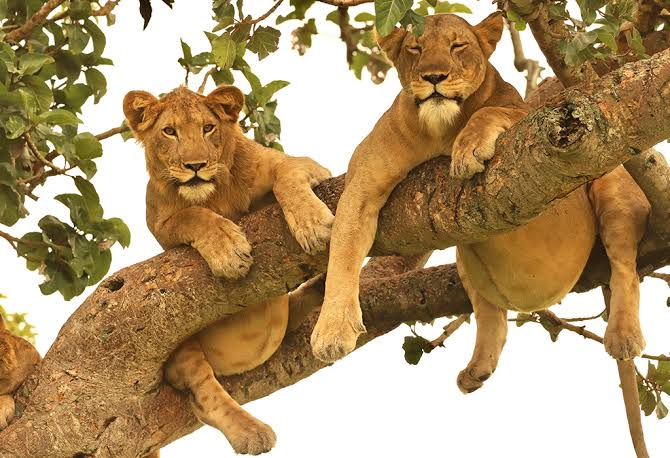
This Week in Ugandan Tourism
The broader tourism sector has had an eventful few weeks. On the pricing front, the Uganda Wildlife Authority's biannual tariff cycle turned over on July 1, pushing the standard gorilla trekking permit at Bwindi and Mgahinga to $800 for foreign non-residents (up from earlier levels) and raising the gorilla habituation experience permit from $1,500 to $1,800 — the latter giving trekkers a full day with a semi-habituated family rather than the standard hour. Industry watchers expect the next adjustment review later in the year, and UWA's March 2026 rule change scrapping the old seven-day reservation window means permits now must be paid in full at booking, a shift tour operators are still adjusting client workflows around.
On the marketing side, the Uganda Tourism Board hosted a high-profile delegation from Roc Nation Sports International in early July, led by president Michael R. Yormark, for a site inspection widely read as groundwork for Uganda's positioning ahead of AFCON 2027, when the country co-hosts the Africa Cup of Nations. That follows UTB's inaugural Cultural and Tourism Festival in Munich in June, part of a wider European marketing push spanning France, Germany, and Belgium, and the recent close of the Pearl of Africa Tourism Expo (POATE), which drew international buyers, exhibitors, and diplomats to the country. Underpinning all of it are strong topline numbers: international arrivals climbed past 1.6 million in 2025, with tourism earnings reported around UGX 5.8 trillion, roughly $1.62 billion, giving the sector real momentum heading into the back half of 2026.
For Queen Elizabeth specifically, none of this changes the fundamentals — the channel still fills with hippos at dawn, the Ishasha lions still find their trees, and the escarpment view still stops traffic. But the broader currents matter to anyone planning a trip: permit costs are rising, booking windows are tightening, and Uganda's tourism authorities are visibly campaigning for a bigger share of the region's safari traffic. The Pearl of Africa, in other words, is not resting on its scenery.



