Where Fire Became Faith: Namugongo's Sacred Ground Still Draws the Faithful and the Curious
Uganda Tourism
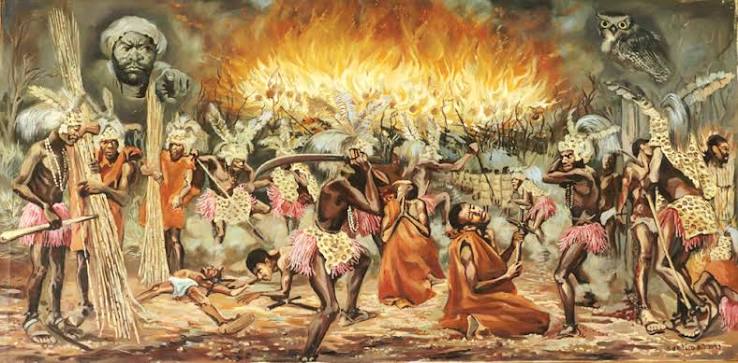
Twelve kilometres northeast of Kampala's roar, the traffic thins, the roadside stalls give way to jacaranda and flame trees, and a quiet settles over Namugongo that visitors say arrives before they even see the twin white domes rising above the trees. This is the ground where, between 1885 and 1887, Kabaka Mwanga II of Buganda ordered dozens of young men in his royal court — pages, chiefs-in-training, servants — executed for refusing to renounce the Christian faith they had newly embraced. On 3 June 1886, the most infamous of these executions took place here: a group of Catholic converts led by Charles Lwanga were wrapped in reed mats and burned alive on a pyre at Namugongo, alongside Anglican converts killed by the same order. Twenty-two Catholics and twenty-three Anglicans are now venerated as the Uganda Martyrs, canonised by Pope Paul VI in 1964, and Namugongo has become one of the most visited pilgrimage and heritage sites in East Africa.
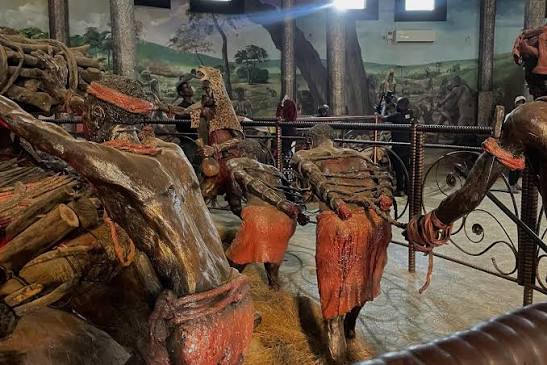
What makes Namugongo remarkable for a visitor today is not just the history but the way two Christian traditions built monuments side by side, a few hundred metres apart, each telling the same story from its own vantage point. The Catholic shrine centres on the Basilica of the Uganda Martyrs, a vast, drum-shaped structure completed in 1975 whose copper roof is designed to evoke a traditional Kiganda hut and whose interior is ringed by pillars each dedicated to one of the twenty-two Catholic martyrs. Beneath the altar lies the exact spot identified as Lwanga's execution site, marked and kept as the spiritual heart of the building. A short walk away, the Anglican shrine takes a different form: a museum housing relics, photographs and oral histories of the martyrs, set within landscaped memorial grounds that include the Martyrs' Lake, where prisoners were reportedly held before execution, and remnants associated with the Ndazabazadde tree under which some of the condemned were said to have prayed. Guides at both sites walk visitors through the sequence of events with a gravity that turns a history lesson into something closer to witness.
The scale of devotion the site commands becomes vivid every 3 June, Uganda Martyrs Day, a public holiday when between two and three million pilgrims converge on Namugongo from across Uganda and neighbouring countries, many having walked for days. Tented camps spring up on the approach roads, Masses run continuously through the day, and the atmosphere is closer to a national festival than a single church service. Tourists who visit outside that narrow window get a very different, quieter experience: empty courtyards, birdsong instead of crowds, and guides with time to talk. Uganda's tourism promoters increasingly pitch Namugongo not only as a pilgrimage stop but as a half-day cultural excursion that pairs naturally with a Kampala city tour, offering travellers whose main itinerary is gorilla trekking or safari a way to understand the country's religious and political history before or after their time in the parks.
Planning a Visit
Namugongo sits in Kira Municipality, Wakiso District, roughly a thirty- to forty-five-minute drive from central Kampala depending on traffic, and is easily reached by private taxi, ride-hailing apps or the shared minibus taxis that run frequently along the Kampala–Jinja corridor before branching off toward Kira. The site is open to visitors throughout the year, with the Catholic Basilica and Anglican shrine each welcoming guests during daylight hours; entry to both compounds is free, though a small donation is customary and guided tours — usually offered by attendants at each site — typically come with an appreciation fee in the range of a few thousand Ugandan shillings, negotiable and modest by regional standards. Modest dress is expected, as at any active place of worship, and visitors should be prepared to remove hats and speak quietly within the basilica and museum. Most tour operators recommend a visit of two to three hours to see both the Catholic and Anglican sites properly, and many combine it with stops at the nearby Uganda Museum or Kasubi Tombs — itself featured in this rotation only a day earlier — for a fuller day of Kampala heritage touring. Outside of 3 June, the best time to visit is any weekday morning, when the grounds are at their most tranquil and staff have the most time to share the fuller history behind the monuments.

This Week in Ugandan Tourism
Uganda's tourism sector kept up a brisk pace of headlines this week. Emirates and the Uganda Tourism Board formally renewed their partnership through a new memorandum of understanding signed at the Arabian Travel Market, with both sides recommitting to marketing Uganda as a premier long-haul destination in Gulf and European source markets. Separately, Uganda was confirmed as a co-host, alongside Kenya and Tanzania, of the TotalEnergies Africa Cup of Nations in 2027, a decision regional tourism officials expect to draw new international attention and infrastructure investment to East Africa well before kickoff. On the conservation and pricing front, the Uganda Wildlife Authority's revised gorilla permit structure, first announced in February and phased in through the year, is now fully in effect: standard permits for foreign non-residents sit at 800 US dollars, with a reduced 600-dollar rate during the April, May and November low seasons, while the fee for the more intensive gorilla habituation experience rose on 1 July from 1,500 to 1,800 dollars for foreign non-residents; operators also note that the old seven-day ‘soft hold’ on permit reservations was scrapped on 1 March in favour of immediate full payment. In the hospitality pipeline, WildPlaces Africa has announced Kulu Ora, a new lodge opening this month, adding to a steady run of boutique-camp openings across the safari circuit. And in western Uganda, the Miss Tourism Ankole 2026 grand finale was staged on 25 July at Akengyeya Country Hotel in Isingiro District, part of a wider push by regional pageants to promote local culture, crafts and destinations alongside the country's better-known wildlife draws.
Taken together, the week's news points to a sector leaning into two things at once: bigger international partnerships and events aimed at raising Uganda's profile, and finer-grained adjustments — permit pricing, new lodges, local festivals — aimed at improving the experience and economics for travellers and communities already on the ground. For a site like Namugongo, which draws its visitors more from faith and curiosity than from wildlife checklists, that broader momentum matters too: every marketing push that gets a first-time visitor to Entebbe increases the odds they will spend an afternoon standing quietly beneath the Basilica's copper dome, hearing the story of what happened here.
Published By | Features Editor