Written By |
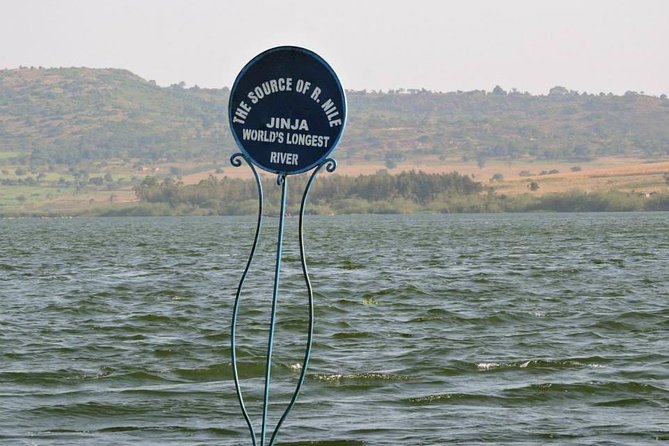
The Source of the Nile site today is a compact, walkable park rather than a single monument
There is a spot on the northern shore of Lake Victoria where a lake quietly becomes a river, and the river becomes one of the great facts of the world. Stand on the viewing platform at Jinja in the early morning, before the tour buses arrive, and the transformation is almost imperceptible: flat water gives way to a faint current, the current gathers itself around a scatter of rocks and papyrus islands, and within a few hundred meters it is unmistakably the Nile, setting off on a 6,650-kilometer journey to the Mediterranean. It is easy to stand there and feel nothing more than a pleasant view. It is harder to stand there and not think about how much history, and how much argument, converged on this exact patch of water.
Where an Empire's Obsession Found an Answer
For much of the nineteenth century, identifying the source of the Nile was one of the great unresolved questions of European geography, pursued with the kind of fervor usually reserved for gold or empire. Richard Burton, Samuel Baker, David Livingstone, and John Hanning Speke each staked careers, and in some cases years of their lives, on solving it. Speke got there first, in the accepted telling: on July 28, 1862, he stood at this outflow point and declared Lake Victoria the Nile's origin, a claim that was disputed for years afterward and only broadly accepted after further expeditions confirmed it. Whatever one makes of the imperial baggage that expedition carried, the site itself became one of the most consequential geographical landmarks on the continent, and it remains the reason Jinja, a modest colonial-era town roughly 80 kilometers east of Kampala, appears on the itinerary of nearly every visitor to Uganda.
The Source of the Nile site today is a compact, walkable park rather than a single monument. A statue of Mahatma Gandhi looks out over the water, marking the spot where a portion of his ashes were scattered into the Nile in 1948 in recognition of the deep ties between Uganda and its Indian diaspora community. Beside it, the Nile Gardens offer shaded paths, flowering shrubs, and benches positioned for exactly the kind of unhurried contemplation the river invites, while a cluster of craft stalls sells Basoga beadwork, bark cloth, and wood carvings to visitors drifting between the viewpoint and the boat docks. None of it is spectacular in isolation. Together, on a quiet weekday morning with the current sliding past and boda-bodas humming somewhere behind the tree line, it adds up to one of those places that rewards lingering rather than checking off.
From Contemplation to Adrenaline
A few kilometers downstream, the mood changes entirely. Bujagali Falls and the stretch of river around it have become East Africa's unofficial adventure-sports headquarters, built almost entirely around the fact that this section of the Nile produces some of the most consistent, most rideable whitewater on the planet. Operators including Nile River Explorers and Adrift Uganda run full-day rafting trips through roughly 24 kilometers of Grade 3 to Grade 5 rapids, with sections like Itanda Falls and a notorious drop nicknamed the Dead Duck drawing rafters who have already done Zambezi or Zambezi-adjacent trips and are looking for something rowdier. A half-day option covering the gentler Grade 3 and 4 water exists for people who want the scenery without quite that level of commitment.
For those who would rather test gravity than water, Nile High Camp operates a bungee platform roughly 44 meters above the river, close enough to the rapids that a well-timed dip on the rebound counts as a genuine possibility, not just marketing copy. Around all of this, a whole secondary economy of kayaking, stand-up paddleboarding, quad-bike tours, horseback riding, and river-boarding has grown up along the banks, catering to a visitor base that increasingly treats Jinja less as a day trip from Kampala and more as a multi-night base in its own right.
Getting There and Getting It Right
Jinja sits on the Kampala–Tororo highway, and the drive from the capital takes anywhere from ninety minutes to two and a half hours depending on how Kampala's traffic is behaving that day, which is to say the trip should never be scheduled tightly against a flight. Entrance to the Source of the Nile park itself runs around 40,000 Ugandan shillings, roughly ten US dollars, for foreign visitors, covering garden access and the main viewing platforms, with free entry extended to Ugandan citizens. Rafting trips typically run from about 70 dollars for a half day to 125 dollars for a full day including lunch, safety gear, and transport, while a single bungee jump costs in the neighborhood of 115 dollars.
The most comfortable window to visit is during Uganda's two dry seasons, roughly December through February and June through August, when river levels are more predictable and rafting operators run their fullest schedules; the wetter months bring higher water and a higher-adrenaline (and higher-risk) version of the same rapids, which some rafting outfits scale back or modify accordingly. Most visitors base themselves in Jinja town or in one of the riverside lodges near Bujagali, close enough to walk to a put-in point in the morning and be back in time for sunset drinks looking out over the water they just fought their way down.
This Week in Ugandan Tourism
Several threads are worth watching as the sector moves into the second half of 2026. The Uganda Wildlife Authority's revised tariff structure took effect on July 1, raising standard-season gorilla tracking permits to 800 dollars for foreign non-residents and 700 dollars for foreign residents, alongside a jump in the gorilla habituation permit from 1,500 to 1,800 dollars, part of a broader push to spread visitor demand more evenly across the calendar via discounted low-season pricing in April, May, and November. Further north, Kidepo Valley National Park has become a genuine conservation story: a founding group of Southern White Rhinos began arriving in March, the first rhinos to roam the park in 43 years after poaching wiped out the local population in the early 1980s, and officials now say Kidepo is positioned to become the only Ugandan park where visitors can realistically hope to see all of the Big Five in a single visit. The rhinos join a national population that has climbed to roughly 61 animals since the Ziwa Rhino Sanctuary breeding program began in 2005.
On the industry-strategy side, the Uganda Tourism Association used a launch event at Speke Resort Munyonyo to unveil its Strategic Plan for 2026 through 2030, a private-sector-led roadmap aimed at tightening standards and coordination across operators as the country works to build on a strong recent run: Uganda's tourism sector generated an estimated 1.7 billion dollars in earnings in 2025 and now supports more than 876,000 jobs, close to 6 percent of GDP. That momentum has an international marketing dimension too, with the Uganda Tourism Board carrying its "Pearl of Africa" branding into European capitals through cultural showcases aimed at diaspora communities and prospective investors, part of a broader bet that Uganda's next wave of visitors will come not just for gorillas, but for river adventure, conservation stories, and a cultural calendar that is being built out as deliberately as its parks.
For now, though, the simplest version of the story still holds at the water's edge in Jinja: a lake ends, a river begins, and for a few hundred meters every morning, a piece of nineteenth-century geography and twenty-first-century adventure tourism sit on exactly the same patch of ground.



