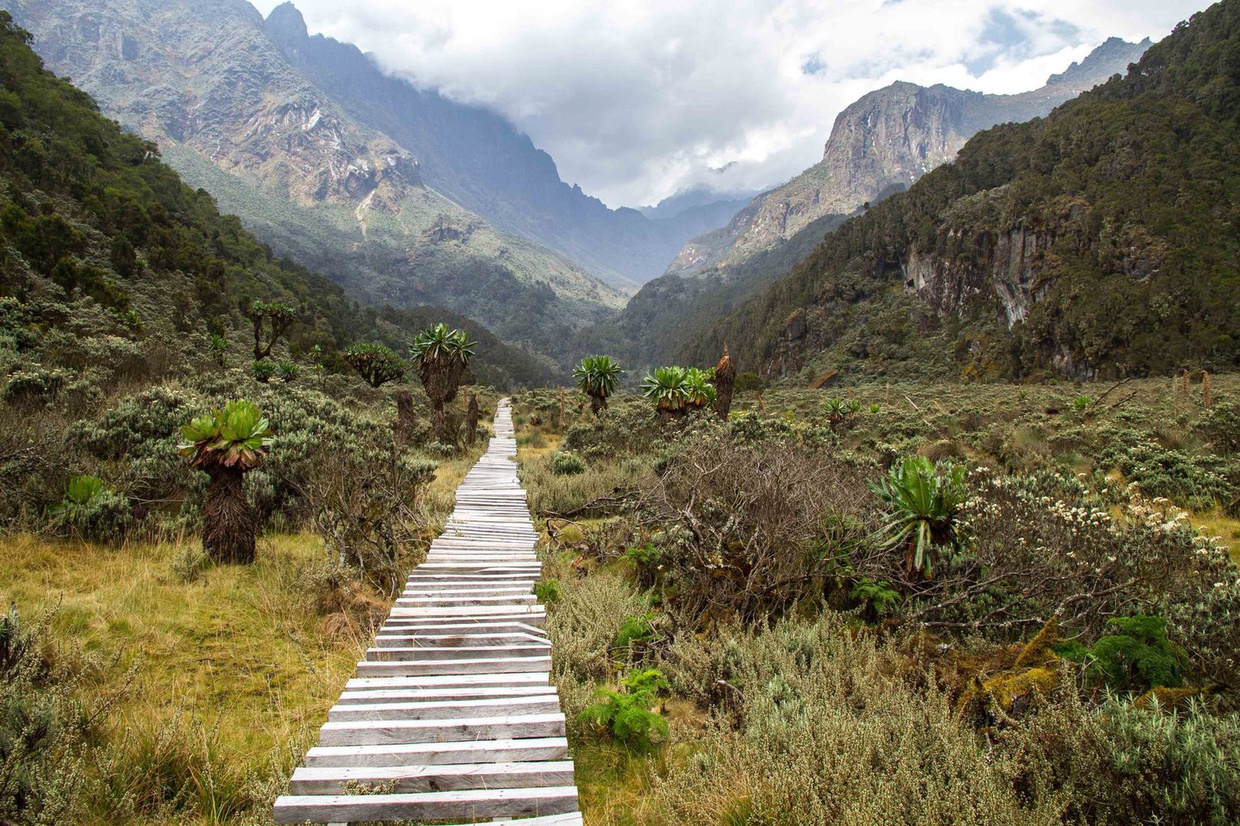
Long before satellites and glaciology teams confirmed what local herders already suspected, the peoples of the Rwenzori foothills spoke of a range so tall its summit wore snow within sight of the equator. Ptolemy, writing in the second century, called it the source of the Nile and named it the Mountains of the Moon. Today those same jagged, cloud-wrapped ridges still draw travelers willing to trade comfort for altitude, and this week they are getting fresh attention as Uganda's tourism authorities push adventure travel harder than ever before.
Rising along the country's western border with the Democratic Republic of Congo, Rwenzori Mountains National Park protects more than 996 square kilometers of Afro-alpine wilderness, crowned by Margherita Peak on Mount Stanley — at 5,109 meters, the third-highest point on the African continent after Kilimanjaro and Mount Kenya. Unlike its more famous volcanic cousins, the Rwenzori range is a block of ancient crystalline rock, thrust skyward by tectonic movement rather than eruption, which gives its slopes a raw, folded geology found almost nowhere else on the continent.
Into the Mountains of the Moon
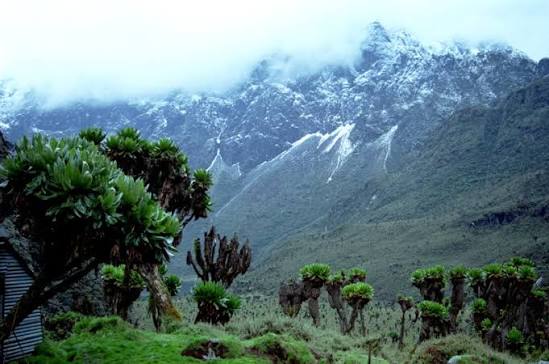
The park earned UNESCO World Heritage status in 1994, recognized for a vertical arrangement of ecosystems that few places on Earth can match. Hikers climbing from the park gate near Kasese pass through dense montane rainforest thick with red duikers and blue monkeys, then into bamboo zones and Afro-alpine moorland where giant lobelias and groundsels — plants that grow nowhere else but East Africa's high volcanic and crystalline peaks — stand like something out of a Dr. Seuss illustration. Above 4,000 meters, the vegetation thins into rock, scree, and the park's fabled glaciers, though those glaciers are now a fraction of their historic size and shrinking with each passing decade, a visible marker of climate change that guides point out to every trekking group.
Biologically, the park holds roughly 70 mammal species and 217 recorded bird species, including 19 that are found only in the Albertine Rift, one of Africa's great centers of endemism. The Rwenzori turaco, the golden monkey, and the elusive Rwenzori duiker draw dedicated birders and naturalists even before the peaks come into view. It is a quieter, less crowded park than Uganda's savanna reserves, which is precisely its appeal: this is trekking country, not a game drive circuit.
Most visitors tackle the Central Circuit Route, a multi-day loop of roughly seven to nine days that threads through the park's core landscapes without requiring full mountaineering gear, though reaching the true summits is another matter entirely. Topping out on Margherita Peak now demands technical skill — ropes, crampons, ice axes, and a belay system — because the ice fields have grown steeper and more unstable as they retreat, with sections now pitched at roughly 60 degrees in places. Outfitters increasingly recommend six to twelve days on the mountain depending on the route and the trekker's ambitions, and many pair the climb with a subsequent three-day gorilla trekking safari in nearby Bwindi Impenetrable National Park, using the descent from altitude as a natural transition into the rainforest before the primate trek.
Access is straightforward relative to the trek itself: the park sits a short drive from Kasese town, which is reachable by road from Kampala in about six to seven hours, or by domestic flight to nearby airstrips followed by a transfer. The classic trekking season runs during Uganda's two drier windows, roughly December through February and June through August, when trail conditions are least treacherous, though the Rwenzori's reputation for mist and rain is well earned in any month and porters and guides are essential rather than optional. Community-run trekking operations based in Kasese, several of them cooperative ventures that funnel income directly to villages along the route, remain the standard way to arrange the climb, reflecting the same community-tourism model Uganda has leaned on successfully around Bwindi's gorilla sector.
This Week in Ugandan Tourism
Uganda's tourism establishment spent the past week recalibrating how it measures success. On July 7, Uganda Tourism Board chief executive Juliana Kagwa told an economic and commercial diplomacy retreat in Kampala that the agency will now judge its international marketing campaigns by visitor bookings and tourism revenue rather than social media reach and impressions. Kagwa said Uganda has built strong global visibility in recent years but must convert that attention into paying visitors, and she pointed specifically toward high-value leisure and adventure travelers — trekkers, primate-permit holders, and culture-and-community tourists — as the segments the country intends to court most aggressively going forward.
That strategic pivot lands alongside a significant cost change for Uganda's marquee wildlife product. As of July 1, 2026, the Gorilla Habituation Experience permit in Bwindi's Rushaga sector rose from $1,500 to $1,800 per person for foreign non-residents, the latest in a series of adjustments the Uganda Wildlife Authority has made to permit pricing this year. Standard one-hour gorilla trekking permits remain at $800 for foreign non-residents, though UWA has also reintroduced discounted $600 permits during the April, May, and November green-season months to smooth demand across the calendar. Earlier in the year, UWA eliminated the option of a 'soft hold' on permit bookings, meaning travelers and operators must now pay in full immediately to secure a reservation — a shift that has pushed agencies to advise clients to book and pay well ahead of peak-season travel.
Behind the pricing headlines sits an encouraging conservation story. The Uganda Wildlife Authority's newly released State of Wildlife Resources in Uganda 2026 report recorded broad-based recovery across the park system: buffalo numbers climbed from roughly 32,235 to 41,548, Uganda kob rose from about 166,526 to 175,109, and waterbuck surged from 16,638 to 22,623, with topi more than doubling in several areas. The southern white rhino population at Ziwa Rhino Sanctuary grew from 43 to 61 animals, and chimpanzee numbers across the country's major forest ecosystems rose from roughly 5,072 to 6,075, even as the mountain gorilla population held steady at 459 individuals. UWA has also begun translocating wildlife to rebuild underpopulated ecosystems, moving kob and buffalo into Ajai Wildlife Reserve and preparing to reintroduce around 30 additional rhinos into Kidepo Valley National Park.
Uganda's tourism sector is leaning on that momentum as it looks toward its next big showcase. The Pearl of Africa Tourism Expo, UTB's flagship trade event, marked its tenth edition this year under the theme "Wanderlust — It's Your Time to Thrive," convening global buyers, exhibitors, investors, and development partners at Kampala's Speke Resort Convention Centre. Organizers and government officials have framed the expo, together with the tourism board's new revenue-first marketing approach, as part of a broader push to grow annual tourism earnings from roughly $1.3 billion toward a stated ambition of $4 billion — a target that leans heavily on exactly the kind of high-altitude, high-adventure product the Rwenzori range represents.
For now, the mountain keeps its own counsel. Its glaciers recede a little further each season, its trails still demand a porter's steady pace and a guide's local knowledge, and its summit still belongs to those willing to rope up for it. But as Uganda's tourism machinery recalibrates around bookings, revenue, and conservation numbers rather than headlines alone, the Mountains of the Moon look increasingly like the kind of destination the country is betting its next decade on.
Published By | Features Editor