Written By | Torch Media Africa
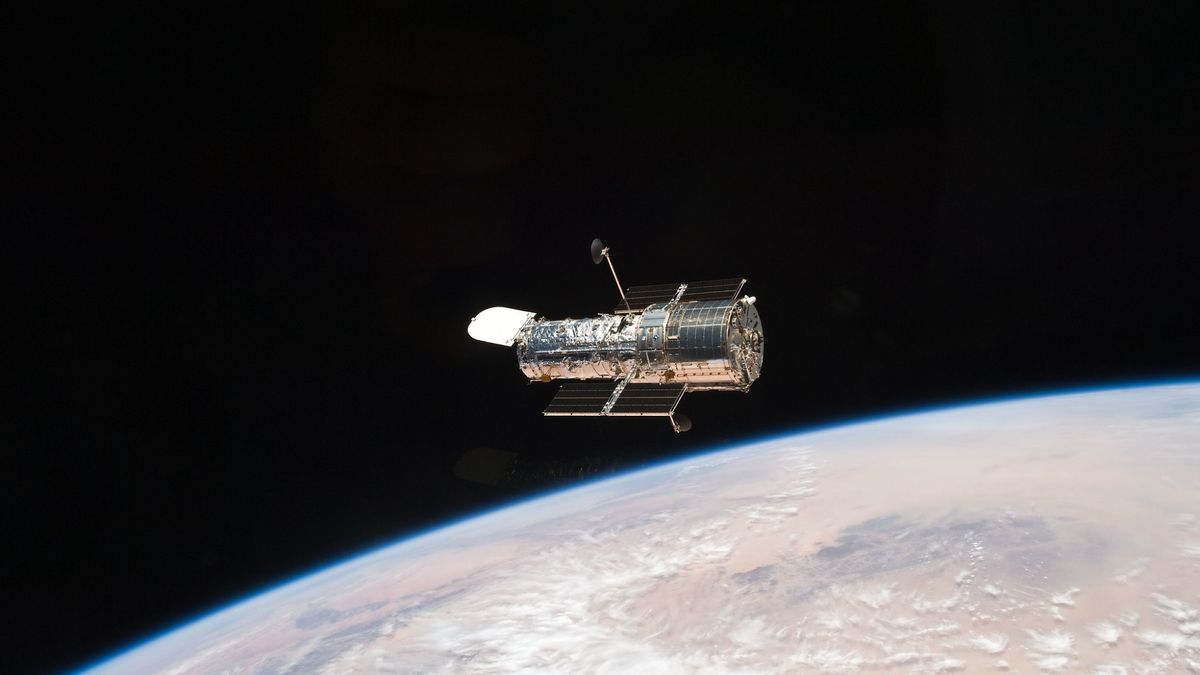
With the legendary observatory sinking toward a fiery reentry in the early 2030s, the space agency has asked private industry for a miracle — and the clock is already running
SCIENCE & TECH
It has shown us the birth of stars, the edge of the observable universe and the breathtaking Pillars of Creation. Now the Hubble Space Telescope needs saving itself. Last week NASA quietly put out a call to the commercial space industry: find a way to lift Hubble to a safer orbit, upgrade it, or, failing that, bring it down safely. The deadline for answers is 30 November.
The request for information, issued on 29 October 2026, is not a contract and not a promise. NASA says plainly that it has not committed to buying anything. But the move is the clearest sign yet that the agency is taking seriously a problem that astronomers have fretted about for years: Hubble has no engine, the atmosphere is slowly dragging it down, and nobody has visited it since 2009.
A telescope with no brakes and no engine
Hubble launched in April 1990 into an orbit about 612 kilometers up, a joint project of NASA and the European Space Agency. Today it circles at roughly 470 kilometers, according to figures reported from the RFI. Though space is often imagined as empty, at that altitude there is still a whisper of atmosphere, and it drags on the telescope relentlessly. Because Hubble carries no propulsion of its own, drag is the only force shaping its orbit.
The loss per day is tiny but adds up to tens of kilometers per decade, and the rate has grown. The reason is the Sun. Solar Cycle 25 peaked above the official forecast, heating and puffing up the upper atmosphere and increasing drag on every low-flying satellite. In February 2026, astrophysicist Jonathan McDowell's analysis put the earliest plausible reentry as soon as 2028.
NASA's current analysis is less dire but still sobering. The Space Telescope Science Institute (STScI) estimates less than a 10 percent chance of reentry before 2030, and a median reentry date of mid-2033 if nothing is done. NASA's own planning points to 2033 or 2034. Any rescue would have to launch by 2032.
The ugly part: a falling bus-sized telescope
Hubble weighs roughly 12,200 kilograms, about as heavy as a fully loaded school bus, and some of its dense components would survive the plunge through the atmosphere. Tech Times reports a casualty probability of about 1 in 330 for an uncontrolled reentry in 2033, far above NASA's own debris safety standard of 1 in 10,000. Hence the third option in the RFI: a controlled deorbit that steers the debris into a remote part of the ocean.
What NASA is actually asking for
The RFI offers three paths: boost Hubble to a higher orbit, service it to extend its capabilities, or dispose of it safely. A reboost must take it to at least 600 kilometers — about 373 miles — without harming the observatory. Respondents must say the lowest altitude from which they can safely lift Hubble to 600 kilometers, the earliest date they can fly, and how they would reach, attach to and move the telescope. The chosen company would supply the rocket, the servicing spacecraft, mission operations and, if needed, a crew.
The physics is demanding but not exotic. The boost needs about 70 meters per second of delta-v, a modest push by rocket standards, but delivering it gently to a 12-tonne, 36-year-old scientific instrument is another matter. The good news is that Hubble is more rescue-friendly than most satellites. The 2009 shuttle servicing mission fitted a 76-centimeter standardized docking ring on its aft end, a capture target a robotic or crewed vehicle could grab.
The Isaacman factor
The man leading NASA knows this story intimately. Administrator Jared Isaacman, then a private astronaut, proposed in 2022 to fund most of a crewed SpaceX Dragon mission to Hubble as part of his Polaris program. NASA and SpaceX signed an unfunded agreement to study the idea in September 2022, and NASA received eight industry responses to a similar request that year. But on 4 June 2024 NASA declined a reboost, citing no emergency, the risk of visiting vehicles to a working observatory, and the danger of thruster exhaust contaminating Hubble's ultraviolet-sensitive optics.
Now Isaacman holds the top job. In an October 30 statement he said NASA "owe[s] it to the American taxpayer" to explore cost-effective ways to extend assets already in orbit, and he stressed evaluating reasonable options, especially if servicing costs less than a replacement launch. He has said he expects robotics companies to show interest.
A crewed visit looks less likely than it did in 2022. SpaceX plans to retire Crew Dragon by 2030, and NASA has been turning to Boeing for astronaut flights. That leaves robots, and robots have recently had a rough run.
The Swift warning
The cautionary tale is the Neil Gehrels Swift Observatory. NASA awarded Katalyst Space Technologies a $30 million contract in September 2025 to attempt a robotic boost of Swift. Katalyst's LINK spacecraft launched in summer 2026 but lost attitude control and abandoned the capture attempt in August, never reaching the telescope. Swift's science mission ended on 20 October, as drag at altitudes below 275 kilometers made steady observations impossible. The US Space Force predicted it would reenter within days, with most of it expected to burn up and some dense parts possibly surviving.
It is a sobering preview. A rescue that works would save a priceless asset. A rescue that fails could leave a damaged telescope, or worse, a vehicle tumbling alongside it.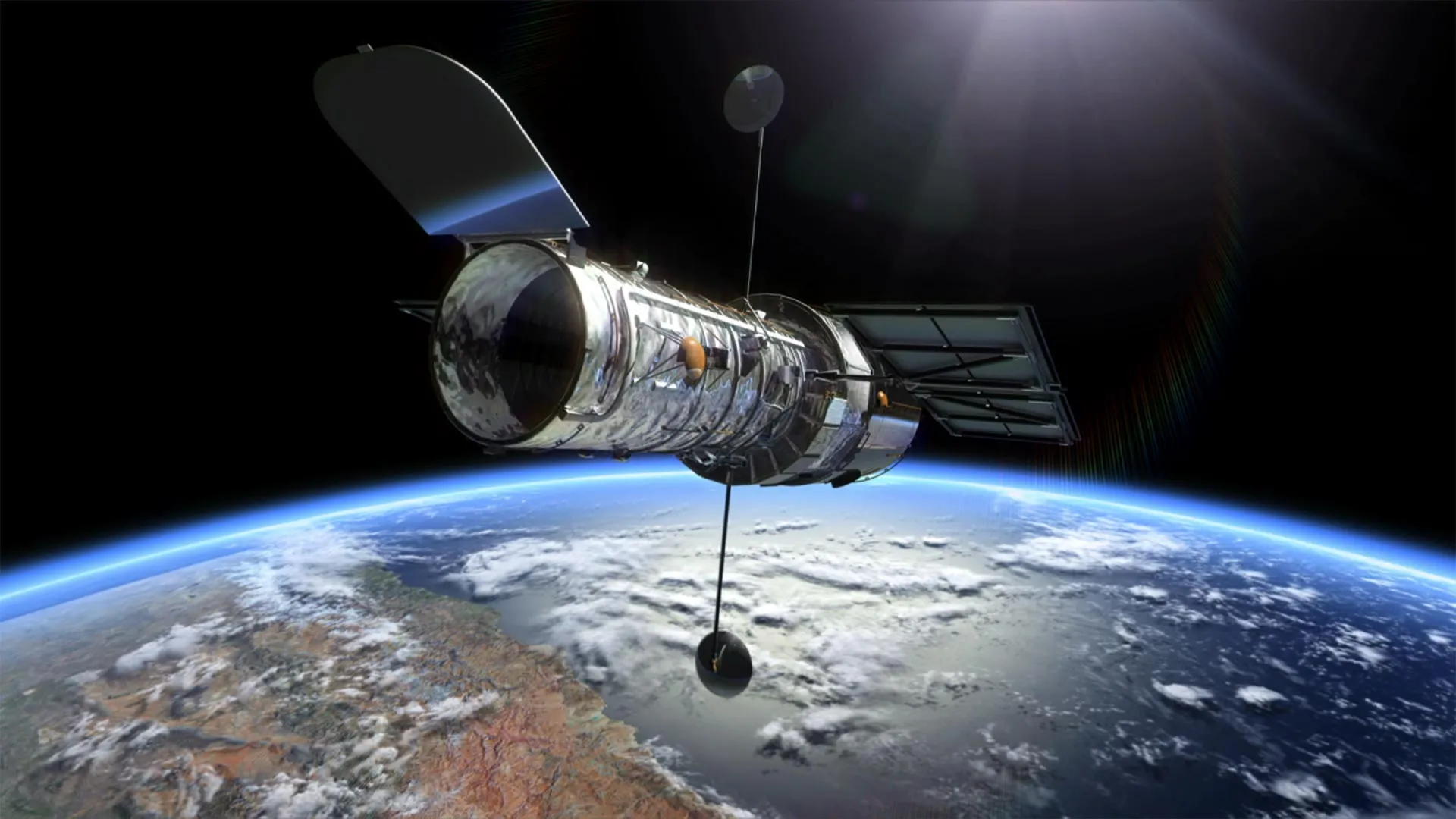
Why Hubble is still worth saving
Hubble's instruments are still working, and its science output remains remarkable. Its observations helped establish that the expansion of the universe is accelerating, a finding that earned a Nobel Prize in Physics. NASA figures suggest its data underpin at least 23,000 scientific papers. In September 2026 NASA reported that astronomers request about seven times more observing time than Hubble can provide each year.
Hubble also does something newer telescopes cannot fully replace: ultraviolet astronomy. The James Webb Space Telescope sees in infrared, and the UV window that Hubble opens is crucial for studying hot young stars, galactic halos and the chemistry of exoplanet atmospheres.
The telescope is not without its aches. NASA moved it to one-gyroscope mode in June 2024, keeping a spare in reserve, a change that trimmed observing time by roughly 12 percent. Hardware is likely to outlast the orbit, which makes altitude the main constraint on Hubble's future.
Show me the money
Funding is the elephant in the room. NASA has set aside no money for a rescue. Hubble's operating budget is planned at between $83 million and $87.8 million a year for fiscal 2026 to 2028, a cut of more than 20 percent. In June, NASA's astrophysics director said the agency would be interested in a reboost if Hubble's operating costs fall. STScI says planning and funding must begin in fiscal 2027, which started on 1 October.
NASA has not published a price for any rescue. The failed Swift contract at $30 million offers a loose benchmark, though a mission to a much larger and more valuable observatory, with a demanding contamination constraint, would almost certainly cost more.
Expert perspective
NASA astrophysics director Mark Clampin, as reported by Tech Times, has named ultraviolet mirror contamination as the main technical hazard. That echoes the 2024 decision to decline a reboost: the very thrusters that would push Hubble higher could coat its optics in residue and ruin the science that makes it worth saving. Any bidder will have to prove a gentle approach.
The KeepTrack space-tracking analysis takes a cautiously optimistic view: a robotic reboost or disposal mission is most likely to be ordered within a year or two and flown before 2030, with the open question being whether NASA commits in time. Note that some of the figures reported vary between outlets, including the exact reentry odds.
What this means for you
For space fans, the stakes are emotional. Hubble's images are woven into popular culture, and losing it would mean losing a 36-year-old icon. A rescue would let future generations see new images from the same lens that captured the Hubble Deep Field.
For taxpayers, the question is value. A rescue costing less than a replacement telescope would be a bargain; one that costs more might not. That is exactly why NASA is asking industry first.
For the space industry, the RFI is a market signal. If a company can show it can rendezvous with and move a large, non-cooperative satellite, the same technology could service communications satellites, clear debris and extend the life of expensive assets. Hubble is the high-profile test case.
And for everyone, there is a safety angle. An uncontrolled reentry of a 12-tonne object is rare but not trivial, and the best insurance is a plan.
The countdown
There is also a diplomatic dimension. Hubble remains a NASA–ESA partnership, and European scientists and agencies have a stake in its fate; any rescue plan will need to keep partners informed, and ESA-built instruments and solar arrays are part of what is on board. A successful mission would show that international science assets do not have to be abandoned when their engines, or in Hubble's case their orbit, run out.
Responses are due on 30 November. After that NASA will weigh the ideas, and decide whether to fund one. Time is the scarce resource: with a launch needed by 2032 and a mission of this complexity taking years to build, there is little slack.
Hubble has already survived a flawed mirror, five shuttle repair missions and decades of budget fights. Now it faces a quieter enemy in the thin air above Earth. Whether a company can answer the call remains to be seen. But for the first time in a long while, someone is asking the right question: who is going up to get it?



