Agriculture
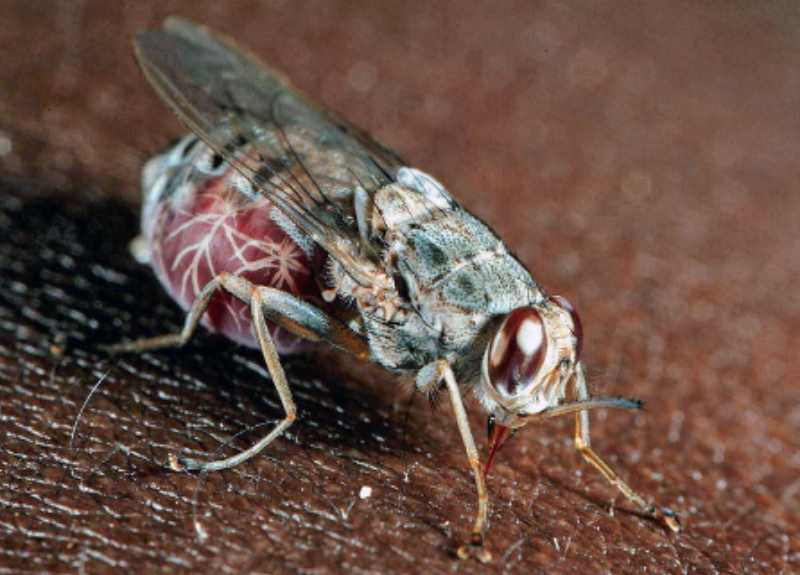
In the sub-counties of Kangulumira and Busaana in Kayunga District, a small, dull-brown insect with a bite no bigger than a pinprick is once again forcing farmers, veterinary officers and district leaders into emergency mode. Rising tsetse fly infestations across the district have prompted authorities to warn residents that livestock production and household incomes are at risk, reviving a threat that Uganda has spent three decades and a dedicated Act of Parliament trying to beat back.
Isaac Kakungulu, Kayunga's District Malaria Focal Person, told local press this week that Kangulumira has registered the highest levels of infestation, with Busaana close behind, and called for a coordinated response involving communities, local leaders and veterinary authorities. "We are encouraging residents to clear bushes around their homes, regularly spray livestock with recommended insecticides, and report suspected cases to veterinary and health authorities. Community participation is essential if we are to contain the spread," he said.
It is a small, localised story on its face — a district health official appealing for bush-clearing and insecticide spraying. But it sits atop a much larger and more expensive national struggle that has quietly shaped Uganda's livestock economy for a generation, and the Kayunga flare-up is a reminder of how quickly gains against the disease can erode when surveillance and control funding lapse.
A Disease With Two Faces
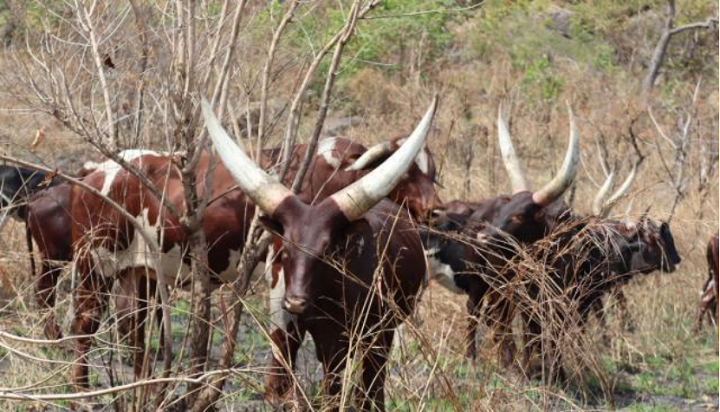
Tsetse flies transmit trypanosomiasis, a parasitic disease that appears in two forms depending on the host: in humans it is known as sleeping sickness, and in cattle, goats and other domestic animals it is called nagana. Kayunga authorities say the district has not recorded a widespread outbreak of human sleeping sickness, which is the more feared and more closely monitored form of the disease. But the animal form, nagana, is already doing damage that farming households will feel directly in their pockets. The disease causes weight loss, reduced milk production, infertility and death in infected animals, translating into substantial economic losses for the smallholder and pastoralist households for whom livestock represents one of the largest stores of wealth they hold.
The scale of what is potentially at stake nationally is significant. Research tracking tsetse distribution and African Animal Trypanosomiasis in Uganda estimates that roughly 70 to 75 percent of the country's land mass is infested with tsetse flies to varying degrees, putting an estimated 20 million animals at risk across the country. Uganda is also one of the few places in the world where both forms of human sleeping sickness — caused by different trypanosome subspecies — occur, which is part of why the country established a dedicated institutional response to the disease well before Kayunga's current infestation made headlines.
Three Decades of Institutional Fight
Uganda's response to tsetse and trypanosomiasis is not improvised. By Act of Parliament in 1992, the country established the Uganda Trypanosomiasis Control Council and its secretariat, the Coordinating Office for the Control of Trypanosomiasis in Uganda, known as COCTU, built around a "One Health" model that draws in nine government ministries alongside affected communities. From 2006, a public-private partnership called Stamp Out Sleeping Sickness promoted the use of insecticide-treated cattle as "live baits" to disrupt tsetse breeding and feeding cycles, and from 2014 COCTU has combined live-bait technology, tsetse trap deployment, mass treatment of cattle with trypanocidal drugs, and ongoing surveillance conducted jointly with district veterinarians and entomologists.
That institutional machinery is precisely what Kayunga's district leaders are now trying to activate locally. District authorities say they are working with veterinary officers and local leaders to strengthen surveillance, run community sensitisation campaigns and promote vector control measures in the affected sub-counties, while appealing to development partners and residents to support the effort — language that echoes almost exactly the national strategy COCTU has pursued for more than a decade. Residents have been advised to clear the overgrown bush and thicket that provide tsetse breeding grounds, maintain sanitation around homesteads, and support government-led spraying and trapping campaigns.
Why Infestations Keep Resurging
If Uganda has had a national tsetse control strategy in place since the 1990s, the natural question is why infestations like Kayunga's continue to emerge. Part of the answer lies in the biology and geography of the problem: tsetse control is not a one-time intervention but a continuous suppression effort, and any lapse in surveillance, trap maintenance or livestock treatment in a given area allows fly populations to rebound, particularly where bush encroachment provides breeding habitat. Land-use change — including bush regrowth on underutilised or contested land, and the movement of livestock into previously uninfested grazing areas — has also been identified by researchers as a driver of shifting tsetse distribution across Uganda's cattle corridor and surrounding districts.
Kayunga's location is instructive here. The district sits along the Nile in central Uganda, in a zone where riverine vegetation and wetland fringes create exactly the kind of bush habitat tsetse flies favour, and where mixed crop-livestock farming means household incomes are directly exposed when animal health deteriorates. For a district where, as local leaders note, livestock farming is a major source of livelihood for many families, a sustained infestation is not an abstract public-health statistic; it is a direct threat to milk income, breeding herds and the asset base that rural households draw on in hard times.

The Economic Stakes for Farmers
The compounding risk for Kayunga's farmers is that trypanosomiasis rarely announces itself with dramatic die-offs. Its damage is more often chronic and cumulative: a cow that should be producing a steady daily milk yield gradually produces less; a breeding animal fails to conceive; young stock grow more slowly and take longer to reach market weight. Because those losses accrue gradually, they can be harder for households to recognise and respond to than an acute disease outbreak, and by the time weight loss or infertility becomes obvious, the underlying tsetse population may already be well established.
This is also a moment when Uganda's livestock sector, more broadly, has been under strain from a separate but related front: a Foot-and-Mouth Disease outbreak that forced mandatory vaccination and cost-sharing policies in the cattle corridor earlier this month, including extended cattle market closures in Kamwenge district. Taken together, the tsetse resurgence in Kayunga and the FMD response elsewhere illustrate a broader vulnerability in Uganda's livestock economy: multiple, simultaneous animal-health threats are straining district veterinary capacity and household resilience at the same time, even as the sector remains central to rural incomes and to national ambitions around dairy and meat exports.
For now, Kayunga's response remains a district-level campaign of bush-clearing, spraying and sensitisation, backed by the same national coordinating structures that have managed tsetse control since the 1990s. Whether that is enough to contain Kangulumira and Busaana's infestation before it spreads further, or whether it will require the kind of intensified trap deployment and mass treatment campaigns COCTU has mounted elsewhere in the country, will depend on how quickly district and national authorities can mobilise resources — and on how seriously residents take Kakungulu's appeal to clear the bush around their own homes before the fly population grows further.
Published By | Features Editor