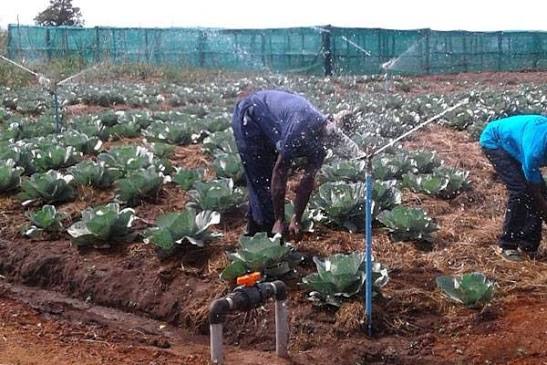
Feature
When Bank of Uganda Deputy Governor Professor Augustus Nuwagaba stood before local leaders in Kabale District this week, he had good news to deliver. Under the Agricultural Credit Facility (ACF), 325 farmers and agribusinesses in the district had received Shs13.59 billion in financing, Shs6.81 billion of it a straight government contribution at zero interest. A separate Small Business Fund had put a further Shs636 million into the hands of 70 local entrepreneurs. "Our policies may be formulated at the centre," Nuwagaba told the gathering, "but their effects are felt in homes, farms, markets, and businesses across Uganda."
Zoom out from Kabale and the numbers become genuinely large. As of March 2026, the ACF — a partnership between the Ministry of Finance and Bank of Uganda that has run since October 2009 — had disbursed a cumulative Shs1.4 trillion to more than 13,000 borrowers nationwide, with a non-performing loan rate of just 0.5 percent, a figure that would be the envy of most consumer lending books in the country. The facility offers capital financing for machinery, irrigation equipment, storage and agro-processing infrastructure at a capped 12 percent annual interest, working capital for grain trade at 15 percent, and premium financing for agricultural insurance at just 5 percent — all substantially below the commercial rates of 17 percent and above that farmers would otherwise face. Loans run for up to eight years, with grace periods on principal repayment of up to three years, and the government matches whatever a participating bank lends, shilling for shilling, at zero interest on its half.
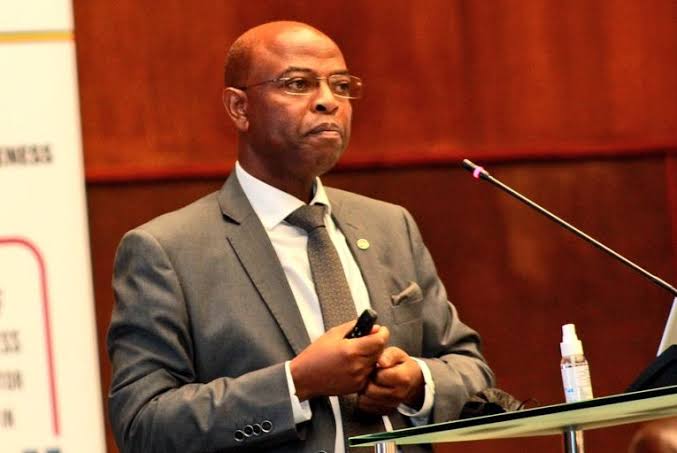
Deputy Governor Professor Augustus Nuwagaba
It is, on paper, exactly the kind of patient, affordable capital that Uganda's agriculture ministry has spent a decade saying farmers need to move from subsistence plots to commercial operations — a central pillar of President Museveni's Ten-Fold Growth Strategy, unveiled at this year's Kyankwanzi retreat, which sets a target of expanding the economy tenfold by leaning heavily on agro-industrialisation.
But a closer look at how that Shs1.4 trillion has actually been distributed tells a more complicated story — one that Ugandan MPs have themselves begun to interrogate. A recent audit sample examined 5,227 loan applications worth a combined Shs402.05 billion. Of those, only 373 were approved, for a combined Shs162.77 billion — an approval rate of roughly 40 percent by value. But break that figure down by loan size and a sharp divide appears. Of 3,974 applications in the Shs1 million to Shs50 million range — precisely the bracket where most smallholder farmers and small agribusinesses sit — only 73 were approved: an approval rate of just 1.8 percent by volume. Applicants seeking loans above Shs2.5 billion, by contrast, saw "dramatically higher approval rates," according to testimony given to Parliament. MPs reviewing the numbers have openly asked whether the facility has been, in effect, captured by large-scale grain traders and processors, leaving the smallholders it was designed to reach standing furthest from the door.
The mechanics of why are almost mundane, which is part of the problem. Richard Byarugaba, Bank of Uganda's finance executive director, told Parliament that "many applications are derailed by incomplete or absent financial documentation" — tax returns, audited financial statements, formal business records that a subsistence farmer converting to commercial production is unlikely to have on hand, and a bank loan officer is unlikely to waive. The audit also found more than a thousand instances in which the Bank of Uganda itself blew past the 14-working-day window it is supposed to observe for transferring the government's share of funds to participating banks once a loan is approved — turning what is meant to be a fast, responsive facility into one where farmers can wait months for money tied to a planting season that will not wait for them.
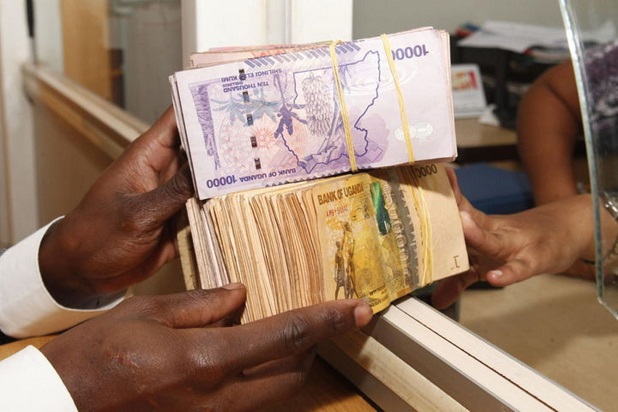
The scheme's defenders point to genuine reforms already under way. A new digital loan management system is meant to cut the administrative friction that has slowed disbursement. Deputy Governor Nuwagaba has been touring the country — Bunyoro and Masindi in April, Kabale this week — in what amounts to a sustained sensitisation campaign, urging farmers to approach participating banks rather than assume the facility is closed to them. Perhaps most significantly, the World Bank-backed INVITE Project has introduced policy flexibility allowing multiple loans per borrower and grace periods aligned to actual crop cycles rather than generic banking calendars, while the central bank has also piloted alternative forms of collateral — chattel mortgages, group guarantees, and cash-flow-based assessments — designed specifically to let farmers without land titles or formal assets still qualify. Bank of Uganda Governor Dr Michael Atingi-Ego has said the institution is "realigning its targeting strategy" to reach underserved farmers rather than the well-connected.
Whether that realignment shows up in the next audit is the real test. The facility's own history offers a cautionary note: as far back as 2021, when cumulative disbursement stood at Shs620 billion, the Bank of Uganda was already warning that the pipeline of applications risked outstripping available funds, and noted even then that "most smaller-scale enterprises tend to stay away" from a facility widely perceived — rightly or not — as built for bigger players. Five years and roughly Shs800 billion in additional lending later, the perception problem and the approval-rate gap both persist, even as the total pool of money has more than doubled.
The stakes go well beyond Kabale's 325 beneficiaries. Uganda's Agro-Industrialisation Programme is one of the largest single line items in the national budget, and cheap agricultural credit is meant to be the connective tissue between that state investment and a private sector capable of absorbing it — the tractors, irrigation pumps, storage silos and processing mills that convert raw harvests into exportable, tax-generating value addition. If the ACF's cheapest, longest-term money continues to flow disproportionately to grain traders and established processors who could plausibly access commercial credit anyway, while the smallholder households who make up the overwhelming majority of Uganda's farming population are filtered out by paperwork and processing delays, the facility risks entrenching precisely the two-tier agricultural economy that the Ten-Fold Growth Strategy is supposed to dissolve. For a farmer in Ntungamo or Kaberamaido weighing whether to even attempt an application, the message from the numbers is blunt: the money is real, the rates are genuinely cheap, and the odds, for now, are still not in their favour.
Published By | Features Editor