Written By |
Queen Elizabeth National Park, Uganda's most versatile safari
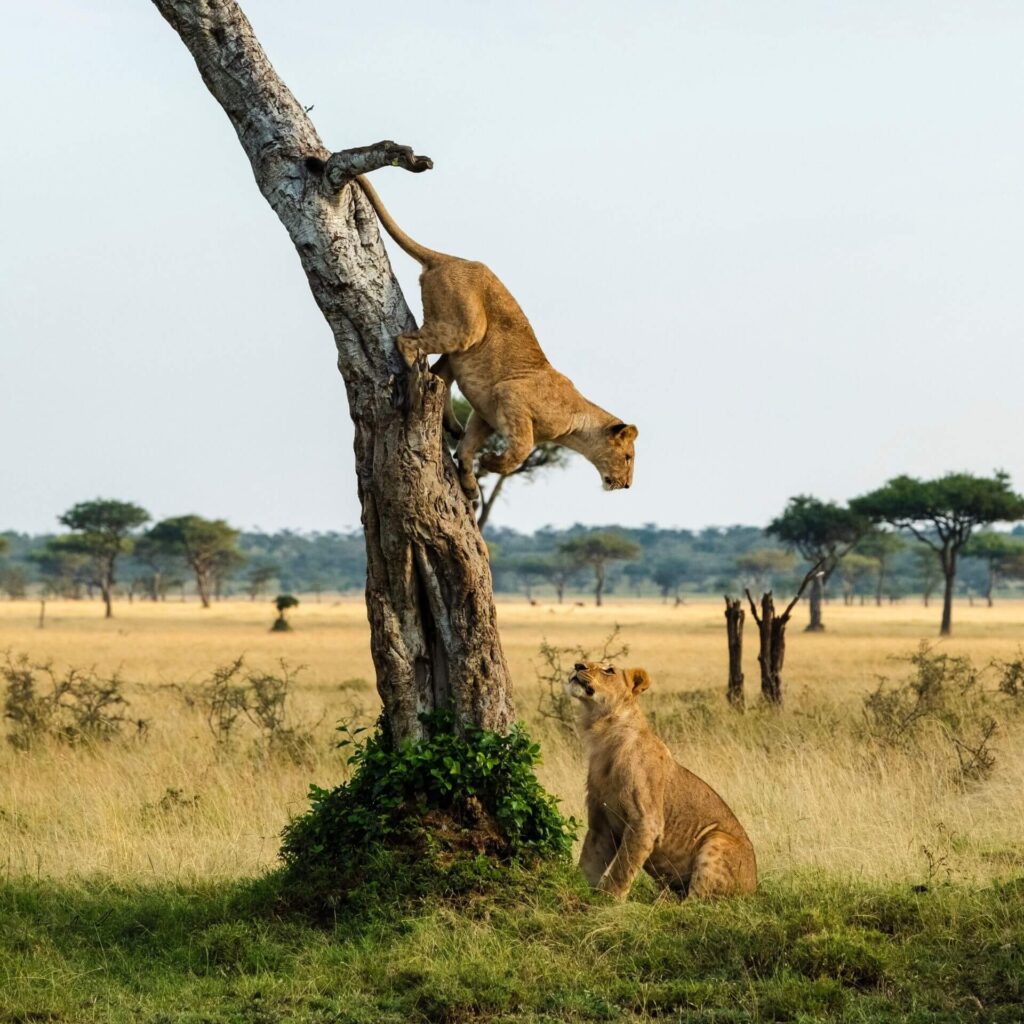
The lions of Ishasha do not behave the way the brochures say lions should. In the southern reach of Queen Elizabeth National Park, where the savannah thins into a grid of ancient fig trees, the great cats spend their hottest afternoons stretched along the boughs, tails dangling, flicking away flies while Uganda kobs graze nervously below. It is one of the few places on the continent where tree-climbing lions are a reasonable expectation rather than a lucky rumour, and it is only one of the reasons this park, straddling the equator beneath the blue wall of the Rwenzori Mountains, remains the most versatile safari destination in Uganda.
The Park at a Glance
Queen Elizabeth National Park sits in Kasese District in western Uganda, roughly 410 kilometres from Kampala, a drive of seven to eight hours that most visitors break up with a lunch stop in Mbarara. Those short on time can fly to airstrips at Kasese, Mweya or Kihihi. The park covers 1,978 square kilometres and, according to the Uganda Wildlife Authority, shelters more than 95 mammal species, over 600 bird species and some twenty carnivore species.
The park was gazetted in 1952 as Kazinga National Park and renamed in 1954 to honour a visit by Queen Elizabeth II. Today its landscape reads like a geography lesson: crater lakes, open grassland, papyrus swamp, forest and the long blue ribbon of the Kazinga Channel, which links Lake Edward and Lake George over about forty kilometres.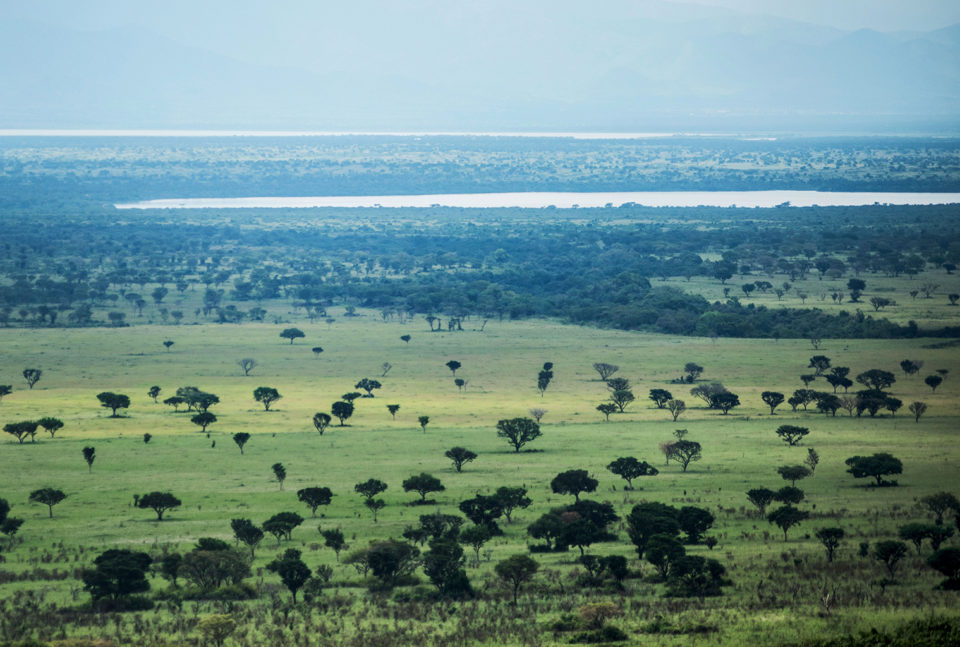
Where the Wildlife Is
Elephants and buffalo move across the Kasenyi plains, hippos crowd the channel in their hundreds, and leopards and lions hunt the grasslands around Mweya. Chimpanzees live in the forest, and the shoebill, that improbable prehistoric-looking stork, is a prize for the birders who come for the park's checklist of more than 600 species. The Ishasha sector, in the south, is the setting for those fig-climbing lions, best looked for in the quieter hours of late morning and afternoon.
The signature experience, though, is the launch cruise on the Kazinga Channel. From the water, buffalo, elephants and kingfishers come within a few boat lengths, and the slow pace suits families and photographers alike. Beyond the animals, communities around the park offer storytelling, traditional music and dance, and village tours that put local livelihoods at the centre of the visit.
Planning Your Visit
Most travellers give the park at least two to three nights: a game drive and cruise around Mweya, then a transfer south to Ishasha, which also makes a natural stop on the road to Bwindi for gorilla trekking. The Uganda Wildlife Authority's published entry fees list USD 40 for one non-resident category, USD 30 for another, and UGX 20,000 for East African citizens; fees change, so confirm current rates and category definitions with UWA or your operator before booking. Cruises, game drives and guided activities are charged separately, as are lodging and transport. The park page does not specify a best season, but dry spells generally make roads easier and animals more concentrated around water, so many operators favour the drier months; ask your operator for current advice.
The park is also being pitched at Ugandans themselves. Domestic visitors are the focus of recent efforts to make wildlife tourism feel like it belongs to everyone, which brings us to this week's news.
Why It Matters
What sets Queen Elizabeth apart is range. In a single trip a traveller can watch lions on the open plains, drift past hippos on a boat, search the forest for chimpanzees and spend an evening listening to community storytellers, all without leaving one protected area. That breadth is rare in East Africa, and it is why operators routinely build circuits around the park, linking it with Kibale to the north, Bwindi to the south and the Rwenzori range on the horizon.
The equator crosses the park, and visitors can stop at the marker for the obligatory photograph with a foot in each hemisphere. It is a small, cheerful ritual, but it also captures the character of the place: a landscape where several worlds meet, from wetland to woodland to grassland, and where the wildlife has adapted to every one of them.
For Uganda, the park is more than a postcard. Fees, lodge stays, boat trips and guiding all feed local economies in Kasese and beyond, and recent efforts to open the gates to Ugandans, rather than only foreign guests, suggest a future in which the people who live alongside these animals are also among the people who come to see them. For a first-time visitor, the advice from those who know the park best is simple: go slowly, stay long enough to see more than one sector, and let the Kazinga Channel do what it has done for generations, which is to bring the savannah to the water's edge.
This Week in Ugandan Tourism
Note: sources reviewed this run did not surface items dated within the last few days, so the items below are the most recent confirmed developments from the Uganda Wildlife Authority, the Uganda Tourism Board and the press.
Free entry for Ugandans, September 25 to 27. The Uganda Wildlife Authority's 2026 Open Park Days waived entry fees for citizens at Murchison Falls, Queen Elizabeth, Lake Mburo and Kidepo Valley national parks, plus Ajai, Katonga, Toro-Semuliki and Pian Upe wildlife reserves. Reported on September 5 by the Daily Monitor, the three days led into World Tourism Day celebrations in Mbale on September 27. Visitors still paid for transport, lodging and activities such as boat cruises.
UTB at the Luo Legacy Dinner, August 8. The Uganda Tourism Board attended the 2026 Luo Legacy Dinner in Kampala, which also launched a digital Luo museum, a sign of growing interest in cultural tourism.
Rhinos return to Kidepo. The Uganda Tourism Board's news page marks the return of rhinos to Kidepo Valley National Park after more than four decades, dated March 17; the page does not state the year.
Pearl of Africa Tourism Expo, May 21. The 2026 expo opened at Speke Resort, Munyonyo, where sector leaders also addressed visitor concerns about Ebola.
Uganda wins at OTM India 2026. The Uganda Tourism Board lists a Best Exquisite Destination award for Uganda at OTM India 2026 (the page gives no date).



