SCIENCE AND TECH
Liver cancer is a killer that almost never announces itself. By the time most patients feel sick enough to see a doctor, the disease has usually advanced past the point where surgery or a transplant can save them. It is the reason hepatocellular carcinoma — the most common form of liver cancer — ranks as the third leading cause of cancer death worldwide, and it is the reason a study published July 31 in the journal Cell Reports Medicine by researchers at Johns Hopkins' Sidney Kimmel Comprehensive Cancer Center is generating so much excitement this week.
The headline finding: a blood test built on artificial intelligence, requiring nothing more invasive than a routine draw, accurately flagged liver cancer in patients from two wildly different corners of the globe — Guatemala and Romania — despite those patients getting sick from almost entirely different causes. If a single test can reliably catch the same cancer whether it was triggered by a toxin in contaminated grain, a hepatitis infection, or metabolic disease linked to obesity, it suggests something that has eluded cancer researchers for years: a genuinely universal early-warning system for one of medicine's quietest killers.
THE TEST THAT READS DNA'S "SHATTERED GLASS"
The technology behind the breakthrough is called DELFI, short for "DNA Evaluation of Fragments for Early Interception," and it was developed over several years by a Johns Hopkins team that includes Dr. Victor Velculescu, a professor of oncology, pathology, medicine and genetic medicine, and co-director of cancer genetics and epigenetics at the Kimmel Cancer Center.
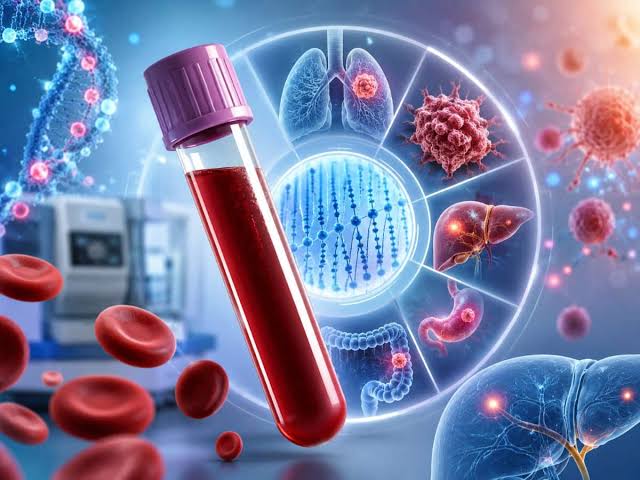
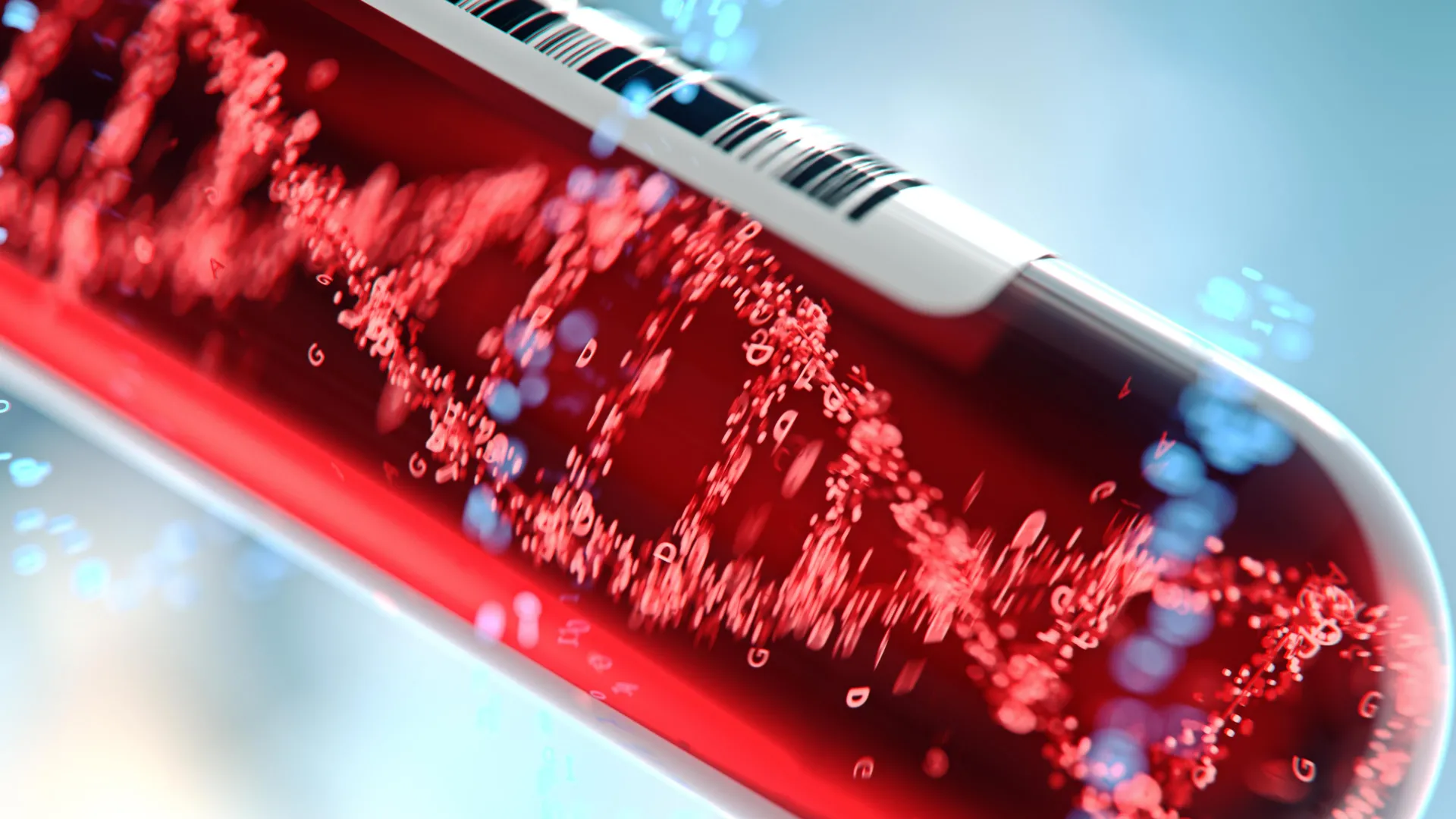
Here's the science in plain terms. When cells anywhere in the body die — which happens constantly as part of normal biology — they release small fragments of their DNA into the bloodstream. Healthy cells and cancer cells shatter their DNA differently: cancer cells tend to package and fragment their genetic material in distinctive, chaotic patterns compared to normal tissue. DELFI uses machine learning to sift through millions of these fragments floating in a simple blood sample, looking for that telltale chaotic signature. Because the analysis reads patterns across the entire genome rather than hunting for a single specific mutation, it can, in principle, catch cancer's fingerprint even when the underlying disease looks completely different from patient to patient.
That "in principle" is exactly what the new study set out to test — and liver cancer is one of the hardest possible proving grounds, because it arises from such a wide range of root causes. In wealthier nations, hepatocellular carcinoma is increasingly driven by metabolic dysfunction-associated liver disease and alcohol use. In other parts of the world, it's chronic hepatitis B or C infection. And in certain agricultural regions, it's aflatoxin — a naturally occurring toxin produced by mold that contaminates improperly stored corn and grain, and that has long been recognized as a potent trigger for liver cancer.
TWO COUNTRIES, TWO VERY DIFFERENT DISEASES, ONE TEST
To find out whether DELFI could handle that diversity, the Johns Hopkins team — working with liver-disease and toxin experts including John Groopman, a leading authority on aflatoxin's role in liver cancer — analyzed blood samples from 377 people across Guatemala and Romania, comparing those with confirmed hepatocellular carcinoma against those without it.
The two study populations could hardly have been more different. In Romania, most participants with liver disease had developed it through viral hepatitis infection or alcohol use — a profile familiar to doctors across Eastern Europe and much of the developed world. In Guatemala, the picture looked almost entirely different: participants were more likely to have metabolic liver disease tied to obesity and diabetes, and many had documented exposure to aflatoxin from the food supply, a risk factor largely absent from the Romanian cohort.
Despite those stark differences in what was actually causing the cancer, the DELFI-based classifier — originally trained and validated in prior research — held up when tested against both independent, high-risk populations. The findings didn't just confirm the test works in more than one place; they offered new insight into why it works, suggesting the chaotic DNA-fragmentation signature the AI is trained to detect reflects something more fundamental about how liver cancer cells behave, regardless of what set them on that path in the first place.
WHY THIS MATTERS MORE THAN THE HEADLINE SUGGESTS
It's worth pausing on just how badly the world needs a better liver cancer early-detection tool. Current surveillance guidelines rely mainly on biannual liver ultrasounds and a blood protein test called alpha-fetoprotein for patients already known to be at high risk — typically people with cirrhosis or chronic hepatitis B. That approach requires patients to already be identified as high-risk, to have consistent access to imaging equipment and follow-up care, and it frequently misses early-stage tumors that ultrasound simply isn't sensitive enough to catch.
The human cost of that gap is enormous and getting worse. Global projections suggest the annual number of new liver cancer cases will nearly double, from roughly 870,000 in 2022 to about 1.52 million by 2050, if nothing changes about how the disease is caught and treated. Researchers estimate that at least 60% of hepatocellular carcinoma cases could be prevented or caught early enough to treat effectively if modifiable risk factors — viral hepatitis, alcohol use, metabolic disease — were managed and screening reached the people who need it. A blood test that doesn't require a specialized ultrasound machine, doesn't depend on knowing a patient's specific risk profile in advance, and can be deployed with the same basic infrastructure in Guatemala as in Romania could meaningfully close that gap, especially in lower-resource regions where imaging equipment and specialist follow-up are hardest to come by.
That's the real promise buried in this study: not just a slightly better test, but a potentially more equitable one. Cancer screening technology has a long, uncomfortable history of working best for wealthy patients in well-resourced health systems and worst for everyone else. A liquid biopsy platform proven to hold up across genuinely different disease drivers and genuinely different health systems is a direct challenge to that pattern.
THE RESEARCHERS' OWN CAUTION
To their credit, the Johns Hopkins team isn't declaring victory. The published research describes this as a validation of a previously developed classifier in new, independent populations — an important and encouraging step, but explicitly not the same as a finished, ready-for-your-doctor's-office product. The investigators say their next moves involve prospective clinical validation, meaning testing the tool going forward on newly enrolled patients in real-world clinical settings rather than analyzing samples that were already collected, and further refining what they call "multimodal" liquid biopsy approaches — combining the DNA fragmentation analysis with protein biomarkers like alpha-fetoprotein and clinical risk factors, layering multiple signals together rather than relying on any single test alone.
This measured framing matters. Multi-cancer blood tests have generated enormous hype over the past several years, including broader efforts aiming to detect around 50 different cancer types from a single draw by hunting for tumor DNA fragments and identifying which organ they came from. Those broader multi-cancer platforms remain the subject of active, sometimes contentious debate among oncologists over how many cancers they truly catch early enough to matter, and how many false alarms they generate along the way. The DELFI liver cancer findings are notable precisely because they're narrower and more rigorously targeted — a single cancer type, tested against real biological diversity, with transparent reporting of a validation study rather than a marketing claim.
WHAT THIS MEANS FOR YOU
If you or someone in your family has risk factors for liver disease — heavy alcohol use, obesity or type 2 diabetes, a hepatitis B or C diagnosis, or a history of exposure to contaminated food staples — this research is genuinely worth watching, though not yet worth acting on. The DELFI liver cancer test is not commercially available and is not something you can currently ask your doctor to order. What it does represent is a credible signal that a simple, scalable blood-based screening tool for one of the deadliest and most silent cancers is moving closer to reality, and that it may end up working just as well for patients in rural Central America as it does for patients in Eastern Europe or the United States.
In the meantime, the existing prevention playbook still matters most: hepatitis B vaccination, moderating alcohol intake, managing weight and metabolic health, and — for anyone already diagnosed with cirrhosis or chronic viral hepatitis — sticking with the ultrasound and blood-test surveillance schedule your doctor already recommends. Liquid biopsy technology like DELFI is aiming to supplement and eventually improve on that playbook, not replace the basics of prevention that already save lives today.
THE BOTTOM LINE
A cancer that kills quietly, often without symptoms until it's too late, may finally be facing a screening tool built to catch it early regardless of what set it in motion. The Johns Hopkins team's DELFI platform just cleared an important hurdle by holding up across two patient populations with almost nothing in common except the same deadly diagnosis. There's real work left before this becomes something available at a routine checkup — prospective trials, regulatory review, and years of refinement likely lie ahead. But for a disease that has long lacked any reliable early-warning system outside of narrow high-risk groups, a blood test that works this consistently across such different populations is the kind of result that keeps oncologists, and now the rest of us, paying very close attention.
Published By | Tech Wiz