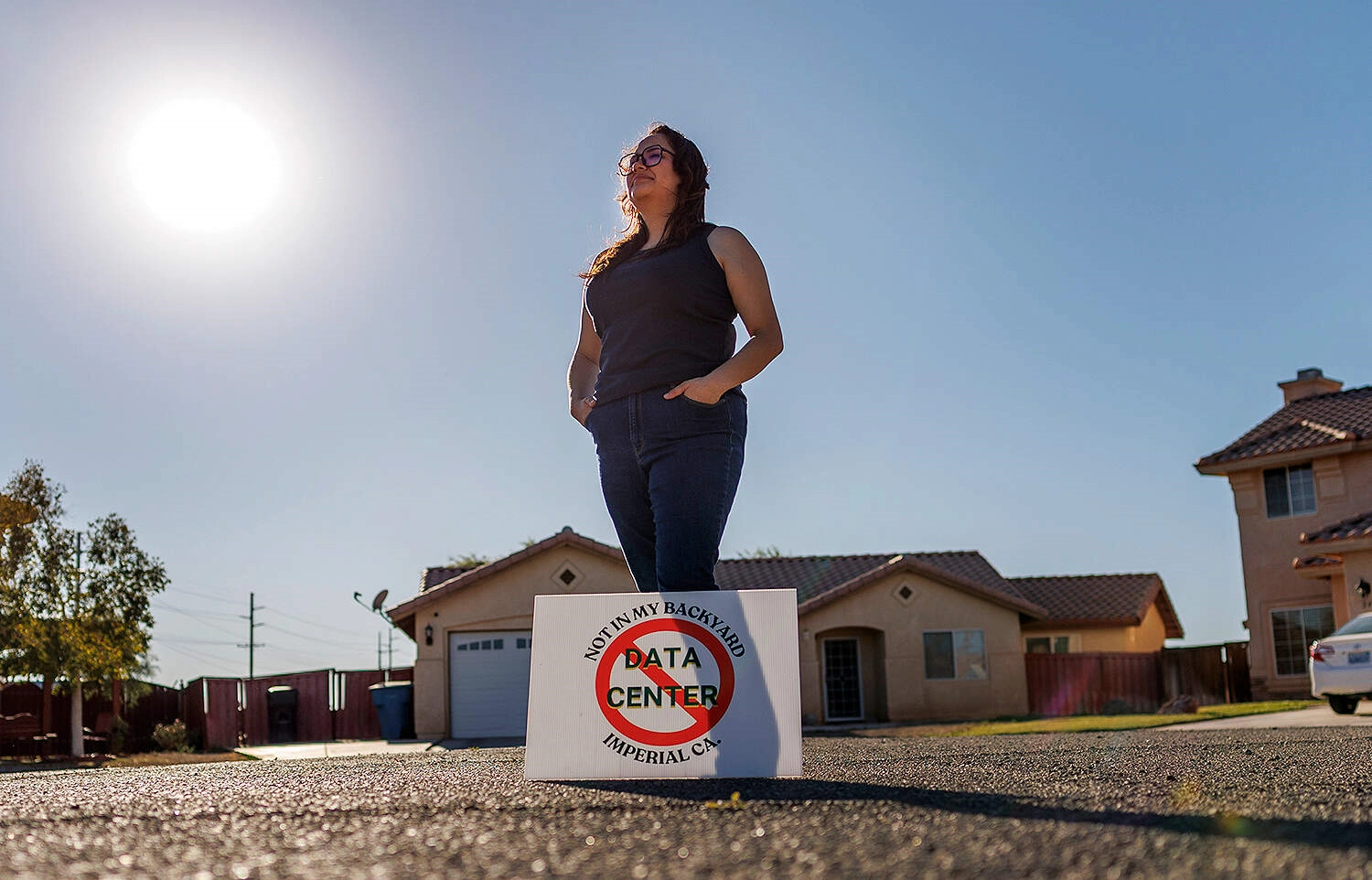
From Ohio cornfield towns to a California suburb, residents crushed local data-center proposals on Election Day, leaving a multi-trillion-dollar AI building boom facing its first big revolt at the ballot box
TECHNOLOGY
The artificial intelligence boom just hit a wall, and the wall is made of ballots. On Tuesday night, while the nation fixated on the midterm headlines, voters in ten states quietly delivered a verdict on the giant, power-hungry server farms that underpin ChatGPT, Gemini and every other AI product on the market: no thanks.
Of 41 local data-center measures put in front of voters on 3 November, 38 had been called by Wednesday lunchtime. Voters limited development in 37 of them and backed it in exactly one, according to a tally compiled from Ballotpedia data by State Capital & Lobbyist reporting. Three more were still being counted as this article was filed. Even the single result that went the developers' way was hardly a ringing endorsement: it was a North Dakota town rejecting an extra review requirement for industrial projects.
It is, by any measure, the most one-sided referendum on a piece of modern technology in recent memory. And it lands at the worst possible moment for an industry that, according to figures reported by Nikkei, has stacked up roughly $3.2 trillion in off-balance-sheet AI commitments — a number that has jumped some 90 percent in just six months.
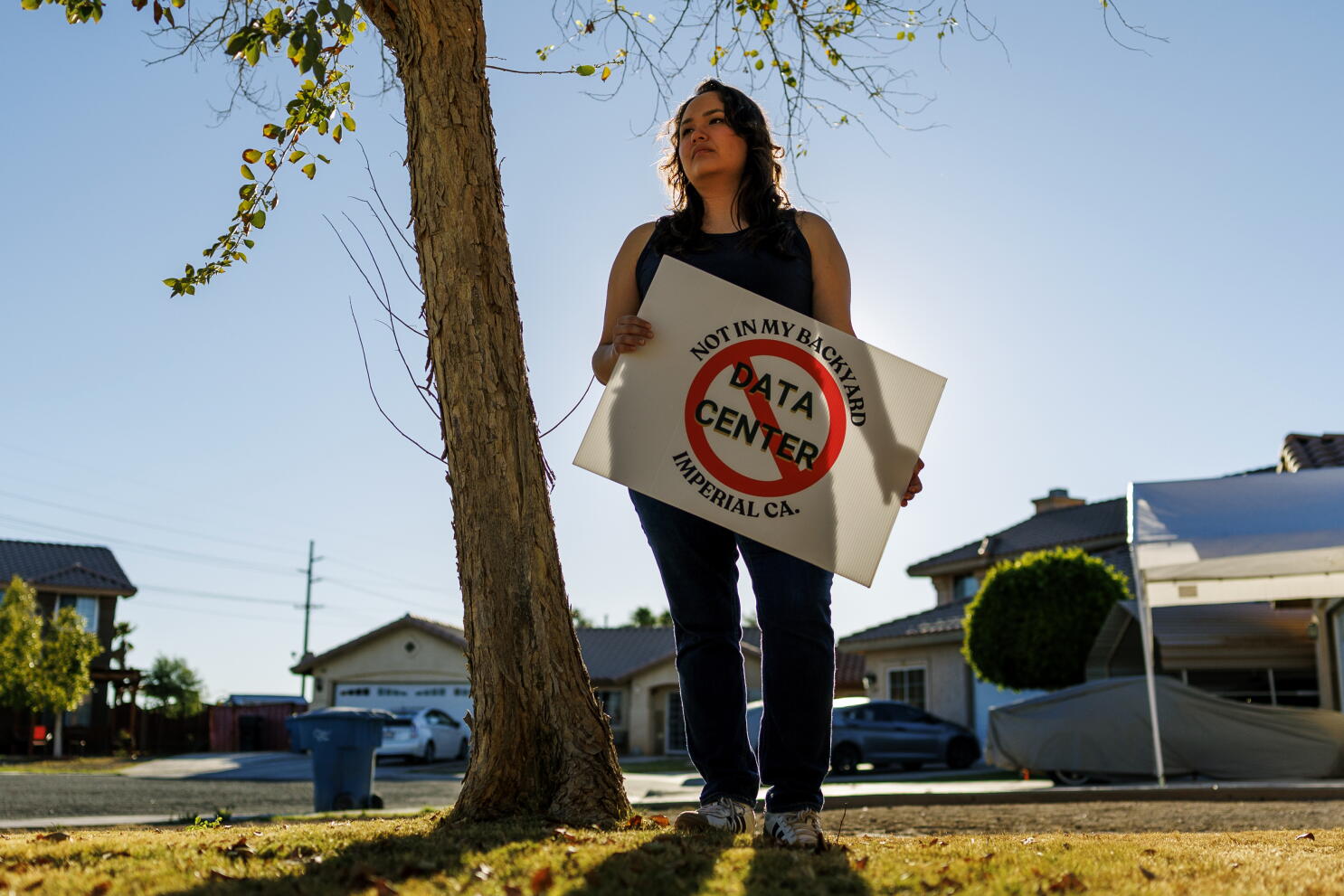
A landslide, town by town
The scale of the rout is best understood locally. Ohio, a state that has become a magnet for hyperscale projects thanks to cheap land and access to the power grid, produced the most dramatic results. Voters there faced 21 measures across 18 localities, and in every one of the 19 counted so far they went against development.
Eleven bans passed outright, in towns including Conneaut, Defiance, Granville, Hubbard, Oregon, Pataskala, Piqua, Sunbury, Trenton, Upper Sandusky and Urbana. Most took the form of 25-megawatt caps or charter amendments. In Wilmington, residents were asked four separate times to approve rezoning for data-center use. Four times they said no, each by roughly 80 percent to 20 percent. In Ashville, a referendum tied to negotiations with the developer EdgeConneX was flattened with 82 percent voting no, and in Monroeville an advisory question failed with 87 percent opposed.
Illinois told the same story. Seven advisory questions, seven rejections. Townships in Madison County — Chouteau, Granite City, Nameoki and Venice — rejected new data-center permits with between 74 and 83 percent voting no. Joliet turned down approving AI data centers with 79 percent against. Bloomington backed a moratorium with 78 percent in favor, and Morgan County voted 88 percent for restrictions.
Beyond the Midwest, the pattern held. In Kansas all three bans passed, including in Emporia (60 percent yes) and Ottawa (69 percent). All four measures in Maine passed, in North Berwick, Peru, Wells and Wiscasset, by margins from 66 to 82 percent. California's Alhambra approved Measure DB with 82 percent. Edgewater, Florida, passed a charter ban with 77 percent. In Janesville, Wisconsin, 63 percent of voters demanded that any redevelopment of the old GM/JATCO site costing more than $450 million go to a public vote. Downe Township, New Jersey, rejected an advisory question supporting data centers by 87 percent.
It was not a one-day blip
If Big Tech hoped Tuesday was an outlier, the year's record says otherwise. Ballotpedia counts at least 50 local data-center measures across 13 states in 2026, most of them started by citizen petition, and 24 of them were outright bans or moratoriums. The six earlier measures this year all went against data centers too: Monterey Park, California, banned them with 88 percent in June; Augusta Township, Michigan, rejected a rezoning with 90 percent in August; Canterbury, New Hampshire, banned them with 84 percent in March; and Nottingham, New Hampshire, voted a 12-month permit moratorium with 90 percent in September.
The anger has also turned personal for local politicians. Ballotpedia counted 42 recall efforts against 80 local officials through early October. In Independence, Missouri, a councilman was recalled on 1 September over a 90 percent tax abatement for a Nebius data center. In Town of Turtle, Wisconsin, the town chairman was recalled in October. On Tuesday, voters ousted a council member in Mason, Michigan, three commissioners in Piqua, Ohio, and the mayor of Urbana, Ohio, among others.
Public opinion polling points the same way. An NBC News Election Day poll found 76 percent of voters oppose local data centers, according to figures cited by The Verge. Texas, the state with arguably more data-center ambition than any other, elected a candidate who backs a statewide moratorium, according to the same roundup. (Some reports on statewide outcomes differ in detail, and officials caution that campaign promises are not law.)
Why are people so angry?
Ask residents and the same themes come up again and again. Electricity prices top the list: a hyperscale campus can draw as much power as a mid-sized city, and ordinary customers worry they will end up footing the bill for new generation and grid upgrades. Water for cooling is a close second, particularly in drought-prone regions. Then there is the noise from backup generators and cooling fans, the sprawling industrial footprint, and the stinging fact that these gleaming buildings employ remarkably few people once construction ends.
Tax breaks add insult. In Perry, Ohio, voters passed a rule requiring financial guarantees for hyperscale tax incentives with 87 percent support, a pointed message that communities no longer want to hand over generous abatements on trust. In Independence, a 90 percent abatement cost a councilman his seat.
There is also a trust problem. Many projects have been negotiated behind closed doors, under non-disclosure agreements, with code names in place of company names. Several of Tuesday's measures were specifically aimed at forcing those deals into the open by requiring a public vote above a certain size. Grove City, Ohio, passed such a rule for large projects, while Janesville did the same at the $450 million threshold.
The industry's $3 trillion problem
The timing could hardly be worse for the companies involved. Fresh figures from Nikkei put big tech's off-balance-sheet AI commitments at around $3.2 trillion at the end of September, with Alphabet carrying about $1.05 trillion and Meta about $810 billion. Those commitments — leases, power deals and construction contracts — assume that land will be rezoned, permits granted and grid connections delivered on schedule.
Chipmakers are still riding the wave. AMD reported this week that its third-quarter data-center revenue nearly doubled to $8.5 billion, up 97 percent, and guided to about $17 billion in total revenue for the fourth quarter, above analysts' $16.2 billion average. But every one of those chips needs a building to live in and a power line to feed it. Demand for silicon is only as good as the industry's ability to switch it on.
Analysts at tech-industry site Tech Insider, summarizing Reuters reporting, argue that permitting is now a genuine constraint alongside power, chips and sites. Single-site bets look riskier; capacity may shift to friendlier jurisdictions or be redesigned; labs with large forward compute commitments face schedule risk, while hyperscalers with many sites can offset a stalled one. Small deployments on existing colocation space look more insulated.
What comes next
The fight is far from over. Two high-stakes votes are already on the calendar. On 1 December, voters in Clarksville, Arkansas, will decide two bond referendums for named projects — one covering up to $50 billion for a site by Hatchbo LLC, and another up to $5 billion for SF ARK1 LLC. On 15 December, Mandan, North Dakota, votes on a 25-megawatt ban. Meanwhile, activists in Ohio, whose proposed statewide amendment to ban data centers above 25 megawatts missed its 1 July signature deadline, say they are targeting November 2027.
Not every proposal even reached voters. At least 17 local proposals in 13 states fell short because of signature shortfalls, deadlines, court rulings, or because councils repealed their own ordinances rather than face a referendum — as happened in Mason, Michigan. In Boulder City, Nevada, a measure to allow data centers in the Eldorado Valley Transfer Area was still being counted.
Developers are expected to respond in three ways: courting communities earlier with benefit agreements and binding commitments on water and power, shifting to sites in places with friendlier politics, and building their own power supply so they are not seen as competing with households. Some may simply pay more. None of those options is cheap, and all of them take time the AI race may not allow.
Expert perspective
The political message is blunt, and not everyone in the AI world is surprised. Geoffrey Hinton, the so-called godfather of AI, told The Guardian this week that "we would have been better off never developing" the technology, and called for FDA-style testing of frontier models. Few would put it that starkly, but the ballot results suggest the public mood has soured on the physical footprint of AI even as people keep using the products.
Analysts also urge caution about over-reading the results. As Tech Insider's analysis noted, the measures concerned buildings and land use, not AI models themselves, and a governor's promise to pause permits is not the same as a pause in effect: policy changes usually need legislation or agency rules, and existing permits often remain valid. Many of the measures were advisory, and many were tiny local contests with low turnout. A town of a few thousand people voting no does not stop a project in the next county.
Still, the sheer consistency is what has the industry's lobbyists rattled. When 37 out of 38 called contests break the same way, across red and blue states, rural and suburban areas, the pattern is hard to wave away as noise.
What this means for you
If you live near a proposed data center, expect to hear about it sooner. Pressure for public votes, disclosure of deals and guarantees on tax incentives is growing, and Tuesday proved that residents can win.
If you use AI tools, the effects will be indirect but real. Slower permitting could mean tighter supplies of computing power, which can feed through to higher prices, tighter rate limits, or slower rollouts of new features. Meanwhile, if you pay a power bill, expect your utility commission to face louder questions about who pays for the grid upgrades that data centers demand.
If you invest, remember that data-center demand and data-center supply are two different things. Chip revenue is soaring, but the ability to deploy those chips depends on local approval. And if you work in tech, the lesson from Tuesday is that social license is now part of the infrastructure stack.
The bottom line
For two years, the story of AI has been told in gigawatts and billions of dollars, and the people who live next to the buildings were rarely asked. On 3 November 2026, they were asked — and they answered in towns from Conneaut to Alhambra, in margins of 80 percent and 90 percent. The industry can still get its data centers built. But it will have to earn them, one community at a time.
Published By |