Written By | Torch Media Africa
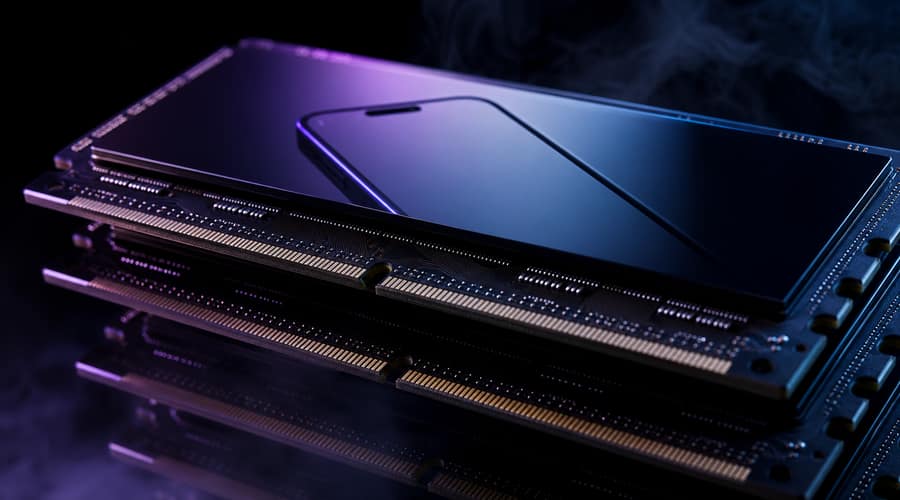
The robots are eating the world's memory supply — and you're the one getting the bill.
San Francisco / Cupertino, California
There is a flood coming, and it isn't made of water. It's made of silicon, and it's about to wash $200, maybe $300, straight out of your wallet the next time you walk into an Apple Store.
On June 17, Tim Cook — the most powerful phone executive on Earth, a man who has steered Apple's supply chain through pandemics, tariff wars, and chip famines for the better part of two decades — sat down with The Wall Street Journal and said something he has never said before: prices are going up, and there's nothing he can do about it.
“I've never seen anything like it in any area in over 40 years,” Cook told the paper, comparing the global memory chip shortage to a “hundred-year flood.” It is, by any measure, a stunning admission from a company that built its empire on controlling every link of its own supply chain down to the screw. Apple has weathered chip shortages before. It has never before told the public, in plain language, that it simply cannot absorb the cost anymore.
The villain in this story doesn't wear a hoodie or live in a garage in Palo Alto. It's a server rack. Specifically, it's hundreds of thousands of server racks, in data centers from Virginia to Malaysia, all of them stuffed with the same memory chips that have, for the last thirty years, quietly powered your phone, your laptop, and your game console. Artificial intelligence has developed an appetite for memory so enormous that it is now eating the supply meant for the rest of us — and the rest of us are about to feel it in our wallets.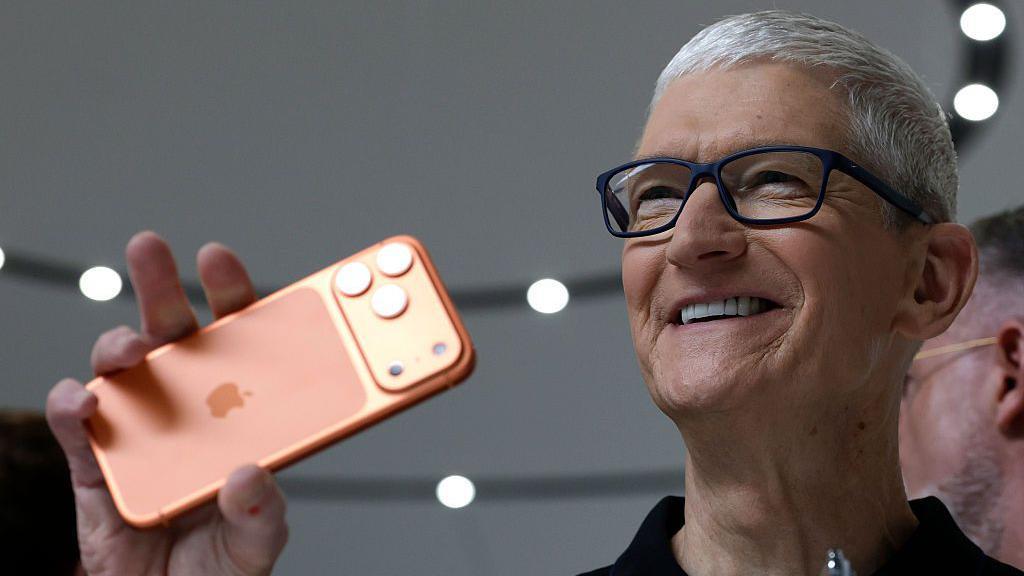
The Great Memory Heist
Here's the part that should make every iPhone owner sit up: as much as 70% of all memory chips manufactured globally in 2026 are now destined for AI data centers, not phones, laptops, or game consoles. Three companies — Samsung, SK Hynix, and Micron — control more than 95% of the world's DRAM (the short-term memory chips inside virtually every digital device on Earth). Between them, they have reallocated an estimated 93% of their combined manufacturing capacity toward high-bandwidth memory, or HBM — the specialized, ultra-fast chips that Nvidia's AI accelerators need to function.
Translation: the factories that used to make the memory chips in your iPhone are now making memory chips for ChatGPT, Gemini, and every other AI model racing to out-think the competition. Micron has gone so far as to halt production of ordinary PC memory altogether, pivoting its lines entirely to high-end AI memory. SK Hynix told investors on an October earnings call that its HBM, DRAM, and NAND capacity is “essentially sold out” — not for this quarter, but for the entirety of 2026.
The price damage is already visible on store shelves. Samsung hiked the price of a 32GB DDR5 memory module from $149 to $239 in September — a 60% jump in a single pricing cycle. Contract pricing for DDR5 chips sold to manufacturers has surged more than 100% year over year. Research firms that track the semiconductor market have been revising their forecasts upward almost monthly: one investment bank lifted its third-quarter DRAM price-increase estimate from a range of 10–15% to roughly 30%, with another double-digit jump expected before the year is out.
And it isn't just Apple. Samsung, Microsoft, Sony, and Dell have all already raised prices on their own hardware in response. Apple quietly made its first move weeks ago, eliminating the entry-level $599 configuration of the Mac mini and pushing the effective starting price to $799 — a 33% increase with no warning and no fanfare. Industry analysts at IDC now project the average price of a smartphone, across every brand on the market, will hit a record $523 in 2026 — a 14% jump in a single year.
What It Means for the iPhone 18
All eyes are now on the iPhone 18 Pro, expected to launch this September, which has become the test case for just how bad this is going to get. Estimates vary, but none of them are good news for your wallet.
TechInsights, a firm that tracks the cost of components inside consumer electronics, estimates Apple would need to charge $270 more for the iPhone 18 Pro just to preserve its current profit margins given the spike in memory costs. The Wall Street Journal's own reporting suggests Apple could set the phone's starting price at $1,399 or higher — a jump of $200 to $300 over the $1,099 starting price of last year's iPhone 17 Pro. Some analysts believe the increase could be more moderate, in the $100–$150 range, with Apple absorbing some of the pain rather than passing all of it to consumers. A handful of more bullish voices — like analyst Jeff Pu — believe Apple might hold the line entirely on its flagship pricing to protect market share, eating the cost itself rather than risk a consumer backlash.
But even the most optimistic outlooks acknowledge the same underlying reality: the cost of the silicon inside every iPhone has gone up, possibly even doubled, in the space of about a year, and that bill has to land somewhere. Beyond the chip costs tied directly to memory, Apple also faces a separate cost pressure from its shift to smaller, more advanced 2-nanometer chips, which industry estimates suggest could add another $35 per handset — pushing total chip costs to roughly $85 per device, before memory costs are even factored in.
It isn't only phones, either. Cook confirmed that Macs and iPads will also see price increases tied to the same memory crunch, marking the first time in years that Apple has signaled hikes across its entire hardware lineup simultaneously, rather than isolating the pain to a single flagship product.
The Experts Weigh In
“The situation has become unsustainable,” is how Samsung's own memory chief, Kim Jaejune, has described the crunch — about as blunt an admission as you'll get from a company that stands to profit handsomely from the very shortage it's describing. Samsung has warned that “significant shortages” across memory products are expected to continue through at least 2027.
Micron CEO Sanjay Mehrotra has gone further, predicting the shortage will persist “well beyond 2026.” SK Group chairman Chey Tae-won offered the grimmest timeline of all, suggesting in recent remarks that shortages in some memory categories could last until approximately 2030 — meaning an entire generation of consumer electronics, from phones to laptops to game consoles, could ship at inflated prices for the rest of this decade.
Cook, for his part, was careful in his WSJ interview to frame Apple's position as a victim of circumstance rather than a profiteer. According to people familiar with the discussion, Apple had been quietly absorbing rising memory costs for months, hoping the shortage would ease, before concluding internally that doing so any longer would meaningfully damage the company's margins — margins that Wall Street watches more closely than almost anything else Apple does.
What This Means for You
If you've been holding off on a new iPhone, Mac, or iPad, the math has suddenly shifted in favor of buying now rather than later. Every signal out of the supply chain points toward higher prices arriving with the iPhone 18 lineup this September, and most forecasters don't see meaningful relief until late 2027 at the earliest — with some predicting the squeeze could last into 2028, or even 2030 for certain memory categories.
For the average household, this isn't an abstract Wall Street story. A family that might have budgeted $1,100 for a new iPhone this fall could be looking at $1,300 to $1,400 instead — and that's before considering that the laptop, the kid's tablet, and the gaming console you were also planning to upgrade are all drawing from the exact same squeezed memory supply. IDC's projection of a $523 average smartphone price across all brands by year's end means this isn't an Apple-specific tax — it is a tax on owning modern electronics, period, and it is one that traces directly back to the global race to build smarter, more powerful artificial intelligence.
There is a certain irony at the heart of this story. The same AI tools that are supposed to make our lives easier, smarter, and more efficient are, in the very same moment, quietly making the physical hardware that runs our digital lives more expensive. Every ChatGPT query, every AI image generated, every large language model crunching through a data center somewhere, is competing — directly, materially — for the same finite pool of memory chips that goes into the phone in your pocket.
The Bottom Line
Tim Cook built his reputation on never letting a supply chain crisis become Apple's problem. This time, he's telling the world flat-out that it has. The flood Cook described isn't going to recede when the iPhone 18 ships in September — by most expert accounts, it's still rising. Whether you're an Apple loyalist, an Android holdout, or someone who hasn't bought a new phone in four years, the bill for the AI boom is about to show up in your shopping cart, whether you asked for it or not.
The age of cheap memory is over. The only question left is how long the rest of us will be paying for AI's appetite — and right now, even the people running the chip factories don't have a confident answer.
Sources: techtimes.com — abcnews.com — deccanherald.com — tidbits.com — engadget.com — tradingview.com (Reuters/WSJ) — networkworld.com — tomshardware.com — tech-insider.org — macrumors.com — techradar.com



