Written By | Torch Media Africa
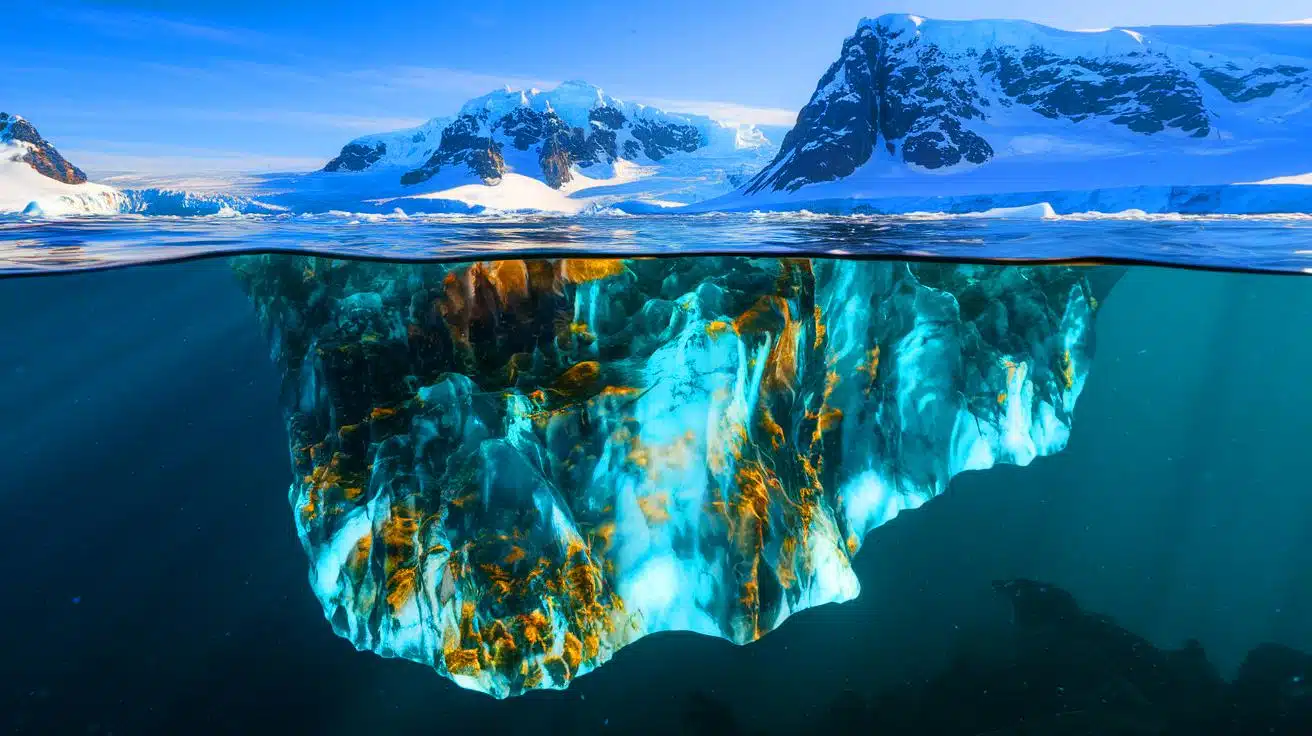
Among the basins is the one cradling Lake Vostok, the largest subglacial lake on Earth, sealed under four kilometers of ice and isolated for millions of years.
GENOA, ITALY
For seventy years, scientists have mapped hidden worlds beneath Antarctica's three-kilometer-thick ice: buried mountains, deep canyons, and hidden lakes. What no one realized until now is that many of these features are not separate curiosities but pieces of a single, gargantuan structure.
A team led by geophysicist Egidio Armadillo of the University of Genoa has discovered the East Antarctic Fan-shaped Basin Province — a network of around thirty connected basins radiating from near the South Pole like the ribs of a hand-held fan. The findings, published in Nature Geoscience, required no new expedition. Instead, researchers combined decades of radar, gravity, and seismic data into one unified picture. A pattern leapt out that had been staring scientists in the face for generations.
Among the basins is the one cradling Lake Vostok, the largest subglacial lake on Earth, sealed under four kilometers of ice and isolated for millions of years. It is now revealed as just one chamber in a continental cathedral of basins.
How a Giant Formed
The researchers argue that the structure was carved by a rare process called distributed rotational extension — imagine a chunk of continental crust thousands of kilometers wide, anchored near today's South Pole, slowly spreading apart like fingers. The thinned zones between the rotating blocks sagged into the great basins we see today.
The team proposes the fan began forming before the breakup of the supercontinent Gondwana, which once welded together Antarctica, Australia, Africa, South America, and India. The weakened crust may have helped steer where Antarctica and Australia later tore apart — meaning this buried structure shaped the very geography of the southern hemisphere.
Why It Matters for Rising Seas
This is far more than a geological curiosity. The shape of bedrock beneath an ice sheet controls where ice flows and how fast it moves. The newly recognized basin province determines the stability of regions scientists consider especially vulnerable to climate change.
The Wilkes and Aurora basins — both ribs of the fan — lie partly below sea level. Warm ocean water could work its way inland along these troughs, destabilizing the ice from below. The East Antarctic Ice Sheet holds the largest store of frozen water on the planet; even modest losses would reshape coastlines worldwide. Knowing these basins are connected gives climate modellers a powerful new framework for predicting sea-level rise.
What This Means for You
If you live near a coast, eat food from coastal farmland, or pay insurance premiums against storm surges, the stability of East Antarctica is your problem. The ice sitting in and around the fan's basins represents meters of potential sea-level rise over the long term. Better maps of the hidden continent mean better forecasts for your hometown. The discovery is also a reminder that Earth can still astonish us. In an age of satellite imagery, a structure the size of a subcontinent stayed hidden until 2026 — found not by miracle, but by scientists patiently connecting dots that the whole world already had.
"The hidden landscape continues to influence ice flow today," the authors note, controlling where subglacial basins sit and affecting the stability of climate-sensitive sectors of the ice sheet. The map is not finished — but the age of exploration is not over.



