Share
By Tiharihondijo Dickens
We often hear relationship advice tossed around casually—"You just need to sit down and talk to your partner." While it sounds like a simple and practical solution, the truth is far more complex. Human beings are not programmed to operate on logic alone. We are driven by ego, pride, insecurities, mental health issues, religious beliefs, cultural conditioning, and more. Yet most advice-givers—be it counselors, motivational speakers, or well-meaning friends—often ignore these deeply ingrained factors when advising people in troubled relationships.
Take, for example, the issue of infidelity. If you ask men why they cheat, very few will give a direct or honest answer. Often, it’s not even about emotional dissatisfaction. Many men admit, albeit behind closed doors, that the urge to cheat sometimes stems from impulse rather than a meaningful reason. So when a woman confronts her partner and asks, “Why did you cheat?” what answer is she likely to get? Most often, the blame will be placed on some vague, external force—“The devil tempted me,” and the conversation ends there.
The truth is, many relationships are built on illusions. If you ask a married couple why they got married, they will likely say, “Because I love my partner so much; I couldn’t live without them.” But dig deeper, and you’ll often find convenience was a stronger motivator than love. Financial stability, family pressure, societal expectations, and the ticking biological clock play a significant role—far more than many are willing to admit.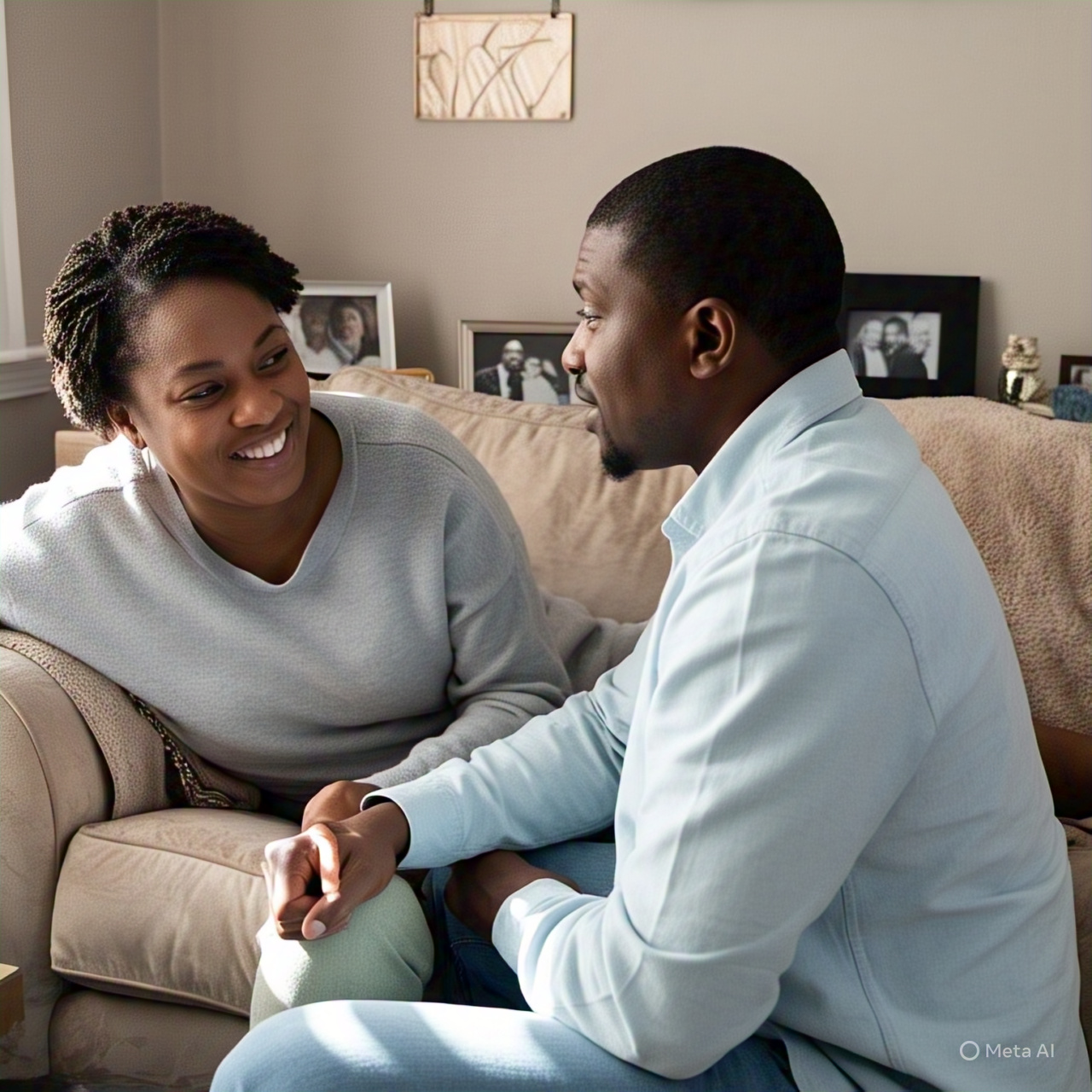
It's difficult to have an honest conversation when the foundation itself is built on pretense. (Photo Couple having a heart -to-heart conversation. Imagined by Meta AI)
Women, for example, are often taught to assess a man’s financial capacity before committing. “What does he do? Which family is he from?” These questions are not inherently bad, but they reveal that for many, love is secondary to security. And yet, no one will ever say, “I want to marry him because I want to be taken care of.” It’s always, “Because I love him.”
This dishonesty becomes a problem when the relationship starts to break down. When people sit down to talk, the original lies that held the relationship together get in the way of progress. It's difficult to have an honest conversation when the foundation itself is built on pretense.
Imagine a woman who is no longer emotionally or sexually satisfied with her partner. Is she likely to say, “I don’t feel connected to you,” or “You’re not good in bed”? Rarely. Instead, she’ll offer convenient excuses: “I’m tired,” “The kids stress me out,” “Work has been overwhelming.” Why? Because honesty in such matters often shatters egos and exposes vulnerabilities that most people are unwilling to confront.
Pride and ego are powerful forces. Some people are raised with rigid beliefs—about what a man or woman should do in a relationship—and no matter how many “sit down and talk” sessions they have, nothing changes. They listen to respond, not to understand.
And let’s not forget narcissists. These individuals believe they are always right and that the world should revolve around their needs. Try sitting down with them for a talk, and you’ll find yourself under attack. They don’t hear you—they hear criticism. And to them, criticism is abuse.
The hard truth is: the truth often feels abusive. Most people don’t want to hear it. That’s why those who speak openly and honestly are often labeled arrogant or difficult. If you want to maintain peace, society teaches us, don’t tell people the truth—tell them what they want to hear.
Ironically, many people who preach the importance of communication in relationships don’t apply that advice in their own lives. They, too, are afraid of what they might hear—or what they might have to admit.
So before we rush to tell someone to “sit down and talk,” perhaps we need to understand what that really requires: emotional maturity, honesty, self-awareness, and a willingness to face uncomfortable truths. Without those ingredients, that conversation will go nowhere—and might even do more harm than good.
The writer is a Ugandan citizen



