Share
By Ayella Amuru
Procreation is often romanticized as an act of love, yet when examined closely, it reveals itself as an act of violence—an irreversible decision that forces a sentient being into a world fraught with suffering. Life is not a gift but a gamble, and no one consents to being born. From the moment of birth, one is thrust into a reality filled with social, political, economic, biological, and ecological turmoil—any one of which is enough to bring lifelong suffering.
As the Greek philosopher Socrates famously said, “The greatest blessing is not to be born; but if one is born, the next best thing is to die as soon as possible.” This may sound grim, but it is an undeniable truth. Every birth is a wager with fate, and no parent can guarantee a life free from pain, disease, heartbreak, or injustice. History shows that suffering is not an exception but a certainty, passed down from generation to generation like an unshakable curse.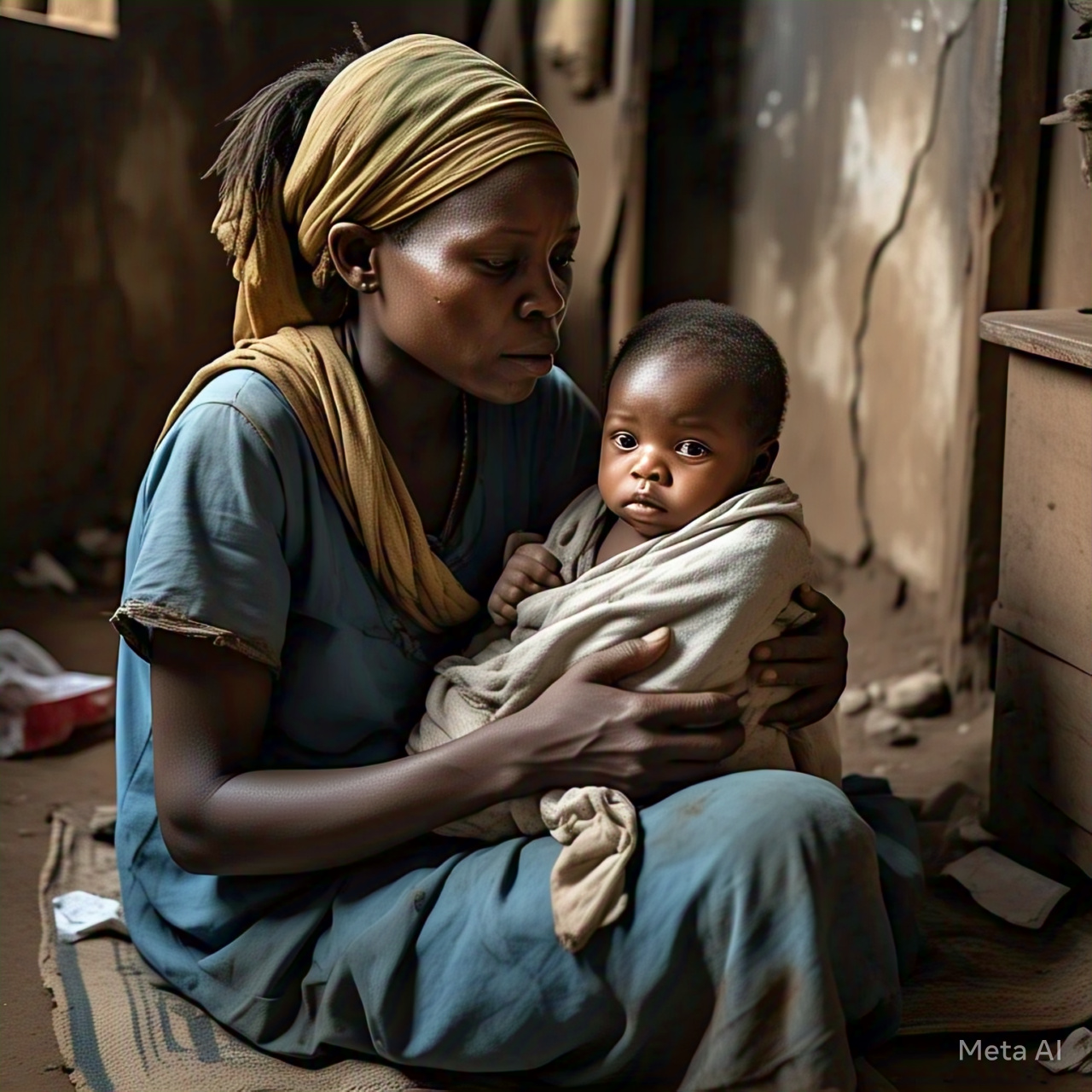
Picture imagined by Meta AI
Antinatalism and the teachings of Jesus
Interestingly, the Bible itself offers a strong case for antinatalism. Jesus never married, never had children, and in multiple passages, he distanced himself from the traditional concept of family. In Luke 14:26, he declares, “If anyone comes to me and does not hate father and mother, wife and children, brothers and sisters—yes, even their own life—such a person cannot be my disciple.”
Early Christianity did not encourage procreation. The idea of remaining child-free was widely accepted among early followers until Emperor Constantine institutionalized Christianity as the state religion. This shift abolished antinatalism in favor of natalism, which was necessary to sustain the empire’s growing economy and military. In essence, population growth became a tool of power rather than an ethical choice.
The ethics of Non-Violence and the ultimate sin
If we truly embrace the principle of non-violence, we must recognize that the greatest act of compassion is to refrain from exposing another being to suffering. Every human life comes with disease, aging, loss, pain, and ultimately, death—none of which can be avoided. Thus, the most ethical decision one can make is not to create life at all.
Becoming a parent is often seen as an unquestionable virtue, but what if it is actually the greatest sin of all? The world mourns death but celebrates birth, forgetting that the two are inseparable. To end suffering at its root, we must rethink our glorification of procreation.
Antinatalism does not condemn those who have children, nor does it deny that life has moments of joy. Rather, it asks a deeper question: Is it ethical to impose existence on someone who never asked for it? And if we truly love others, should we not spare them from the inevitability of suffering altogether?
What do you think?
Torch Media Africa



