Uganda Tourism
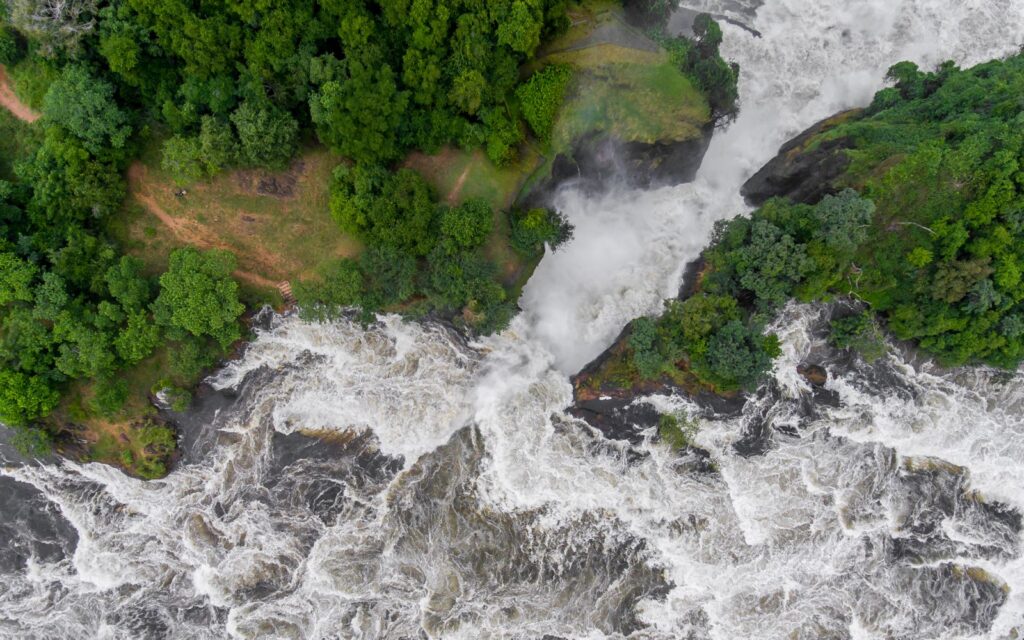
There is a place on the Victoria Nile where the whole river — one of the mightiest waterways on Earth, swollen from its long journey out of Lake Victoria — is forced through a gap in the rock barely seven metres wide. The water does not so much fall as explode, throwing spray fifty metres into the air and filling the gorge with a permanent, low thunder that visitors say they feel in their chest before they ever see it. This is Murchison Falls, the roaring heart of Uganda's largest and oldest national park, and this week it is the country's turn in the spotlight as the dry season draws safari-goers back to its savannahs, its riverbanks thick with hippos and crocodiles, and its skies patrolled by some of the rarest birds in Africa.
A Park Built Around a Roar
Murchison Falls National Park sprawls across roughly 3,893 square kilometres of northwestern Uganda, split neatly in two by the Victoria Nile as it cuts west toward Lake Albert. The park takes its name from the falls themselves, named in 1864 by the explorer Samuel Baker in honour of Roderick Murchison, then president of the Royal Geographical Society — though the Acholi and Alur communities who have lived along this stretch of river for centuries knew the cataract long before any European mapped it. Baker and his wife Florence, guided by local knowledge, were the first Europeans to document the falls, and the park that grew up around them, gazetted in 1952, remains Uganda's oldest protected area.
What makes Murchison Falls extraordinary is the sheer density of experience packed into a single landscape. North of the river, rolling grassland and borassus palm savannah hold the park's signature herds: Rothschild's giraffes — found almost nowhere else in the country in such numbers — alongside elephant, buffalo, Uganda kob, oribi, and the lions and leopards that hunt them. South of the river, the Nile carves through the Buligi Peninsula and into the dense, humid tangle of Budongo Forest Reserve, one of Uganda's most important remaining blocks of natural forest and home to roughly 800 chimpanzees along with black-and-white colobus and blue monkeys. The delta where the Nile empties into Lake Albert is a Ramsar-listed wetland of international importance, and it is here that visitors go hunting for the park's most coveted sighting: the prehistoric-looking shoebill stork, a bird so odd-looking and so still that guides joke it might be a statue until it blinks. More than 450 bird species have been recorded across the park in total.

The signature Murchison experience remains the boat cruise up the Nile from Paraa to the base of the falls, a slow, three-hour drift past pods of hippos, baking crocodiles, and elephants come down to drink, ending with the falls themselves rearing up ahead in a wall of noise and mist. Above the gorge, a second trail lets visitors hike or drive to the top of the falls, where the entire river is compressed into that impossible gap before dropping 43 metres into the churn below — a vantage point many say is even more affecting than the view from the water. Game drives across the northern sector, guided nature walks, chimpanzee trekking in Budongo, and increasingly popular hot-air balloon safaris at dawn round out the park's offering, making it arguably the most complete single-destination safari in East Africa.
Murchison's story in 2026 is not without tension. The park sits atop part of the Albertine Graben's oil reserves, and the Tilenga development, led by TotalEnergies in partnership with Uganda's national oil company, has continued drilling within the park's boundaries and building feeder infrastructure toward the export pipeline that will eventually carry crude to the Tanzanian coast. Conservationists and some tour operators have raised concerns about habitat disturbance near the ecologically sensitive delta, even as the Uganda Wildlife Authority maintains that safari operations, wildlife numbers, and the visitor experience across the vast majority of the park remain unaffected. For most travellers, the two industries occupy different corners of a very large park, and the falls, the wildlife, and the river cruise remain as compelling as ever.
Getting There, and What It Costs
Murchison Falls sits about 305 kilometres from Kampala by road, a drive of five to six hours via Karuma that passes through the Nile's dramatic gorge country. Travellers short on time increasingly fly: scheduled domestic flights connect Entebbe International Airport to Pakuba Airstrip in the park's northern sector in about an hour, with lodges typically a ten- to twenty-five-minute transfer from the airstrip. A second, more adventurous approach crosses the Nile at the Paraa vehicle ferry, linking the park's southern and northern sectors.
Entry fees for 2026 stand at USD 45 per day for foreign non-residents and USD 35 for foreign residents, with East African Community citizens paying UGX 25,000 per adult and UGX 10,000 for children aged five to fifteen. The Uganda Wildlife Authority now accepts cashless and card payments at park gates, a recent shift from the cash-only system of past years. Activities such as the launch cruise to the falls, chimpanzee tracking in Budongo, guided nature walks, and hot-air balloon flights are booked and paid separately from the park entry fee. Notably, 30 percent of all park entrance revenue is channelled back to the communities living around Murchison's boundaries, a revenue-sharing model Uganda has leaned on increasingly as it tries to build local buy-in for conservation.
The dry seasons, from roughly June to September and again from December to February, offer the best wildlife viewing, as animals concentrate around the river and remaining waterholes and the tracks stay firm for game drives. Accommodation options range from the long-established Paraa Safari Lodge and Pakuba Safari Lodge overlooking the river to smaller tented camps scattered through the northern savannah and along the delta, catering to everything from budget overlanders to high-end fly-in safari clients.

This Week in Ugandan Tourism
Uganda's tourism sector is riding real momentum into the second half of 2026. Tourism revenue hit an estimated USD 1.7 billion in 2025, up from USD 1.28 billion the year before, with international arrivals climbing roughly 26 percent — figures the Ministry of Tourism and the Uganda Tourism Board have been citing as they pivot strategy from chasing raw visitor numbers toward attracting higher-spending travellers who stay longer.
The most immediate event on the calendar is the Rwenzori Marathon, set for Saturday, 22 August 2026, in Kasese at the foot of the Rwenzori Mountains. Organisers and government officials are billing it as a soft-power tourism play, with runners expected from close to 45 countries and organisers projecting a global following in the millions, part of a deliberate push to market western Uganda's mountain scenery alongside its more famous savannah parks.
Later in the year, the Uganda Wildlife Authority has scheduled its Open Park Days for 25 to 27 September 2026, a three-day window in which selected national parks — historically including sites like Murchison Falls — waive entrance fees entirely to encourage domestic tourism and get more Ugandans into their own protected areas. It is a policy UWA has leaned on in recent years to build a domestic conservation constituency rather than relying solely on international visitors.
On the industry side, the newly launched Pearl of Africa Tourism Expo Awards for 2026 are pushing the sector's conversation toward service standards and sustainability rather than pure growth, part of what local broadcasters have described as tourism's shift "from numbers to standards." The Uganda Tourism Board has also been actively courting new source markets, most notably a fresh diplomatic and marketing push aimed at Indian travellers, positioning Uganda as an affordable, wildlife-rich alternative within East Africa's crowded safari market. Together, the marathon, the fee-free park days, and the new awards framework sketch a tourism sector trying to grow up — bigger, yes, but also more deliberate about who it welcomes and how it measures success.
Published By | Features Editor