Written By |
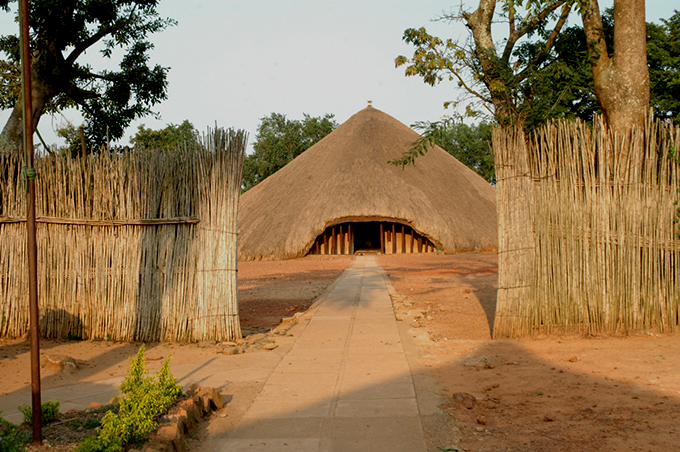
Kasubi Tombs occupies nearly 30 hectares of hillside in Kampala district, a site whose story begins in 1882, when Kabaka Muteesa I built his palace here
Kampala, Uganda
The hill rises gently above the roar of Kampala's traffic, and with each step up the red-earth path, the city seems to fall away. By the time visitors reach the tall reed fence encircling the summit at Kasubi, the noise has softened into something closer to reverence. Inside, beneath a colossal dome woven entirely from grass, reed, and wattle, four kings of Buganda lie at rest — and, according to Baganda belief, they have not truly died at all. They have simply withdrawn into the forest, from where they continue to speak to the living through chosen mediums. Nearly a decade and a half after fire tore through this sacred hilltop, the Tombs of the Buganda Kings at Kasubi are once again drawing travelers, pilgrims, and the merely curious into one of East Africa's most extraordinary encounters with living history.
A Palace Turned Sacred Ground
Kasubi Tombs occupies nearly 30 hectares of hillside in Kampala district, a site whose story begins in 1882, when Kabaka Muteesa I built his palace here. Two years later, following his death, the palace was transformed into his burial ground — and every Kabaka since has continued the tradition, with four kings now interred within the site's main building, the Muzibu Azaala Mpanga. That structure, circular and crowned by an immense thatched dome, has long been regarded as one of the most remarkable examples of organic architecture in sub-Saharan Africa, built almost entirely from vegetal materials: timber poles, spear grass thatch, reed, wattle, and daub, without a single nail. UNESCO inscribed the tombs as a World Heritage Site in December 2001, citing the site's architectural achievement and its unbroken role as a spiritual center for the Baganda people, one of Uganda's largest and most influential kingdoms.
That unbroken role is what makes Kasubi different from a typical heritage monument. It remains, to this day, the most active religious site within the Buganda kingdom. Guides who lead visitors through the compound explain, without embellishment, that the Baganda do not consider their kings to have died — the language is deliberate. Kings 'disappear into the forest.' Special guardians called Bajjajja tend each king's tomb and quarters, described in the historic present tense, as though the men who ruled generations ago still hold court. Drums, spears, shields, and royal regalia are preserved inside the main tomb house alongside the burial sites themselves, and spirit mediums are still consulted by members of the royal family and the public on matters of importance.
The site's modern history took a devastating turn on the evening of March 16, 2010, when a fire swept through the Muzibu Azaala Mpanga and destroyed much of the thatched superstructure, an event that shook the Buganda kingdom and prompted UNESCO to place the tombs on its List of World Heritage in Danger. What followed was one of Africa's most significant cultural heritage restoration efforts. The government of Japan contributed substantial funding beginning in 2014, sending conservation specialists to work alongside Ugandan craftsmen and members of the royal household to rebuild the dome using traditional materials and techniques, while quietly incorporating modern safety measures — including a 170,000-liter water reservoir and modern firefighting infrastructure — to guard against another catastrophe. The meticulous, years-long rebuild was completed in 2025, and in a milestone celebrated across Uganda's heritage and tourism sectors, UNESCO removed Kasubi Tombs from its endangered list in 2023 as the reconstruction neared completion, clearing the way for the site's full reopening to visitors this year.
Visiting Kasubi Today
For travelers building an itinerary around Kampala, Kasubi Tombs sits only a short drive from the city center, making it one of the most accessible cultural experiences in the country and an easy pairing with a visit to the nearby Kabaka's Palace at Mengo or the Uganda Museum. The site is open daily, with published hours generally falling between 9:00 a.m. and 5:00 p.m., though some listings note extended hours to 6:00 p.m. — travelers are advised to confirm with their tour operator or the site office on the day, particularly around royal ceremonies. Entry is strictly by guided tour, typically lasting one to two hours, led by attendants drawn from the families who have served the royal tombs for generations; visitors should not expect to walk the grounds unaccompanied.
Entrance fees have varied across recent seasons as the site transitioned from restricted to full access, with figures reported this year in the range of roughly $10 to $20 for foreign non-resident adults, somewhat less for foreign residents and children, and lower still for East African citizens — travelers should treat published prices as approximate and confirm current rates before arrival, as is standard practice across Uganda's heritage sites. Modest, respectful dress is expected, shoes are removed before entering the main tomb house, and photography inside the sacred interior is often restricted out of respect for the site's living religious function; guides will clarify what is and is not permitted. Beyond the tombs themselves, visitors typically encounter surrounding traditional huts that once housed the widows and caretakers of past kings, drumming demonstrations, and craft stalls — a fuller immersion into Buganda court life than the tombs alone might suggest.
For a country whose tourism identity is built overwhelmingly around gorillas, savannah, and the source of the Nile, Kasubi offers something distinct: a cultural counterweight to the wildlife circuit, and a reminder that Uganda's story is inseparable from its kingdoms. Increasingly, tour operators are packaging a Kasubi visit as the opening chapter of a Kampala cultural trail, pairing it with the Uganda Martyrs Shrine at Namugongo and the Buganda Parliament building at Mengo to give travelers a fuller picture of the country before they head west or north toward the national parks.
This Week in Ugandan Tourism
Gorilla permit prices step up
The Uganda Wildlife Authority's discounted gorilla habituation rate of $1,500 expired on June 30, 2026; as of July 1, the Gorilla Habituation Experience in Bwindi now costs $1,800 per person for foreign non-residents, while the standard one-hour trekking permit remains at $800. UWA has, however, reintroduced discounted standard permits of $600 for the shoulder months of April, May, and November, giving budget-conscious travelers a window to save.
No more 'soft hold' on permits
Since March 1, 2026, UWA has required full payment at the time of booking to secure a gorilla trekking permit, ending the informal practice of provisional reservations. Travel agents are urging clients planning 2026 and 2027 treks to book and pay well in advance, particularly for the peak June-to-September and December-to-February windows.
Rhinos return to Kidepo Valley
In a landmark conservation moment, Southern White Rhinos returned to Kidepo Valley National Park in March 2026 for the first time in more than four decades, after Uganda Conservation Foundation and partners translocated the first two animals from Ziwa Rhino Sanctuary. Eight rhinos are expected to be moved to Kidepo in total during this initial phase, restoring a species long absent from Uganda's rugged northeastern wilderness.
New luxury lodge rises at Bwindi's edge
Pan-African operator Asilia Africa is expanding into Uganda with Erebero Hills Lodge, an eight-suite property set on 45 acres of reforested land at the northern edge of Bwindi Impenetrable Forest, timed to open this year. The lodge's name, meaning 'a place where you can see far,' reflects its positioning as both a gorilla-trekking base and a contributor to forest-edge conservation.
Pearl of Africa Tourism Expo draws global buyers
In May 2026, the Uganda Tourism Board hosted more than 200 international buyers and media at the Pearl of Africa Tourism Expo, anchored by a cultural gala at Kampala's Ndere Cultural Centre — a showcase of the same living heritage that draws visitors to sites like Kasubi, and a signal of Uganda's push to raise its profile on the global travel stage.
Looking Ahead
Taken together, the reopening of Kasubi and the flurry of activity across the parks tell a consistent story about Uganda's tourism ambitions in 2026: a country investing simultaneously in the preservation of its deepest cultural roots and the expansion of its wildlife credentials, betting that travelers increasingly want both. Standing beneath the great dome at Kasubi, where the guides speak of kings who have not died but merely withdrawn, it is easy to believe that Uganda's tourism story, too, is less about starting over than about continuing something that never really stopped.



