TOURISM
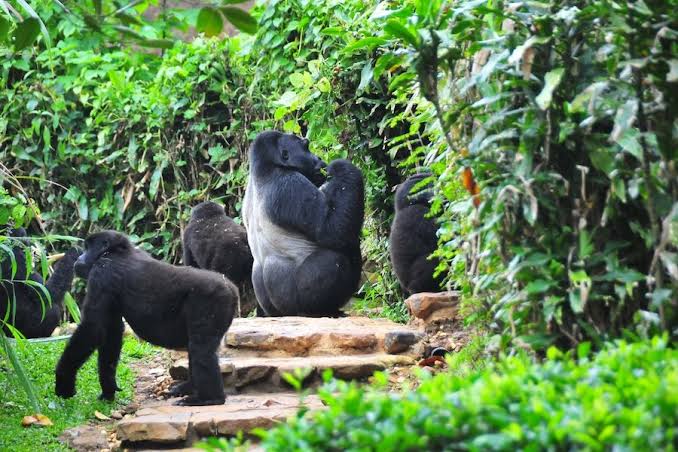
The mist does not lift so much as it retreats, curling back up the ridgelines of southwestern Uganda in long grey ribbons, and for a moment the forest looks exactly as it must have looked half a million years ago: a wall of green so dense it swallows sound, so tangled that early explorers named it simply — Bwindi, “impenetrable.” Somewhere inside that wall, a family of mountain gorillas is waking up, and by mid-morning a small group of travelers who flew in from Chicago or Cape Town or Copenhagen will be standing eight feet from a five-hundred-pound silverback, forgetting to breathe.
Bwindi Impenetrable National Park, tucked into the Albertine Rift along Uganda's border with the Democratic Republic of Congo and a short drive from Rwanda, is not a large park by African standards — just 331 square kilometers of tumbling, fog-wrapped hills rising between 1,160 and 2,607 meters. But within that modest footprint lives an outsized fraction of the planet's rarest great ape: Bwindi alone shelters nearly half of all remaining mountain gorillas on Earth, spread across more than twenty-five habituated families that rangers and researchers have spent decades acclimating to human presence, one cautious visit at a time.
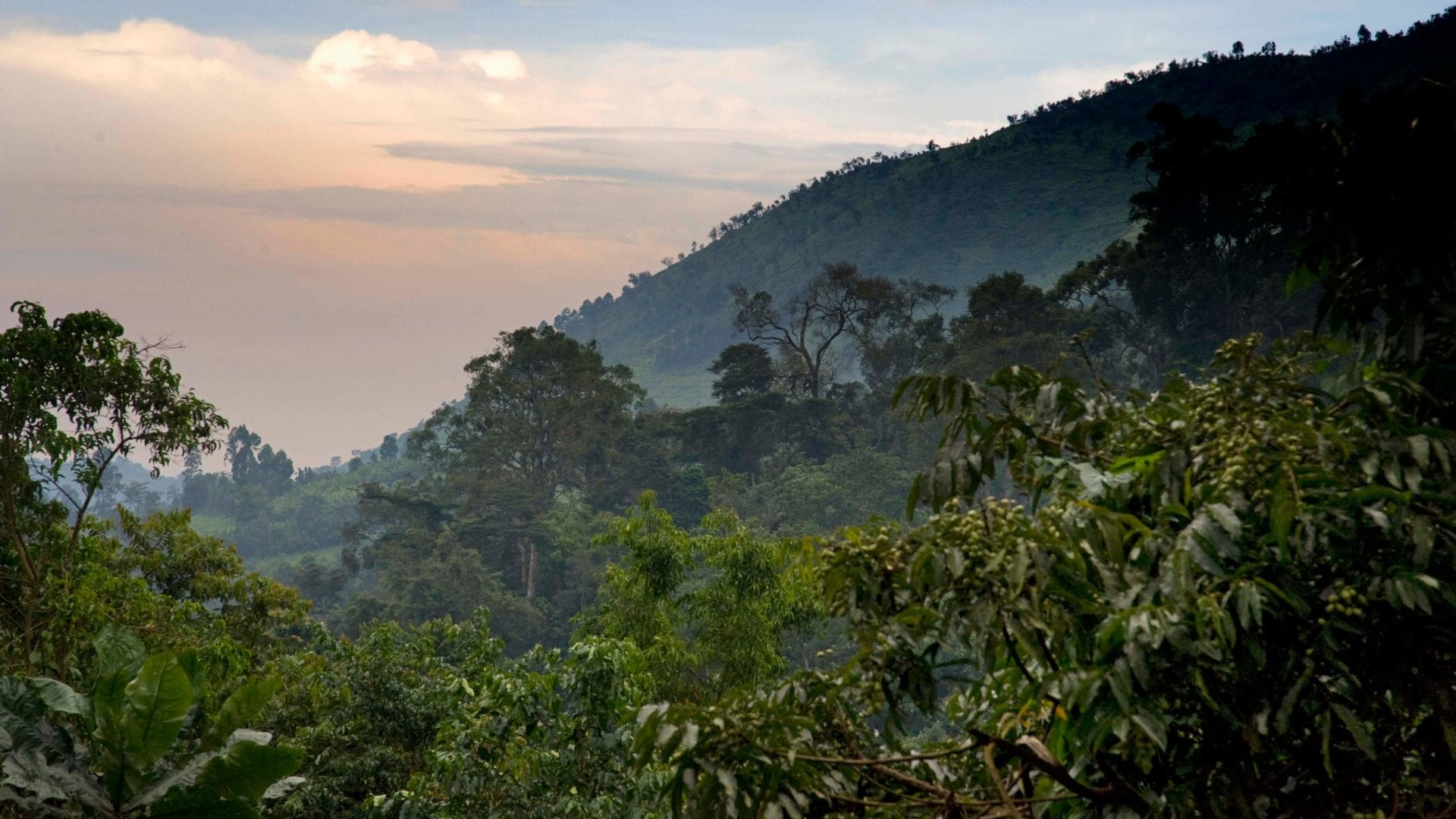
The forest itself predates the surrounding savanna by millions of years, a relic of the ancient woodland that once stretched across equatorial Africa, and its age shows in the density of its biodiversity: over 400 plant species, 350 bird species found nowhere else in East Africa, and a canopy so layered that sunlight arrives in the understory as scattered coins rather than beams. It was this exceptional richness — combined with the gorillas — that earned Bwindi UNESCO World Heritage status in 1994.
That designation, and the national park status that came two years earlier, carried a human cost the brochures rarely mention. The Batwa, hunter-gatherers who had lived alongside the forest's gorillas in relative harmony for centuries, referring to themselves as the forest's original keepers, were evicted from Bwindi in the early 1990s when the government formalized the park boundaries. No consultation preceded the move. Today the Batwa live in settlements along the park's edge, and a visit to Bwindi is incomplete without acknowledging that the landscape drawing in nearly a hundred thousand travelers a year was, until recently, someone's home. Several community trusts and cultural experiences — Batwa storytelling walks, craft cooperatives, forest-use demonstrations — now channel tourism revenue directly back to those displaced communities, and conservationists increasingly treat that arrangement as central to the park's future, not incidental to it.
A Morning With the Gorillas
Gorilla trekking remains Bwindi's singular draw, and the experience is deliberately unhurried in its bureaucracy and utterly unpredictable in its execution. Trekkers gather before dawn at one of four park sectors — Buhoma, Ruhija, Rushaga, or Nkuringo — for a briefing, then set off behind armed rangers and trackers who may already have located a family's overnight nest site via radio. What follows can be a gentle ninety-minute walk or a four-hour scramble through thick vegetation and steep, slick terrain; Bwindi earns its name honestly, and visitors are warned to arrive fit and equipped with real hiking boots, not enthusiasm alone.

The reward, when it comes, is a single hour in the presence of a gorilla family — juveniles wrestling in the undergrowth, a mother grooming an infant, a silverback occasionally glancing up with an unbothered, almost bored authority. Rangers enforce a seven-meter distance and a strict no-touching rule, partly for visitor safety and partly because gorillas share roughly 98 percent of human DNA and can contract human respiratory illnesses; anyone with a cold is asked to sit the trek out. For travelers wanting more, Uganda now offers a Gorilla Habituation Experience in Bwindi's Rushaga sector, granting up to four hours with a semi-habituated family working through the early stages of acclimation to people.
Planning the Trip
As of 2026, a standard gorilla trekking permit costs 800 US dollars for foreign non-residents, 700 dollars for foreign residents, and 300,000 Ugandan shillings for East African citizens, while the habituation experience runs 1,500 dollars per person. Prices soften slightly during the April, May, and November low season, when a standard permit drops to around 600 dollars — a function of heavier rain rather than lesser gorillas. With more than 200 permits issued daily across Bwindi's habituated families, demand regularly outstrips supply in peak months, and the Uganda Wildlife Authority advises booking three to six months ahead for June through September or December through February, the two dry-season windows when trails are firmer and skies are more forgiving.
Access typically runs through Kigali, Rwanda, or Entebbe, followed by a long, scenic road transfer of eight to nine hours from Entebbe or a shorter crossing from Kigali, with charter flights into Kihihi or Kisoro airstrips available for travelers short on time. Lodges cluster near each trekking sector, ranging from community-run guesthouses to luxury properties perched on ridgelines with views into the Congo basin, and most itineraries pair Bwindi with Queen Elizabeth National Park or the golden monkey treks of neighboring Mgahinga, stitching gorillas, big cats, and crater lakes into a single southwestern circuit.
This Week in Ugandan Tourism
Uganda's tourism sector enters late July with momentum on several fronts. The Ministry of Tourism, Wildlife and Antiquities has announced free entry to national parks across the country on September 25, 26, and 27, a promotion open to Ugandan citizens and international visitors alike and aimed at building domestic tourism ahead of the peak season. On July 2, the Uganda Tourism Board hosted a high-level delegation from Roc Nation for a destination site inspection, part of a marketing push tied to Uganda's role as a co-host of the Africa Cup of Nations in 2027 — a tournament officials hope will put the country in front of an entirely new global audience. Separately, the government has outlined a long-term strategy to grow annual tourism earnings from roughly 1.6 billion dollars today to a targeted 50 billion dollars by 2040, leaning on expanded air connectivity, new investment incentives, and partnerships modeled on approaches used by Kenya, Tanzania, and other regional peers.
Adventure tourism is emerging as a parallel growth story to the classic wildlife safari. Operators along the Nile at Jinja, the waterfalls of Sipi, and the slopes of Mount Elgon report rising interest in rafting, hiking, and multi-day trekking packages as travelers look past the primate circuit for kinetic, participatory experiences. Further north, industry voices are steering increasingly adventurous travelers toward Karamoja and Kidepo Valley National Park, pitched as an unspoiled alternative to Uganda's more heavily trafficked southwestern parks — rugged, remote, and largely free of the crowds now common at Bwindi's trailheads during peak trekking months.
Taken together, the week's headlines sketch a tourism sector betting on scale without abandoning what built it: gorillas remain the anchor, but Uganda is visibly working to diversify its draw — through free-entry days that build local buy-in, high-profile sports diplomacy ahead of AFCON 2027, and a fresh generation of adventure and off-the-beaten-path itineraries designed to spread visitors, and their spending, further across the country.
For now, though, it is still the forest that pulls people in. Every trekking season, thousands of visitors climb into Bwindi's green half-light chasing the same hour: a family of gorillas going about an ordinary morning, indifferent to the humans crouched nearby with cameras and racing pulses. The mist rolls back down the ridge by midday, and the forest closes over the trail behind them, impenetrable again until tomorrow's trackers go looking.
Published By | Features Editor