Written By | Staff Writer
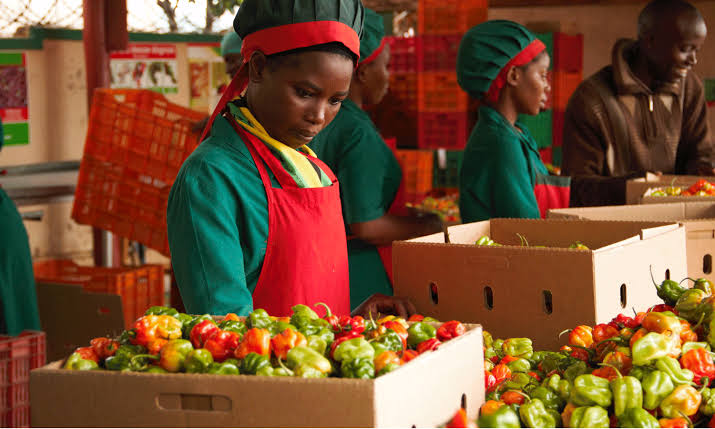
The single biggest obstacle standing between Uganda's farmers and that target is not production — it is what happens after the harvest
Agriculture
Uganda's government has thrown its weight behind an ambitious plan to grow horticulture export earnings nearly twenty-five-fold by the end of the decade, but the industry's own numbers show why the target will be extraordinarily difficult to hit without first fixing the basic plumbing of the sector: cold storage, airfreight capacity and the roughly two-fifths of every harvest that currently rots before it reaches a buyer.
On Friday, the Ministry of Trade, Industry and Cooperatives opened talks with the Hortifresh Association of Uganda on a proposed five-year strategic partnership meant to push horticultural export earnings to Shs7.2 trillion by 2030. The discussions, chaired by Trade Minister Sanjay Tanna, focused squarely on the constraints that have kept Uganda's fruit and vegetable exporters punching well below their weight: high post-harvest losses, inadequate cold-chain infrastructure and expensive airfreight.
The scale of the ambition becomes clear when set against where the sector stands today. Uganda's horticulture exports earned about $80.9 million, roughly Shs291 billion, in 2024, according to figures cited by the ministry. Reaching Shs7.2 trillion by 2030 would require export earnings to grow by a factor of roughly 25 in six years — a trajectory that dwarfs even the sector's own recent growth, which has taken it from about $32.1 million in 2015 to its current level over nearly a decade.
"We want to work closely with government to improve sanitary and phytosanitary compliance, expand market access, strengthen value chain coordination and promote regional trade integration," said Samuel Balagadde, chairperson of the Hortifresh Association of Uganda, following the talks. "Increasing productivity, improving quality and ensuring a reliable year-round supply will require better planting materials, irrigation and stronger aggregation systems."
The Rot Problem
The single biggest obstacle standing between Uganda's farmers and that target is not production — it is what happens after the harvest. According to the Ministry of Trade, Uganda produces about 1.3 billion metric tonnes of fruits and vegetables annually, yet between 30 and 45 percent of that produce is lost after harvest. Less than 20 percent of what survives ever reaches high-value export markets, held back by logistical and infrastructure bottlenecks rather than any shortage of raw product.
That loss rate is not a uniquely Ugandan problem — post-harvest losses of 20 to 50 percent are common across sub-Saharan Africa's horticulture sectors — but it is precisely the reason Uganda has struggled to convert its considerable growing capacity into export revenue. A tomato, mango or passion fruit that spoils in a village before reaching a packhouse represents lost farmer income, lost foreign exchange and, ultimately, a wasted input of water, land and labour that Uganda can ill afford to squander given how central agriculture remains to rural livelihoods.
Industry analysts tracking the sector say the fixes are well understood even if they have proven expensive and slow to implement: cold-chain logistics at collection points and at Entebbe International Airport, specialised refrigerated trucking between farm and airport, and dedicated freighter capacity that does not leave exporters competing for passenger-flight cargo space. Market researchers covering Uganda's agriculture industry have projected the fruit and vegetable export segment could grow at close to 9 percent annually through the early 2030s if that infrastructure gap is closed — a healthy but far more modest trajectory than the government's Shs7.2 trillion target implies.
Flowers, Avocados and the Regional Race
Horticulture is a broader category than fruit and vegetables alone. Uganda's cut-flower industry, concentrated around Entebbe and Wakiso, generated about $64.1 million in export earnings in 2024 and represents one of the country's few horticultural sub-sectors with mature cold-chain and airfreight arrangements already in place, since flowers cannot survive the kind of delays that other produce can occasionally tolerate. Fresh fruit and vegetable exports — led by hot peppers, passion fruit, pineapples, avocados, mangoes and dried fruit products — have been the faster-growing but less infrastructure-ready side of the ledger, increasingly aimed at buyers in the European Union, the United Kingdom and Gulf states.
Avocados illustrate both the opportunity and the friction points ahead. Uganda's avocado stakeholders have in recent months pushed for a more unified national strategy and tighter quality standards, arguing that poor coordination among growers, aggregators and exporters — not lack of demand — has been undercutting farmer earnings and Uganda's reputation with international buyers. Those tensions have occasionally spilled into disputes over market access for Kenyan buyers operating inside Uganda, a reminder that the domestic value chain still needs sorting out even as the government looks outward for new markets.
Kenya remains the regional benchmark and, in some respects, the sector's biggest competitive threat. Nairobi's horticulture exporters benefit from established air-freight links through Jomo Kenyatta International Airport, growing sea-freight capacity out of Mombasa, and — more recently — expanded access to Asian markets, including a Chinese market opened in 2022 that has continued to scale through 2026, alongside tariff reductions under trade arrangements with India. One industry estimate suggests that if Uganda could lift the value of its horticultural exports to just half of what Kenya or Tanzania currently earn, it would add close to $259 million to the Ugandan economy — a figure that underscores just how much headroom exists, and how far behind regional peers Uganda still sits.
What It Means for Farmers
For the smallholders and commercial growers who actually produce Uganda's fruit and vegetables, the government-Hortifresh talks matter less as a headline target than as a signal of where investment priorities may shift over the coming years. Minister Tanna committed the ministry's agencies, including the Uganda Free Zones and Export Promotions Authority, to strengthening market intelligence, supporting exporters' participation in international trade fairs, and negotiating market access — commitments that, if followed through, would primarily benefit exporters who are already organised enough to meet international sanitary and phytosanitary standards.
That points to a structural tension likely to shape how the Shs7.2 trillion push plays out on the ground: horticulture exports are disproportionately captured by better-resourced commercial farms and aggregators who can afford certification, packhouses and reliable logistics, while the smallholders who grow the bulk of Uganda's 1.3 billion tonnes of annual fruit and vegetable output remain largely locked out of export value chains and continue selling into lower-value domestic and regional markets. Unless the promised investment in irrigation, planting materials and aggregation systems specifically targets that smallholder base, the trillion-shilling ambitions could translate into narrower gains concentrated among a smaller set of well-capitalised players.
Tanna also tied the horticulture push to broader economic initiatives, including a partnership with the Presidential CEO Forum aimed at removing bottlenecks facing manufacturers and a collaboration with MTN Uganda to promote digital trade and a cashless economy — signalling that government sees horticulture as one thread in a wider push to diversify Uganda's export base beyond coffee, which has dominated the country's agricultural earnings narrative for much of 2026 amid falling global prices.
Whether the Shs7.2 trillion target is realistic by 2030 is, on the industry's own figures, an open question. But the diagnosis offered by both government and exporters — that the constraint is infrastructure and coordination rather than growing capacity — at least points policymakers toward a concrete, if costly, set of fixes: cold storage, freighter capacity, aggregation systems and smallholder inclusion. The scale of investment needed to close a 30-45 percent post-harvest loss gap while multiplying export earnings twenty-five-fold will be the real test of whether Friday's talks amount to more than another five-year plan.



