Uganda Tourism
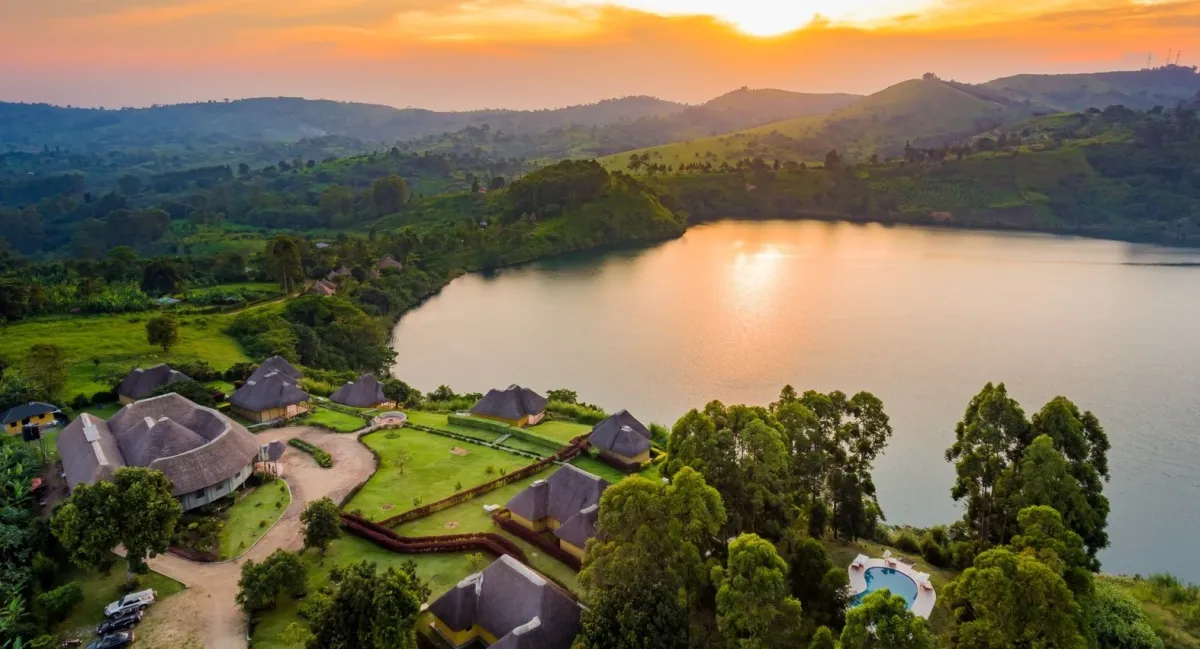
From the veranda of a lodge perched on the rim of Lake Nyinambuga, the water below sits so still it looks poured rather than formed, a disc of green-black glass ringed by forest. It is one of more than fifty such lakes scattered across the hills around Fort Portal in western Uganda, each one a scar left by volcanic violence tens of thousands of years ago and softened, since, into something closer to serenity. Locals call this the Crater Lakes region, and on a clear morning, with mist still lifting off the water and a colobus monkey barking somewhere in the canopy, it is easy to understand why travelers who came for the gorillas of Bwindi or the chimps of Kibale often find themselves lingering here longest.
A City Built on a Volcanic Field
Fort Portal itself, recently elevated to city status and increasingly marketed by Uganda's tourism authorities as a hub rather than a stopover, sits at the foot of the Rwenzori Mountains, the fabled 'Mountains of the Moon' whose snow-brushed peaks are visible on rare clear days. The city is the seat of the Tooro Kingdom, one of Uganda's four traditional monarchies, restored after Idi Amin's abolition of the kingdoms and now centered on the Karuzika Palace, home to the current Omukama. Guided tours of the palace grounds walk visitors through Tooro's royal lineage, tracing back through the Batembuzi and Bachwezi dynasties whose myths still shape how locals talk about the land itself.
Ten kilometers outside the city, those myths take physical form at the Amabere ga Nyinamwiru caves, a cluster of limestone formations named for a legendary princess said to have been mutilated and exiled by her father, King Bukuku, her transformed remains forming the milky, breast-shaped stalactites that drip mineral water into stone basins below. Around the caves, a waterfall spills through fig trees and hiking trails wind past smaller crater lakes, making the site as much a nature walk as a piece of oral history.
Craters, Chimps, and Cooling Lodges
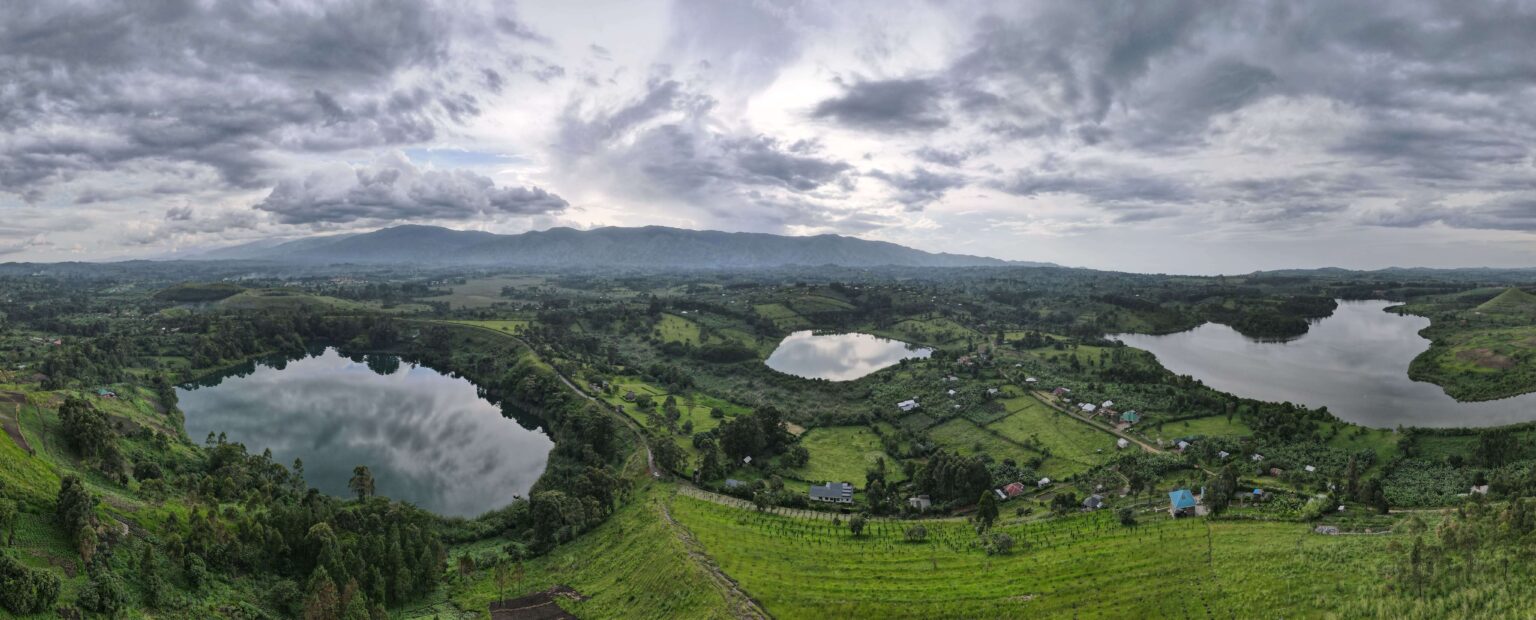
The crater lakes themselves are the region's signature draw, and their variety is part of the appeal. Lake Kyaninga, a deep, cliff-ringed crater in the north, has become synonymous with Kyaninga Lodge, whose timber-and-thatch cottages overlook the water and offer swimming, canoeing and horseback riding across surrounding ridgelines. Closer to Fort Portal, Lake Nkuruba sits inside a community-run nature reserve where black-and-white colobus monkeys move through fig trees above a swimming dock, while Lake Nyabikere, nicknamed the 'frog lake,' and Lake Lyantonde offer quieter, less-visited alternatives for travelers who want a crater lake to themselves. Guides in the area frequently combine two or three lakes into a single day's hike, threading between farmland, tea estates and patches of remnant forest.
The wider region rewards travelers who build in extra days. Kibale Forest National Park, roughly 30 minutes south of the city, holds one of the highest primate densities in Africa and is Uganda's premier chimpanzee-tracking destination; the forest also borders Bigodi Wetland Sanctuary, a community-run swamp walk known for monkeys and birdlife. Further west, Semuliki National Park's Sempaya hot springs send scalding, sulfurous water bubbling up through the forest floor, a stark contrast to the cool crater lakes nearby. Tea estates carpet much of the land between these attractions, and several now offer factory tours and tastings, adding an agricultural note to a landscape otherwise defined by wildlife and water.

Planning a Visit
Fort Portal is roughly five to six hours by road from Kampala or Entebbe, a drive most tour operators break up with a stop in Mubende or Kyenjojo, though scheduled and charter flights into Kasese or Fort Portal's own airstrip are increasingly used by travelers short on time. The dry seasons, from December to February and again from June to September, offer the easiest hiking and the clearest views of the Rwenzori foothills, though the crater lakes are swimmable and scenic year-round. Community reserves such as Lake Nkuruba typically charge modest entry and guiding fees in the range of ten to twenty dollars, while lodges around Kyaninga and the other lakes range from simple guesthouses to high-end retreats charging several hundred dollars a night. Most visitors pair a two- to four-day stay in the crater lakes region with a chimpanzee permit in Kibale, currently priced at 250 dollars for foreign non-residents in high season and discounted to 200 dollars during the low-season months of April, May and November, a pattern Uganda's Wildlife Authority introduced this year to spread visitor traffic more evenly across the calendar.
This Week in Ugandan Tourism
Uganda's tourism sector has had an active few weeks. On July 2, the Uganda Tourism Board welcomed a delegation from Roc Nation Sports International, led by co-CEO Michael R. Yormark, for a site inspection at Entebbe ahead of the co-hosted AFCON 2027 football tournament, a visit UTB has framed as a milestone in its push for celebrity-driven destination marketing. From June 27 to July 1, UTB Board Chairperson Pearl Hoareau Kakooza represented Uganda at the AESATA Travel Agents' Conference in Livingstone, Zambia, where more than 800 delegates from 22 African countries gathered under the theme 'Africa in Motion.' UTB has also joined panel discussions at the UG Catalyst Summit focused on building globally competitive tourism and creative-sector enterprises, part of a stated national ambition to push annual visitor numbers past three million and tourism revenue above five billion dollars by 2028.
On the regulatory side, the Uganda Wildlife Authority's February 2026 tariff overhaul continues to reshape trip planning. Gorilla permits in Bwindi and Mgahinga now run 800 dollars for foreign non-residents in high season, with a discounted 600-dollar low-season rate for April, May and November trips, while a July 1 increase pushed gorilla habituation permits from 1,500 to 1,800 dollars. UWA has also tightened its booking rules: permits can no longer be held for seven days without payment, with full payment now required at the time of booking, a change tour operators say has sped up the reservation process but left less room for indecision.
Published By | Features Editor