Written By |
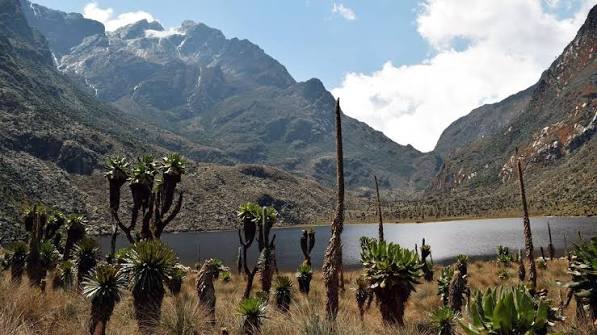
Fort Portal and the Tooro Crater Lakes — Uganda's quiet capital of green
Tourism
The road out of Fort Portal climbs through tea. Not the ragged smallholder tea of a roadside shamba, but the clipped, luminous green of the Mpanga and Kiko estates, combed into contour lines that follow the hills like fingerprints. Then, without ceremony, the tea ends and the ground simply drops away — a perfect circle of water, several hundred metres across, held in a bowl of forest so steep that the reflection of the far rim seems closer than the lake itself. This is Lake Nyinambuga, and if it looks familiar, check your wallet: it is the view engraved on Uganda's twenty-thousand-shilling note.
There are more than fifty of these crater lakes scattered across the Tooro highlands west and south of Fort Portal, the cooled punctuation marks of an old and violent volcanic argument between the Rwenzori massif and the floor of the Albertine Rift. Some are barely bigger than a village football pitch. Some are two hundred metres deep. A few are so heavily mineralised that nothing much lives in them at all; others are warm, bilharzia-free and entirely swimmable, which in East Africa is a rarer luxury than it sounds. Together they form what may be Uganda's most underrated landscape — a place travellers pass through on the way to gorillas and chimpanzees, and then spend the rest of the trip wishing they had stayed in.
A kingdom with a view
Fort Portal itself sits at roughly 1,540 metres on the eastern shoulder of the Rwenzori Mountains — Ptolemy's fabled Mountains of the Moon — and the altitude shows. Mornings arrive cool and clean; afternoons are green rather than glaring. The town was named for Sir Gerald Portal, the British consul-general who arrived in the 1890s, but its older and truer identity is as the seat of the Tooro Kingdom, one of Uganda's constitutionally recognised cultural institutions. In 2020 the government gave the town city status and branded it, pointedly, Uganda's Tourism City. Six years on, the label has begun to fit.
The kingdom is the reason to slow down here. Karuzika Palace, the royal residence on its own commanding hill above town, was built in 1963 and restored in 2001; it is the home of Omukama Oyo Nyimba Kabamba Iguru Rukidi IV, who was enthroned in 1995 at the age of three and remains one of the youngest reigning monarchs anywhere in the world. A short drive down the Kasese road, the Karambi royal tombs hold his predecessors. Neither site is polished in the way a European palace is polished, and that is rather the point: a guide from the kingdom will walk you through succession, regalia and the etiquette of the court in the same breath as the current king's development foundation.
Ten kilometres out, at Amabere ga Nyina Mwiru, the geology and the mythology fuse outright. Behind a small waterfall, a cave of pale, dripping stalactites is said to be the breasts of Nyina Mwiru, daughter of King Bukuku, mutilated by her father in an attempt to keep suitors away and prophecy at bay. The prophecy won: her son Ndahura became the first of the semi-legendary Chwezi rulers. The mineral seepage that whitens the rock is still, in the local telling, her milk. Guides climb from the caves to the rim of Nyakasura crater for a view that takes in three lakes and, on a clear morning, the snow line on Margherita Peak.
Walking the craters
The best way to see the lakes is on foot, and the region has quietly built the infrastructure for it. The Ndali-Kasenda cluster, about half an hour south of town, is threaded with community-run trails linking Lake Nyabikere — the lake of frogs, and it lives up to the name after dark — to Lake Nkuruba, where a protected pocket of forest shelters black-and-white colobus, red-tailed monkeys and vervets, and on to Nyinambuga and Lyantonde. Half-day loops are genuinely half-day loops: three to four hours, a guide from the neighbouring village, stops for medicinal plants, butterflies and a birdlist that runs comfortably past sixty species before lunch. Great blue turacos crash through the canopy like badly parked aircraft. Crowned hornbills complain from the rim.
Fort Portal is also the most convenient base in western Uganda. Kibale National Park's chimpanzee tracking at Kanyanchu is about 35 kilometres south; Semuliki and its Sempaya hot springs lie roughly 55 kilometres west through the Rwenzori foothills; the northern sector of Queen Elizabeth is two hours away; and the Rwenzori trailheads at Nyakalengija and Kilembe are within a comfortable morning's drive. Many visitors treat the town as a refuelling stop between two parks. The better plan is to reverse it — base yourself on a crater rim for three nights and make the parks the day trips.
Practical notes
Getting there is easier than the map suggests. Fort Portal lies about 300 kilometres from Kampala on tarmac via Mubende, a four-to-five-hour drive in normal traffic, or slightly longer on the southern route through Mbarara and Kasese. Scheduled domestic flights serve Kasese, roughly 75 kilometres south. Within the crater-lake region a high-clearance vehicle is worth having in the wet, though the main loops are passable in a saloon car in dry weather.
The climate is the region's quiet advantage: two drier windows, roughly December to February and June to August, but the highlands stay green year-round and the so-called low season of April, May and November now carries discounted permit pricing in the nearby parks. Pack a fleece for evenings on a crater rim at 1,500 metres; visitors consistently underestimate how cold Tooro nights get.
Costs are modest by Ugandan safari standards. Entry to Amabere ga Nyina Mwiru has been posted at around UGX 7,500 for Ugandan adults, UGX 2,500 for Ugandan students, UGX 18,500 for East African residents and UGX 41,500 for non-residents, with community guiding fees on the crater trails typically negotiated locally in the UGX 20,000–50,000 range; confirm current rates on arrival, as site fees are revised without much notice. Accommodation runs the full ladder — from backpacker bandas on the water at Lake Nkuruba, through mid-range town hotels such as the Mountains of the Moon and Nyaika, to Ndali Lodge's cottages strung along a crater ridge with the Rwenzoris filling the horizon. Even the top end here costs a fraction of a comparable bed in the gorilla sector.
This Week in Ugandan Tourism
Three days of free national park entry, 25–27 September. The Uganda Wildlife Authority's Open Park Days return this month, with entrance fees waived at selected protected areas from 25 to 27 September 2026. The State Minister for Tourism, Wildlife and Antiquities, Susan Nsambu Nakawuki, announced the dates as part of a push to grow domestic visitation; Kibale, Semuliki, Rwenzori and Queen Elizabeth are all within reach of Fort Portal for anyone planning around them. Entry fees are waived; activity permits such as chimpanzee tracking are not.
UWA publishes its State of Wildlife Resources Report 2026. Launched in August, the report is the most comprehensive national assessment Uganda has produced, and the first to move beyond headline mammal counts to consolidate data on flora, fungi, invertebrates, amphibians, reptiles, birds and bats. Its tone is not celebratory: it warns that settlement expansion, agricultural encroachment, infrastructure and extractive activity are steadily fragmenting habitat and squeezing wildlife corridors — a pressure keenly felt in the farmed, densely settled crater-lake belt around Fort Portal.
The new tariff regime has now fully taken effect. Under changes announced on 26 February 2026 by UWA executive director Dr James Musinguzi, gorilla permits for foreign non-residents are priced at USD 800 in high season and USD 600 in the discounted low-season months of April, May and November. The old seven-day reservation hold was scrapped on 1 March, so permits must now be paid for in full at the time of booking, and most other primate experiences moved to higher rates on 1 July. Foreign visitors are required to book through licensed Ugandan tour operators.
Uganda Airlines adds Accra and Kigali. The national carrier confirmed in early August that it will begin four-times-weekly Boeing 737-800 service to Accra from 27 October 2026, followed by daily CRJ900 flights to Kigali from 18 November. Operators have welcomed both as feeder routes for West African and regional circuits, adding to a long-haul picture that already includes direct British Airways service between London Heathrow and Entebbe.
The numbers behind the optimism. Ministry data released this year put 2025 international arrivals at 1,642,215 — up 19.7 per cent on 2024 and comfortably above pre-pandemic levels — with tourism receipts of roughly USD 1.6 to 1.7 billion, some 5.9 per cent of GDP and more than 876,000 direct jobs. The tenth Pearl of Africa Tourism Expo, held at Speke Resort Munyonyo from 21 to 23 May under the theme “Wanderlust — It's Your Time to Thrive,” leaned hard on exactly the sort of secondary destination Fort Portal represents: places that keep visitors in the country an extra three nights.
The last word
Fort Portal closes this twenty-site rotation more or less where Uganda's tourism argument now sits. The country's marquee attractions — gorillas, the Nile, the savannah parks — are already world-class and already priced accordingly. The growth, and the money that stays in villages rather than leaving with a permit fee, lies in the places in between: a crater rim, a community trail, a kingdom willing to explain itself to strangers. Stand on the lip of Nyinambuga at six in the evening, with the Rwenzoris going purple and the tea below turning almost black, and the case makes itself.



