Written By |
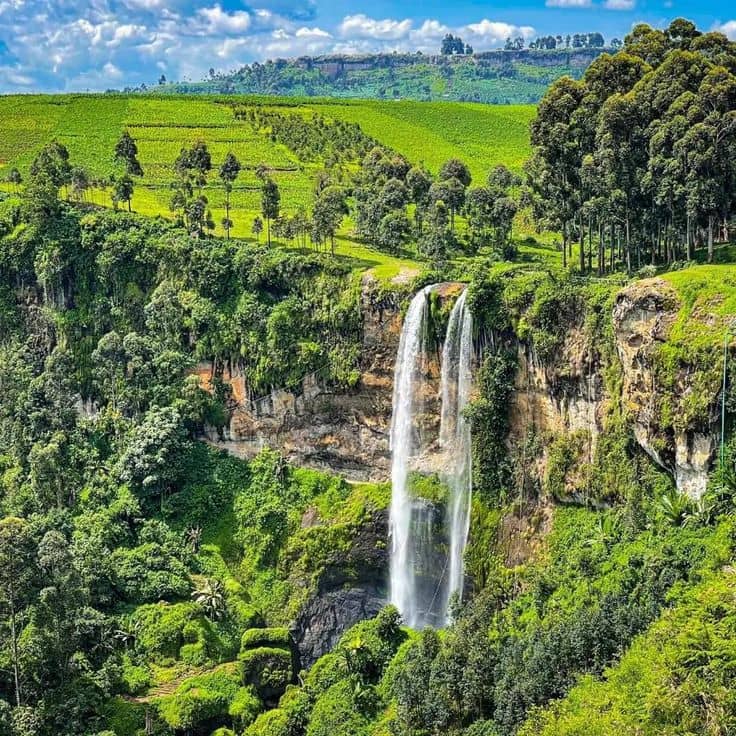
On the shoulder of an extinct volcano, three waterfalls and a coffee trail are quietly becoming Uganda's answer to the question of what tourism looks like after the gorillas.
TOURISM
The road out of Mbale climbs before you notice it is climbing. One moment the matatus are weaving through banana stalls and roadside maize roasters on flat red earth; the next, the windows have filled with green terraces stacked like amphitheater seating, and the air has lost its lowland thickness. This is the beginning of the ascent to Sipi Falls, a cluster of three waterfalls tumbling off the western slopes of Mount Elgon in Kapchorwa District, roughly 270 kilometers and a full climate zone away from Kampala. Where Uganda's tourism story is so often told through silverback gorillas parting the mist in Bwindi, Sipi tells a quieter one, of water, volcanic rock, and coffee that has been grown on these same terraced slopes for generations.
The falls themselves are the headline act, and they earn it. The tallest of the three drops around 100 meters off a sheer basalt lip, a legacy of Mount Elgon's volcanic past, geologists date the mountain's eruptions back some 24 million years, making it one of the oldest extinct volcanoes in East Africa and, at its Wagagai peak, the fourth-highest mountain on the continent. Visitors can view the main falls from a viewing platform a short walk from the trading center, but the more rewarding version of Sipi involves lacing up boots and following community guides on a three- to four-hour loop that threads between all three cascades, crossing homesteads, coffee gardens, and eucalyptus groves along the way. It is less a hike to a single viewpoint than a walk through a working landscape.
Coffee Country
What distinguishes Sipi from Uganda's other natural wonders is how thoroughly tourism here has folded into agriculture rather than displacing it. The slopes of Mount Elgon produce some of the country's best Arabica, grown by smallholder families on plots that have been passed down for generations, and a cottage industry of coffee tours has grown up around that fact. Guides, often the farmers themselves, walk visitors through the full arc of production: picking ripe red cherries, pulping and fermenting them, drying beans on raised tables, roasting over open flame in a blackened pan, and finally grinding and brewing a cup that never leaves the hillside it grew on. It is a far more intimate encounter with a commodity crop than most tourists get anywhere in the world, and it has become, alongside the waterfalls, the reason people extend a planned overnight into two or three days.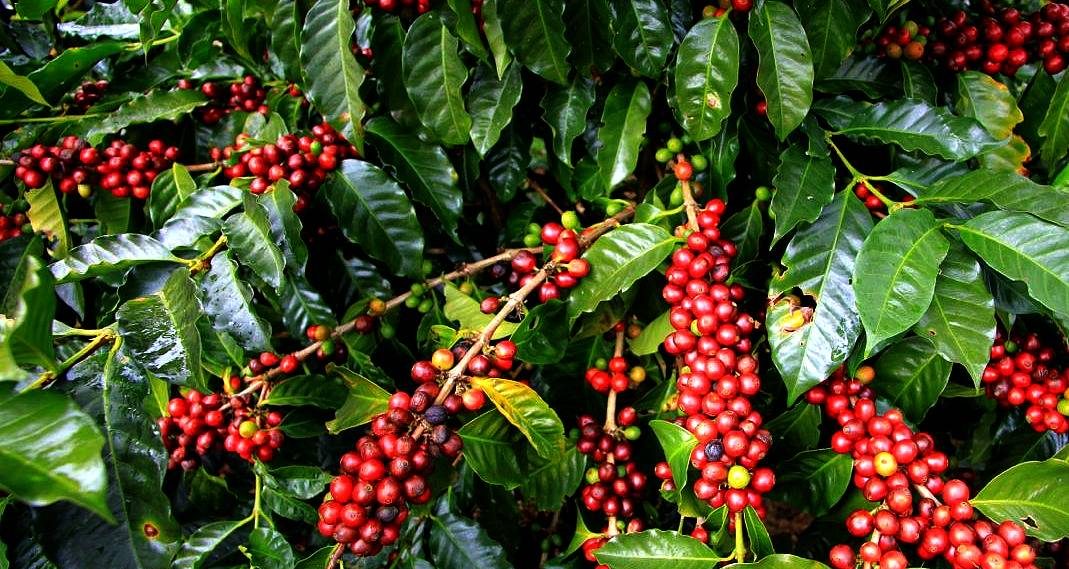
For Those Who Want More Than a View
Sipi has also built a reputation as one of Uganda's better-kept adventure secrets. Operators based in the trading center offer abseiling down the face of the main falls, a briefing, a harness, and then a controlled descent past the spray with the valley opening below, along with rock climbing on the surrounding outcrops, mountain biking through the coffee shambas, and, for the more determined, multi-day treks up Mount Elgon itself. The mountain's caldera, one of the largest in the world, and its Sipi and Sasa trailheads make it a serious hiking objective in its own right, with the added lure of hot springs and caves used historically by Mount Elgon's communities. Birders, meanwhile, have their own reasons to linger: Mount Elgon National Park's forest and moorland zones host over 270 recorded species.
Getting There, and What It Costs
Sipi Falls sits close enough to the Kenyan border that many overland travelers combine it with a Mount Elgon crossing, but most Uganda-based visitors reach it by road from Mbale, itself a five- to six-hour drive from Kampala, or by connecting through Jinja and the Mbale highway. The falls themselves are managed by the local community rather than the Uganda Wildlife Authority, and access is priced accordingly, a nominal community fee, roughly the equivalent of a dollar, covers entry to the main viewing area, with guided walking tours booked separately through local operators. Mount Elgon National Park itself, which borders the falls, carries UWA's standard non-resident park fees, currently around 40 US dollars per day for foreign non-residents, with reduced rates for foreign residents and East African citizens. The dry seasons, roughly December to February and June to August, offer the clearest views and firmest trails, though Sipi's cloud-forest setting means a passing shower is never far off in any month.
Accommodation has kept pace with demand without losing the area's low-key character. Options range from budget guesthouses perched on the valley rim to mid-range lodges with views straight down the falls, and almost all of them lean into the setting: wraparound porches, wood fires in the evening, coffee grown a few hundred meters away served the next morning. It is a landscape built for slowing down, in a country whose tourism marketing has spent two decades emphasizing the opposite instinct, the rush to see gorillas, to catch the migration, to tick off the Big Five. Sipi asks visitors to sit still instead, and increasingly, they are choosing to.
This Week in Ugandan Tourism
Uganda's tourism sector continues to lean into its August peak, with several developments worth watching for anyone tracking the industry beyond the trailheads.
Peak-season squeeze on gorilla permits: August remains the single busiest month on the Uganda safari calendar, combining the region's driest trekking conditions with the Northern Hemisphere summer holiday window. Standard non-resident gorilla trekking permits are priced at 800 US dollars for 2026, with the Uganda Wildlife Authority capping availability at eight permits per habituated group, meaning upward of 200 permits issued daily across Bwindi Impenetrable National Park's groups, plus a further eight in Mgahinga Gorilla National Park. Operators are advising travelers to book six or more months out for peak-season slots.
UWA's free access weekend announced for September: the Uganda Wildlife Authority has confirmed its Open Park Days initiative for September 25 to 27, 2026, waiving standard park entrance fees at a slate of major protected areas including Murchison Falls, Queen Elizabeth, Kidepo Valley, Lake Mburo, and the Pian Upe Wildlife Reserve. The move is aimed at boosting domestic visitation and giving Ugandan citizens broader access to the country's flagship parks.
New lodge investment signals continued confidence: pan-African operator Asilia Africa has continued expanding its Uganda footprint, with its Erebero Hills property joining a wave of new eco-lodge development clustered around Bwindi and other western circuit parks, part of a broader infrastructure push that includes upgraded park-access roads and expanded international connections through Entebbe International Airport.
Conservation-tourism messaging front and center: industry coverage this season has repeatedly framed Uganda's pitch to international travelers around its conservation record alongside its wildlife, positioning gorilla trekking revenue and community-based tourism models, of the kind visible at Sipi's own coffee-tour cooperatives, as central to the country's pitch rather than a footnote to it.
Expo season on the calendar: the Pearl of Africa Tourism Expo continues to serve as a key trade gathering for Uganda's tourism private sector, bringing together tour operators, hoteliers, and government tourism bodies to plan for the year's remaining high season and beyond.



