SCIENCE & TECH
Somewhere in a beige convention hall in Santa Clara this week, engineers in company polos did something that could ripple through every corner of the global economy: they agreed on a spec sheet.
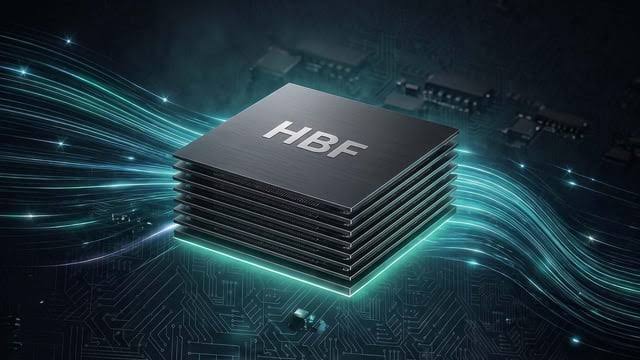
It doesn't sound like the stuff of headlines. But the announcement, made August 4 at the Future of Memory and Storage conference by South Korean chip giant SK hynix and American storage maker SanDisk, may be the closest thing the AI industry has to a rescue flare. The two companies unveiled the first official standard specifications for something called High Bandwidth Flash — HBF for short — a brand-new category of computer memory purpose-built to fix the single biggest bottleneck standing between Silicon Valley and its trillion-dollar AI ambitions: there simply isn't enough memory to go around.
If that sounds abstract, consider the numbers already rattling boardrooms this year. SK hynix's own chief financial officer, Kim Jae-joon, has confirmed the company has already sold out its entire 2026 supply of high-bandwidth memory, or HBM — the current gold-standard chip that feeds data to AI processors at blistering speed. Micron's CEO, Sanjay Mehrotra, has said much the same about his company's HBM output. Data-center GPU lead times are stretching past 30 weeks. Server RAM prices have doubled in some markets. And industry analysts now warn the shortage, first flagged in 2025, could persist beyond 2030 without a fundamental rethink of how AI memory gets built.
That fundamental rethink just arrived.
WHAT ON EARTH IS "HIGH BANDWIDTH FLASH"?
To understand why chip nerds are buzzing, you need to understand the problem HBF is trying to solve. Every AI model — from chatbots to image generators to the "agentic AI" systems now being pitched as autonomous digital employees — runs on a delicate relay race between two components: the processor (the brain doing the thinking) and the memory (the filing cabinet holding the data it needs). If the filing cabinet can't hand over folders fast enough, the brain sits idle. That's the "memory wall," and it's been the AI industry's most expensive headache for the better part of two years.
Today's fix is HBM — high-bandwidth memory — a stack of ultra-fast chips glued directly next to processors like Nvidia's GPUs. HBM is blazingly fast, but it's also brutally expensive to manufacture, capacity-limited, and, as of this year, essentially impossible to buy in the quantities the industry wants. Every major cloud company on Earth is currently fighting over the same limited pool of HBM supply, and prices are climbing by what analysts describe as "high-teens to low-twenties" percentage increases with every new contract cycle.
HBF is designed to slot in as a new, cheaper, higher-capacity layer sitting between HBM and traditional solid-state drives (SSDs). Instead of the ultra-costly DRAM chips used in HBM, HBF uses NAND flash — the same fundamental technology found in a USB stick or a smartphone's storage — but re-engineered and stacked to deliver speeds that start to approach HBM territory while offering vastly more room to store data.
The numbers in the newly released spec are eye-opening. HBF modules will support capacities up to 512 gigabytes, built from stacks of either 8 or 16 NAND dies. Bandwidth comes in three grades, scaling from roughly 0.4 terabytes per second up to 3.0 terabytes per second. And crucially, the standard adopts UCIe — Universal Chiplet Interconnect Express — an open industry connector standard, meaning HBF chips are designed to plug into GPUs, CPUs, and custom AI accelerators from multiple manufacturers rather than being locked to one company's hardware.
"With the rapid spread of AI applications, we are at a point where overall data processing structures must be redesigned," said Kim Chun-sung, SK hynix's Executive Vice President and Head of Solution Development, in the company's announcement. "Through HBF, SK hynix will expand the boundaries between memory and storage and contribute to building new architectures that enhance overall system efficiency."
A CONSORTIUM WITH SOME VERY BIG NAMES
What makes this moment more than just another corporate press release is who signed on. The HBF specification wasn't developed in secret — it was published through the Open Compute Project (OCP), the same open-standards body that underpins much of the hardware running Facebook, Microsoft, and Google's data centers. That matters because it signals HBF is meant to become an industry-wide standard, not a proprietary SK hynix product that locks customers in.
The consortium behind HBF, launched just six months ago in February 2026, already counts Google and AI-chip startup Tenstorrent among its members — a notably fast turnaround for hardware standardization, which typically takes years. On August 6, the final day of the Santa Clara conference, executives from SK hynix, SanDisk, and Google DeepMind shared a stage for a panel bluntly titled "Breaking the Memory Wall with High Bandwidth Flash," featuring SK hynix Vice President Lim Eui-cheol, SanDisk Vice President Rajeev Nagabhirava, and Google DeepMind Senior Staff Engineer Xiaoyu Ma.
That Google DeepMind — the AI lab at the center of some of the year's biggest tech headlines — sent a senior engineer to publicly champion a memory chip standard tells its own story. Google, like every other AI hypergiant, is desperate for a way around the HBM bottleneck, and it's willing to put its name behind a fix built by outside chipmakers.
SK hynix also used the conference to show off something else: its tenth-generation, 375-layer 4D NAND wafer, a technology described as delivering a 2.5-times improvement in power efficiency over the previous generation. The company says it plans to begin mass production of high-capacity solid-state drives built on that new NAND early next year, specifically targeting power-hungry AI data centers.
WHY THIS MATTERS FAR BEYOND SILICON VALLEY
It's tempting to file this under "chip industry inside baseball" and move on. That would be a mistake. The AI memory shortage isn't an abstract supply-chain hiccup — it's already showing up in the price of everything from cloud computing subscriptions to the consumer electronics sitting on store shelves.
Nvidia, the world's dominant AI chipmaker, is reportedly considering scaling back the memory specifications on its next-generation "Rubin Ultra" GPU platform simply because it cannot secure enough HBM to build the chips as originally designed. When the company that essentially prints money selling AI hardware is forced to cut corners on its flagship product because of a parts shortage, that shortage is real, and it's structural.
Consumers are already feeling secondary effects. Server DRAM price surges have a way of trickling into the cost of laptops, gaming consoles, and phones, because manufacturers compete for the same underlying memory-chip factories. Some analysts tracking the 2026 memory crunch have warned that without new supply — new architectures, new factories, new approaches like HBF — relief may not arrive until late 2027 at the earliest.
If HBF succeeds at scale, the effect could cut two ways at once: reducing the crushing demand pressure currently concentrated on HBM (because AI workloads could shift some of their memory needs onto the cheaper, higher-capacity HBF layer), while also making it more economical to run large AI models — potentially easing the cost of cloud AI services for businesses and consumers down the line. It's the kind of unglamorous infrastructure fix that rarely makes front-page news but ends up shaping how much you pay for a ChatGPT subscription or a new phone next year.
THE EXPERT VIEW: A "TIERED MEMORY" FUTURE
Industry watchers have started describing HBF as part of a broader shift toward what SK hynix executives are calling "tiered memory" — the idea that a single type of chip can no longer serve every AI workload, and that data centers of the future will need a hierarchy of memory types, each optimized for a different job: ultra-fast HBM for the most latency-sensitive tasks, mid-tier HBF for large-scale AI inference where sheer capacity matters more than absolute speed, and traditional SSD storage for everything else.
That framing lines up with where the AI industry itself is heading. As "agentic AI" — systems capable of autonomously planning and executing multistep tasks without constant human prompting — moves from buzzword to commercial reality, the sheer volume of context, memory, and data these systems need to process on the fly is exploding. A chatbot answering one question at a time has modest memory needs. An AI agent juggling dozens of parallel tasks, remembering long histories, and drawing on massive knowledge bases needs an entirely different memory architecture — which is precisely the gap HBF is designed to fill.
WHAT HAPPENS NEXT
Don't expect HBF chips in your laptop anytime soon — this is data-center infrastructure, built for hyperscale cloud providers and AI labs, not consumer PCs. But the timeline is not glacial either. With a published open standard now in hand and heavyweight backers like Google already validating the technology, industry watchers expect the first commercial HBF products to begin appearing in AI accelerator designs within the next one to two product cycles, likely arriving alongside next-generation GPU platforms in 2027.
Competitors won't sit still. Samsung, the other giant of the memory world, has its own high-bandwidth memory roadmap and is widely expected to pursue a competing or complementary flash-based architecture rather than cede the field to SK hynix and SanDisk. Micron, too, has hinted at alternative approaches to the same capacity problem. What's clear is that the industry-wide scramble to solve the AI memory crisis, once confined to backroom supply negotiations and panicked earnings calls, has now produced its first real, standardized, multi-company answer.
THE BOTTOM LINE
The AI boom has always run on two things everyone talks about — chips and electricity — and one thing almost nobody outside the industry pays attention to: memory. This week's HBF announcement is a reminder that some of the most consequential decisions shaping the future of artificial intelligence are being made not in glossy product launches, but in dense technical standards published by engineers at trade conferences. If High Bandwidth Flash delivers on its promise, it won't generate the kind of headlines that a new chatbot does. But it may be remembered as the moment the industry finally started building its way out of the memory crisis that threatened to choke the AI revolution before it could fully begin.
Published By | Tech Wiz