Written By |
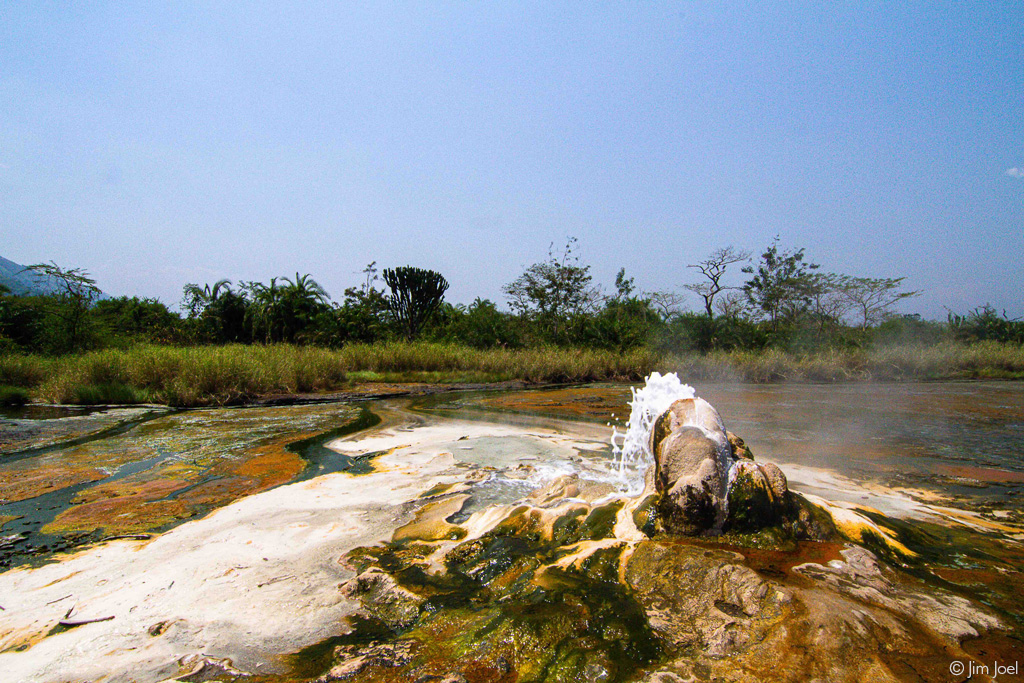
This is Sempaya, the beating, hissing heart of Semuliki National Park, and it is as close as Uganda gets to the primordial. [Photo Credit Jim Joel / Courtesy]
Uganda Tourism
Steam rises off a swamp clearing in the far west of Uganda, curling through raffia palms until it disappears into a canopy loud with hornbills. Somewhere below the surface, water is boiling. This is Sempaya, the beating, hissing heart of Semuliki National Park, and it is as close as Uganda gets to the primordial: a slice of the Congo Basin's lowland rainforest that spilled east across the Albertine Rift and stayed, carrying with it a cast of birds, forest elephants and Central African oddities found nowhere else on this side of the continent.
A Forest Out of Place, and All the Better For It
Semuliki sits in Bundibugyo District, tucked against the Rwenzori foothills where Uganda's western border folds into the Democratic Republic of Congo. Gazetted in 1993 and covering roughly 220 square kilometers, it is geologically and biologically an outlier among Uganda's parks: rather than the acacia savannah or highland forest visitors picture when they think of East Africa, Semuliki is genuine Ituri-type lowland rainforest, part of the vast Congo Basin system that most travelers associate with Central Africa. The Semuliki River, which gives the park its name, marks the international boundary and feeds the plains with silt each rainy season, keeping the forest floor damp and the wildlife elusive.
That elusiveness is part of the appeal. Semuliki is not a park of dramatic drive-by game viewing; it rewards patience and a good guide. Forest elephants and buffalo move through the undergrowth, along with several primate species, and the park protects a genuinely rare mix of Central African fauna alongside a resident community of Batwa, the forest people whose knowledge of the terrain predates the park boundary by generations. For birders, Semuliki is close to a pilgrimage site: more than 440 species have been recorded here, some 40 percent of everything found in Uganda, and roughly 46 of them, including the elusive Nkulengu Rail and the Congo Serpent Eagle, are seen almost nowhere else in East Africa. Serious listers plan multi-day visits around the forest trails for exactly this reason.
Sempaya: Where the Ground Itself Performs
The park's signature attraction remains the Sempaya Hot Springs, a short walk from the old ranger post into a swampy clearing that locals have long treated as sacred ground. Two springs anchor the site, and Bagandan and Bwamba folklore has given both a gender. Bintente, the "male" spring, is a wide, steaming pool some 12 meters across, warm enough to poach an egg and popular for exactly that with visiting guides. Nyasimbi, the "female" spring, is the more theatrical of the two: a true geyser that periodically erupts in a plume of scalding water and vapor, with recorded temperatures well over 100 degrees Celsius. Guided walks to the springs typically take two to three hours round trip and pass through dense forest thick with butterflies, monkey troops and birdsong, making the destination almost secondary to the walk itself.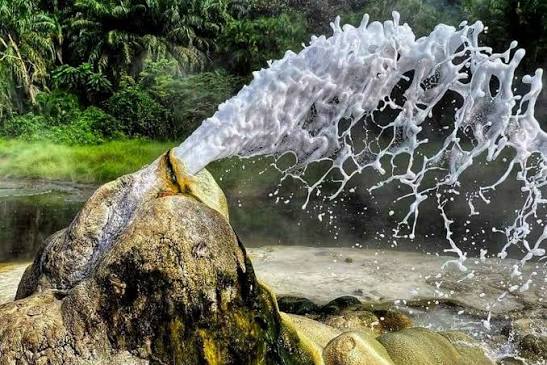
Getting There, and When
Semuliki lies about 52 kilometers from Fort Portal along the road to Bundibugyo, a route that climbs and drops through Rwenzori foothill scenery before descending into the rift valley floor. The road can turn difficult in heavy rain, and a 4WD vehicle is strongly advised outside the dry months. Travelers without a private vehicle can reach Fort Portal by bus from Kampala and then connect via taxi or truck toward Bundibugyo, disembarking at Sempaya gate; the park's administrative headquarters has since shifted to nearby Ntandi village, so it is worth confirming current logistics with the Uganda Wildlife Authority or a local operator before setting out.
Park entrance costs 35 US dollars for non-resident foreign adults, 25 dollars for foreign residents, and 15,000 Ugandan shillings for East African citizens, with reduced rates for children and free entry for those under five. The dry seasons, roughly December to February and June to August, offer the easiest hiking and the best road conditions, though birders often prefer the wetter months when migratory species swell the count. However you time it, plan on at least one overnight in the area; the springs, forest walks and the Kirumia birding trail are difficult to do justice in a single rushed afternoon.
This Week in Ugandan Tourism
Uganda's tourism sector spent late July riding a wave of genuinely good news. On July 29, the country was formally declared Ebola-free, closing out a scare that had rattled travel advisories earlier in the year; tourism voices immediately framed the milestone as a chance to reset the national narrative around safety and hospitality rather than outbreak headlines. Days earlier, on July 21, the Uganda Wildlife Authority confirmed a slate of Open National Park Days for September 25 through 27, 2026, when visitors will be able to walk into the country's parks, Semuliki included, without paying entry fees, a move aimed at boosting domestic and regional visitation.
Closer to home for this park, local governments in Kasese, Kabarole, Bundibugyo, Bunyangabu and Ntoroko districts are working with the Uganda Wildlife Authority and the National Information Technology Authority to roll out the Rwenzori Tourism Destination Plan, a coordinated push to raise the profile of the wider Albertine Rift region, exactly the corridor that includes Semuliki, the Rwenzori Mountains and Lake Albert's shoreline. On the marketing front, the Uganda Tourism Board hosted a high-level delegation from Roc Nation Sports International between July 2 and 5, led by executive Michael R. Yormark, as the country courts global sports and entertainment partnerships ahead of co-hosting AFCON 2027. And for travelers weighing a gorilla-trekking add-on to a western circuit itinerary, a reminder: since March 1, 2026, all foreign gorilla permit bookings must be made through a Uganda Tourism Board-licensed operator, and August's peak-season pricing holds at 800 dollars per permit for foreign non-residents, with the discounted 600-dollar shoulder-season rate not returning until later in the year.
Taken together, the week's developments point to a sector in recovery mode and actively courting attention, betting that free-entry weekends, regional destination planning and marquee delegations can translate into rooms booked and permits sold. For Semuliki, still one of Uganda's least-visited parks despite its ecological credentials, that renewed spotlight may finally be arriving.



