Uganda Tourism
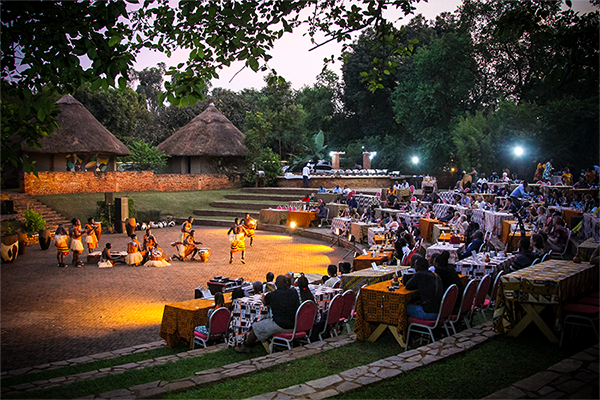
As dusk settles over the red-earth hills of Ntinda, a Kampala suburb just a fifteen-minute drive from the roundabouts and boda-boda swarms of the city centre, a different kind of traffic builds along a quiet side street: taxis and tour vans nosing toward a floodlit compound where drums have already begun to warm up. Inside the nine-acre grounds of the Ndere Cultural Centre, under a wide, star-flecked sky, Uganda's fifty-plus ethnic groups are about to share a stage, and for three hours the country's staggering cultural diversity will be distilled into song, sweat, and spectacle.
This is the Ndere Troupe, and to watch them work is to understand something that a wildlife safari, however thrilling, cannot fully convey: that Uganda's greatest resource may not be its gorillas or its lakes but its people, and the four hundred or so distinct cultural threads they carry. Dancers dressed in barkcloth, cowrie shells, and ostrich feathers move through the "bwola," a stately royal dance once performed exclusively for Acholi chiefs in the north, then pivot within minutes into the "larakaraka," a courtship dance built on flirtation and rhythm. Drummers from the Buganda kingdom trade the stage with dancers from Karamoja, whose leaping, spear-adjacent choreography evokes the cattle-herding plains of Uganda's arid northeast. It is, in the space of one evening, a condensed tour of a nation most visitors only skim from the window of a safari vehicle.
The centre's story begins not in 2003, when the current grounds opened, but in 1986, in the aftermath of a civil war that had left Uganda's cultural institutions battered and its ethnic communities wary of one another. A young performer and cultural activist named Stephen Rwangyezi believed dance could do diplomatic work that politics could not, and he began assembling performers from across the country's regions into a single troupe. The gamble paid off. What started as a modest ensemble touring Kampala's hotels has since performed on stages across Europe and North America, carrying Ugandan music into rooms that had never heard a Luo lullaby or an Acholi war chant. The Ntinda compound the troupe now calls home each week — with its open-air amphitheatre, thatched restaurant, and gardens strung with lights — has become one of Kampala's most reliable answers to a question every visiting tour operator eventually gets asked: what is there to do here after dark?
The centre answers with structure. Three distinct programs run weekly: the Sherehe Show on Wednesday nights, Ndere Friday Night, and the Katika Sunday Family Show, a matinee-style Sunday evening performance pitched at visiting families and children. Each runs roughly three hours and is preceded by dinner service, so that a visit to Ndere functions less like a museum stop and more like a full evening out — a rarity in a city where after-dark entertainment options for travelers can be thin. Entrance runs UGX 95,000 (about $30) for international visitors and UGX 55,000 (about $17) for Ugandan nationals, with children aged three to twelve admitted for roughly UGX 30,000 ($10); a set dinner adds another UGX 60,000 ($19) on top, with drinks charged separately. Reservations are recommended, particularly on weekend nights when tour groups block out significant seating in advance.
For visitors building a Kampala itinerary around the primates and waterfalls further afield, Ndere occupies a useful niche: it requires no early wake-up call, no long drive, and no park entry fee, yet it delivers a cultural immersion that a week in the bush cannot. Tour operators increasingly slot it in on arrival or departure nights, when travelers are adjusting to jet lag or winding down before a flight and want something engaging but low-effort. The centre also runs youth training programs, teaching traditional dance and drumming to a new generation of performers, which gives the operation a second identity as a cultural preservation project as much as a tourist attraction — an answer, of sorts, to the perennial worry that globalization is flattening the specific and unrepeatable textures of Uganda's ethnic heritage.
Getting there from central Kampala is straightforward: a short taxi or ride-hail trip to Ntinda, following signs for the Kisaasi-Ntinda road, delivers visitors to the gates well before showtime. The grounds themselves, planted with mature trees and threaded with walking paths, invite arriving early to wander before the drumming starts. Best months to visit align loosely with Uganda's broader dry seasons — December through February and June through August — when outdoor seating is most comfortable, though the shows run rain or shine under cover.
This Week in Ugandan Tourism
Beyond Ntinda, Uganda's tourism sector is in the middle of a consequential stretch, caught between record momentum and a public health scare that is testing the industry's resilience.
Record 2025 revenue, and a pivot from volume to value.
Uganda's tourism sector closed 2025 with $1.7 billion in revenue, up sharply from $1.28 billion in 2024, as international arrivals rose 26 percent to 1.65 million visitors. Uganda Tourism Board officials have said 2026 strategy is shifting deliberately from chasing raw visitor numbers toward attracting higher-spending travelers who stay longer, a shift reflected in recent diplomatic outreach and marketing aimed at premium safari and conservation travelers.
Gorilla permit pricing overhaul took effect this year.
As of July 1, 2026, a standard gorilla trekking permit for foreign non-residents costs $800, with foreign residents paying $700; East African citizens pay 300,000 UGX. Since February 2026 the Uganda Wildlife Authority has also offered a low-season discount, dropping the non-resident rate to $600 during April, May, and November, alongside the removal of the old seven-day reservation hold and a fully cashless payment system now enforced at park gates. A further increase, to $1,800 for gorilla habituation permits, is confirmed for January 1, 2027.
An Ebola outbreak is testing the season.
Uganda declared an Ebola outbreak on May 15, 2026, after an imported case from the Democratic Republic of Congo's Ituri Province; confirmed cases in Uganda have since risen to nine, including one death. Tour operators report a real drop in bookings and a wave of cancellations, though the Ministry of Health says no new cases have been confirmed in recent weeks, and authorities have deployed thermal screening and sanitization protocols at national parks while insisting major tourist sites remain safe and open.
POATE 2026 wrapped with a nine-figure investment pledge.
The tenth Pearl of Africa Tourism Expo ran May 21–23, 2026 at Kampala's Speke Resort Convention Centre under the theme "Wanderlust — It's Your Time to Thrive," bringing together global buyers, exhibitors, and press for a mix of B2B and public-facing programming. Organizers tied more than €40 million in investment commitments to the expo's awards program, part of a broader push to convert diplomatic and trade relationships built over the past year into confirmed tourism partnerships.
Low season brings a quieter, cheaper window.
With June through September traditionally Uganda's slower tourism months, operators are reporting softer bookings even independent of the Ebola-driven caution — a dynamic that, paired with the UWA's wet-season permit discounts, is prompting some tour companies to market August and early September as a value window for travelers willing to trek gorillas or tour parks with fewer crowds.
Published By | Features Editor