Written By |
At just 33.7 square kilometers, Mgahinga Gorilla National Park is dwarfed by its famous cousin Bwindi to the north, and that has always been its advantage
July 11, 2026
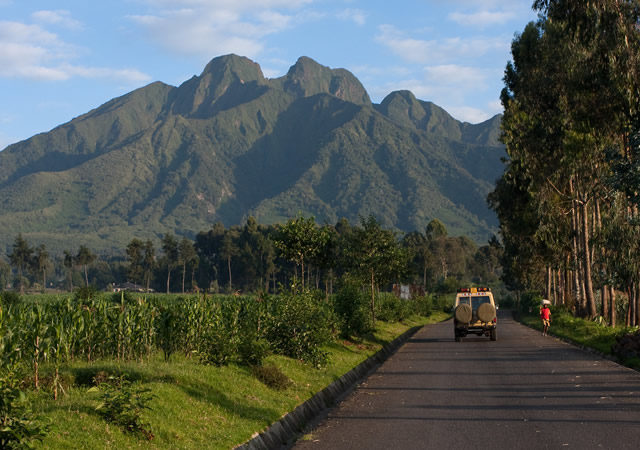
The mist comes down off Sabinyo before the birds have finished waking, and for a moment the bamboo forest at the base of Uganda's smallest national park looks less like a wilderness than a held breath. Somewhere above the cloud line, three extinct volcanoes stand shoulder to shoulder against the Rwandan and Congolese borders, their slopes still warm with the old violence that built them and now given over entirely to gorillas, golden monkeys, and the people who have tracked this ground for generations. This is Mgahinga, and despite being barely the size of a modest American county, it may be the most quietly extraordinary square mile of Uganda's tourism map.
At just 33.7 square kilometers, Mgahinga Gorilla National Park is dwarfed by its famous cousin Bwindi to the north, and that has always been its advantage. Gazetted in 1991 specifically to protect the endangered mountain gorilla, the park sits at the Ugandan tip of the Virunga Massif, a chain of volcanoes shared with Rwanda's Volcanoes National Park and the Democratic Republic of Congo's Virunga National Park. Three of the eight Virunga peaks fall on Ugandan soil here: Mount Muhabura, Mount Gahinga, and Mount Sabinyo, whose jagged, saw-toothed summit marks the exact point where three countries meet. Travelers who stand on it, if they make the full day's climb, can straddle Uganda, Rwanda, and Congo with an outstretched arm in each direction.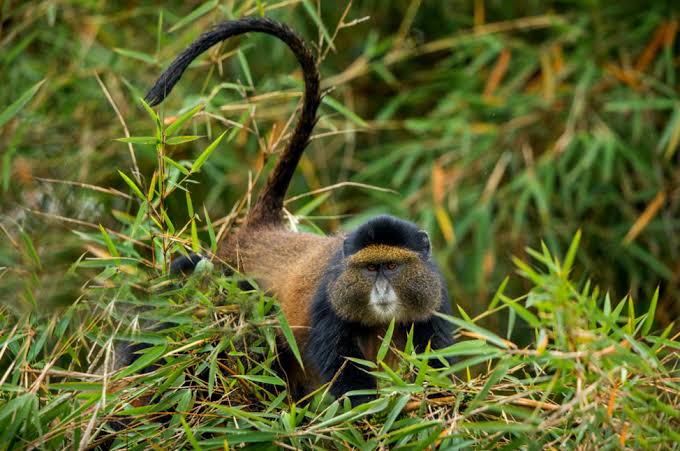
A Park Built Around Rarity
Mgahinga's defining feature is scarcity, and its programs are built to match. The park is home to a single habituated gorilla family, the Nyakagezi group, whose ranging habits mean it sometimes wanders across the border into Rwanda or Congo for days or weeks at a time, a reminder that the mountain gorilla population, however carefully guarded, does not recognize the lines drawn on a map. When the group is in residence, trekking here offers something increasingly hard to find elsewhere in the region: a genuine chance of solitude with the animals, since permits are capped at eight visitors a day for the one troop, far below the crowds sometimes seen in more heavily trafficked sectors of Bwindi.
The park's second headline act is smaller, faster, and found nowhere else in Uganda. Mgahinga is the country's only sanctuary for golden monkeys, an endangered subspecies restricted to the Virunga bamboo zone, whose fur genuinely glints amber and black as they crash through the canopy in tight, chattering troops. Golden monkey trekking is gentler than gorilla trekking, both in terrain and in price, and gives visitors a realistic shot at spending an hour at eye level with an animal found almost nowhere else on the planet.
A third experience sets Mgahinga apart from every other park in the country: the Batwa Trail. The Batwa were the original forest-dwelling inhabitants of this volcanic highland, hunter-gatherers who lived in the Virunga forests for generations before conservation boundaries displaced them in the early 1990s. Today, Batwa guides lead visitors on a half-day walk through their former home, demonstrating how they harvested medicinal plants, collected honey from hollowed logs, and built grass-thatched huts, before ending at the Garama Cave, once a royal hideout and still a ceremonial ground for Batwa cultural leaders. It is one of the few tourism experiences in East Africa built and led directly by an indigenous community narrating its own displacement, and it has become, for many visitors, the emotional center of a Mgahinga trip rather than a footnote to the wildlife.
Planning the Visit
Mgahinga sits in Kisoro District in Uganda's far southwest, a scenic but slow eight-to-nine-hour drive from Kampala, which is why most visitors combine it with a flight into Kisoro's small airstrip or fold it into a longer southwestern circuit that also takes in Bwindi, Lake Bunyonyi, and Lake Mutanda. Park hours run from 7 a.m. to 6 p.m., with trekking briefings beginning around 7 to 8 a.m. at the Ntebeko park headquarters. There is no lodging inside the park itself, but Kisoro town and the surrounding hills hold a growing cluster of guesthouses and lodges within a short drive of the gate.
The dry seasons, June through September and December through February, remain the most reliable windows, when trails on the volcanic slopes are firmer and gorilla and golden monkey movement is easier to track. Trekking requires a minimum age of fifteen, a rule the Uganda Wildlife Authority enforces strictly to protect both younger visitors and the gorillas from disease exposure and unpredictable encounters. Gorilla treks can run anywhere from one to six hours depending on where the Nyakagezi family has ranged that morning, at altitudes climbing past 4,000 meters, so a reasonable level of fitness matters more here than at flatter parks. Hiring a Batwa porter, commonly available for a modest daily fee, is both a practical aid on steep terrain and a direct way to put tourism income into the hands of the community most historically tied to this land.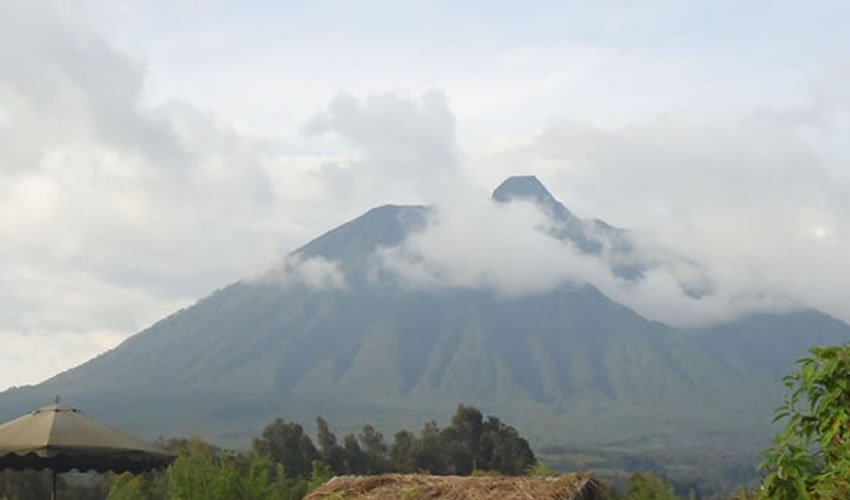
This Week in Ugandan Tourism
Uganda's broader tourism sector is moving on several fronts this month. The Uganda Wildlife Authority's new 2026 gorilla tariff structure took effect on July 1, raising the Gorilla Habituation Experience fee to $1,800 for foreign non-residents (up from $1,500) and $1,600 for foreign residents, while a standard gorilla trekking permit for foreign non-residents remains $800 in peak months, dropping to $600 during the April, May, and November low season. Compounding the tightened market, UWA confirmed in an April 14 letter that it has stopped issuing extra gorilla permits beyond the standard daily allocation to individuals and licensed tour operators, and as of March 1 it also suspended the previous seven-day reservation window, meaning permits must now be paid in full at the time of booking to be secured.
On the conservation side, Uganda notched a genuine milestone in March, when rhinos returned to Kidepo Valley National Park for the first time in more than four decades, following the earlier addition of eight rhinos translocated from South Africa; the country's total rhino population, concentrated mainly at Ziwa Rhino Sanctuary, has now grown to 61 animals. A related restoration effort saw the first zebras arrive at Ajai Wildlife Reserve in the country's northwest as part of a broader push to rebuild biodiversity in reserves that were emptied during decades of poaching and civil conflict.
On the hospitality front, Asilia Africa announced it is expanding into Uganda with a new property, Erebero Hills Lodge, opening near Bwindi Impenetrable Forest and promising closer access to the park alongside an explicit conservation mandate. And at this year's Ekkula Festival, an event increasingly positioned as Uganda's flagship sustainable-tourism showcase, Acacia Wilderness Mweya took the Sustainable New Hotel/Eco Lodge of the Year award, with Tabebuia Spa & Safari Resort and Emburara Farm Lodge recognized for eco-lodge excellence and agro-tourism respectively. Beyond its borders, the Uganda Tourism Board has been courting a new demographic of high-spending travelers directly, with a strategic push into the Swiss market through appearances at the Bern Ferienmesse and FESPO Zurich travel exhibitions this year.
Taken together, the signals point to a sector tightening its premium offerings, gorilla permits costlier and scarcer, new lodges chasing conservation credibility, wildlife numbers slowly rebuilding in parks that had been stripped bare, while still reaching for new markets abroad. For a visitor standing in the bamboo at Mgahinga's edge, waiting for word that the Nyakagezi family has been found, none of that market noise matters much. What matters is the mist lifting off Sabinyo, and the chance, however brief, of eye contact with something that has almost vanished from the rest of the world.



