Agriculture
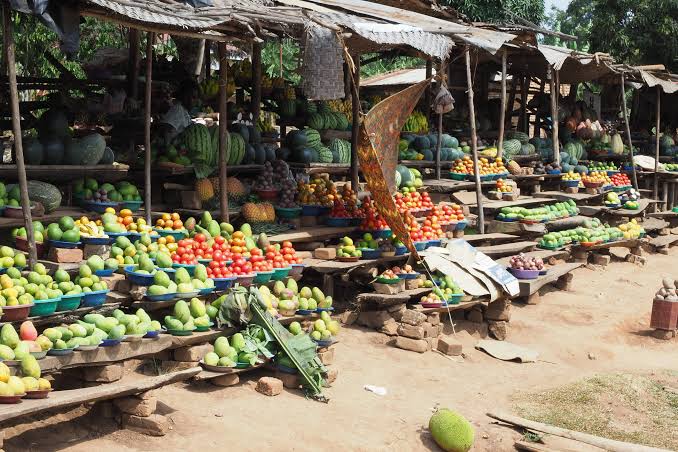
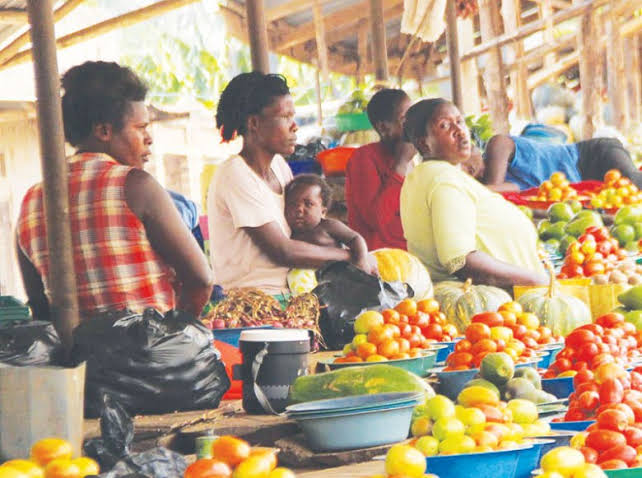
Every morning, Priscilla Arikiriza sets up her stall at Ibanda Central Market the same way she has for years, arranging Irish potatoes, onions and cabbages in neat pyramids to draw in customers from Ibanda Municipality and the farming villages around it. But lately, she says, the ritual has stopped paying off the way it used to. "We receive customers every day, but many leave without buying much because prices have gone up," she told Nile Post this week. A basin of Irish potatoes that used to sell for between Shs30,000 and Shs35,000 now fetches considerably more. Onions have climbed to between Shs45,000 and Shs50,000 a basin, and even a single head of cabbage can cost as much as Shs2,000, up from a few hundred shillings not long ago.
Arikiriza's frustration is being repeated in markets across Uganda, and it is now backed by hard numbers. Data released by the Uganda Bureau of Statistics (UBOS) for July 2026 shows that annual headline inflation rose to 4.0 percent, up from 3.7 percent in June, driven by a sharp jump in food crop prices and an even sharper rise in fuel costs. It is a paradox that is becoming harder to ignore: Uganda's agriculture sector just posted some of its strongest growth in years, yet the people buying food in local markets are paying more for it than they were twelve months ago.
A Season of Bad Weather, Passed On in Shillings
The immediate trigger for the price spikes is weather. A prolonged dry spell that began in April 2026 has cut deeply into harvests in several regions, reducing the volume of fresh produce reaching markets like Ibanda's at exactly the time transport and input costs are rising. "The previous dry spell affected production, and changing weather patterns have reduced supplies from farmers, forcing prices higher," Arikiriza said. Fellow trader Jacklin Ainembabazi pointed to a second, compounding factor: the cost of simply getting produce from farm to market. "Transport costs have also increased, and unpredictable weather continues to affect harvests," she said. "Some commodities remain affordable because there were good harvests, but others are scarce, which explains the higher prices."
The transport story is itself a headline. UBOS figures show a litre of diesel averaged Shs6,603 in July 2026, up from Shs4,354 a year earlier — a 52 percent jump. Petrol rose nearly 39 percent, from Shs4,710 to Shs6,538 a litre. For a taxi or produce truck operator who once spent Shs100,000 to fill a 23-litre tank, the same fill-up now costs roughly Shs152,000, a cost that inevitably gets passed down the supply chain to the trader and then to the shopper. "Prices of commodities have increased. It means you will spend more money to get the same litre of fuel. The water and electricity prices have equally increased, and you will see that in your bills for the month," said Juliet Nakayenga, a senior statistician at UBOS, explaining that Energy, Fuel and Utilities inflation climbed to 14.9 percent in the year to July, from 11.9 percent in June.
Food crops and related items inflation, meanwhile, jumped to 1.6 percent in July after registering flat at 0.0 percent in June — evidence that the dry spell's effects on harvests are only now filtering fully into shop and market prices. The picture is uneven rather than uniformly bleak. Fresh leafy vegetables were up 26.2 percent annually and fresh cassava rose 25.9 percent, according to UBOS data reported by the New Vision. Basic protein sources have also become markedly pricier: a kilogram of mukene, the small silverfish that is a dietary staple for many low-income households, rose 25 percent, from Shs17,691 to Shs22,155, while smoked Nile perch climbed 14 percent, to Shs40,227 a kilogram. Tomatoes rose more than 18 percent, from Shs2,410 to Shs2,855.
Not every staple moved the same direction. Matooke, the green banana that anchors many Ugandan meals, actually fell over the same twelve months, from Shs1,028 to Shs916 a kilogram, and dry beans dropped from Shs4,548 to Shs3,910, alongside declines in Irish potatoes and onions at the national level — even as Ibanda's traders describe those same items becoming pricier locally. The divergence underscores how food inflation in Uganda plays out unevenly: national averages can mask sharp regional shortages driven by which areas caught rain and which did not, and by how far produce has to travel to reach a given market.
Beef, Disease and the Cattle Corridor
Meat prices tell a related but distinct story. Beef has climbed from around Shs16,000 a kilogram to between Shs20,000 and Shs22,000 in several parts of the country, a rise attributed to a combination of livestock disease outbreaks — including recurring Foot-and-Mouth Disease flare-ups in the cattle corridor — prolonged dry spells in cattle-rearing districts, higher transport costs and growing demand from regional markets. Uganda has responded with a nationwide FMD vaccination campaign targeting roughly 46.5 million animals, but the near-term effect on herd health and cattle movement restrictions has still fed through to butcher prices.
Karamoja: The Extreme End of the Same Story
Nowhere is the link between drought and food insecurity starker than in Karamoja, where the same dry conditions rippling through markets in Ibanda have produced a humanitarian emergency. At least 19 people have died of starvation and roughly 1.5 million people are considered at risk of malnutrition, according to the Famine Early Warning Systems Network. Agnes Kirabo, executive director of the Food Rights Alliance, told Al Jazeera that crop losses in the region range from 50 to 70 percent, with an estimated 5,000 hectares of crops worth Shs200 billion destroyed. The government has released Shs45 billion and begun distributing nearly 9.5 million kilogrammes of relief food — maize flour and dry beans — to more than 300,000 households across 480 parishes, an effort due to run through August.
Analysts argue the crisis exposes a distribution problem as much as a production one. "The ultimate irony is that western Uganda pours away excess milk while Karamoja starves," said Job Kijji, executive director of the policy think tank IDEA. "We don't need aid. We need systemic investment in climate-smart agriculture, water harvesting, irrigation and national preservation networks to move food from surplus areas to deficient ones." Kirabo similarly points to a lack of investment in water infrastructure, cold storage and agricultural extension services as the deeper cause behind recurring shortages, describing the situation as "not primarily a climate crisis" but "a governance crisis."

The Wider Economic Puzzle
The price pressure comes even as Uganda's agriculture sector posted strong headline growth. UBOS preliminary figures for the 2025/26 financial year show the agriculture, forestry and fishing sector expanded 6.5 percent, with food crop production up 4.9 percent and cash crops up 12.1 percent, helping push overall GDP growth to 6.4 percent. That combination — robust sector-wide growth alongside rising consumer prices for basic foodstuffs — is not necessarily contradictory. Export-oriented cash crops such as coffee and cocoa can expand rapidly while food-crop supply for the domestic market remains vulnerable to localized weather shocks, uneven storage infrastructure and high transport costs that eat into farmers' incomes without lowering what shoppers pay.
For traders like Arikiriza and Ainembabazi, the macro debate is secondary to the daily arithmetic of a stall that is well-stocked but under-visited. Both say they are hopeful the coming planting season will bring better rains and better harvests, restoring both supply and customer traffic. "We are hopeful that increased production will bring down prices and attract more customers back to the market," one vendor said. Agricultural experts, for their part, continue to press farmers to adopt climate-smart practices and better post-harvest handling to reduce losses. But as this year's dry spell has shown, until Uganda closes the gap between farm-level production and reliable, affordable delivery to market — through irrigation, storage, cold chains and rural roads — food price swings will keep tracking the rains as closely as they track the harvest.
Published By | Features Editor