Written By | Staff Writer
Peasant movements say Europe exports the chemicals it won't allow at home — and Ugandan farmers are learning to fight pests without them
Agriculture
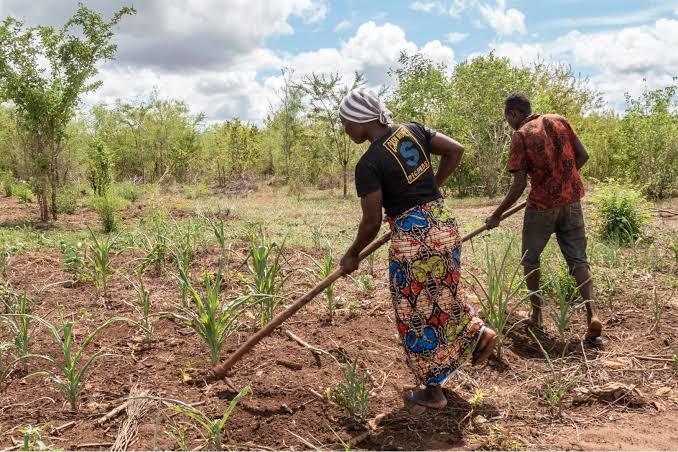
In the vegetable gardens of Mukono, the school plots of Kasese and the maize fields of Apac, a quiet experiment is under way that its organizers hope will eventually replace one of the most stubborn features of Ugandan farming: the highly hazardous pesticide. On July 8, the Eastern and Southern Africa Small Scale Farmers' Forum (ESAFF) Uganda, working with the international peasant movement La Via Campesina, issued a pointed public statement accusing European manufacturers of exporting chemicals to Uganda that are banned for use in their own countries — and laid out, in granular detail, how a farmer-led network of 37 "Community Agroecology Schools" is already showing an alternative works.
The numbers underpinning ESAFF's case are stark. Of the 41 Highly Hazardous Pesticides (HHPs) currently registered for use in Uganda, an estimated 51 to 59 percent are banned for use across the European Union, according to figures ESAFF attributes to the US Environmental Protection Agency and Ugandan reporting. A 2021 report by the International Pollutants Elimination Network put a similar figure at 60 percent of the same 41-chemical list. These are not obscure or rarely used products: they include glyphosate, cypermethrin and mancozeb, chemicals that studies going back to 2019 found in routine use among Uganda's Arabica coffee farmers, often applied with little protective equipment and, in some documented cases, with farmers using their mouths to unblock clogged spray nozzles.
The human cost, ESAFF argues, is measurable and mounting. "Uganda, like many African countries, is part of the EU-AU Partnership, yet a significant share of banned and highly hazardous agrochemicals used on Ugandan farms originates from Europe," said Hakim Baliraine, ESAFF Uganda's national chairperson, in the statement. Scientific testing cited by the organization has detected HHP residues in human urine, blood, breast milk and sweat among exposed farming communities, and researchers note that children absorb roughly twice the pesticide dose of adults relative to body weight. A separate review study on pesticide drift, cited in earlier Ugandan reporting on the issue, found that as much as 75 percent of applied HHPs miss their intended target entirely and wash into streams and water systems, where they accumulate in fish and other aquatic life relied on by riverine and lakeside communities.
The problem, campaigners say, does not respect a map. Lake Victoria, the Nile's tributaries and the river systems that cross the East African Community carry pesticide residues wherever the water flows, regardless of which country applied the chemical. "Government, being a signatory to the Bamako Convention, must look at the highly hazardous molecules in this country, and they must be banned. Molecules banned elsewhere must also be banned across Africa," said Benard Bwambale, coordinator of the Food Safety Coalition of Uganda. ESAFF's push has consequently expanded beyond Kampala to Nairobi, Dar es Salaam and other EAC capitals, arguing that a country-by-country approach to banning HHPs simply displaces the risk rather than eliminating it, since food, water and residues cross borders daily regardless of national regulation.
What makes the ESAFF campaign different from previous advocacy pushes is the scale of the alternative it can now point to on the ground. Inside the network's 37 Community Agroecology Schools, farmers have shifted toward botanical pesticides made from neem, chilli and garlic extracts; fermented organic inputs blending cow dung, molasses, wood ash and beneficial microorganisms; intercropping with marigold, basil and tephrosia to disrupt pest cycles while building biodiversity; and — in one of the more unusual entries in the toolkit — human urine, promoted by ESAFF as a zero-cost, nutrient-rich fertilizer substitute that doubles as a pest deterrent. "In this community, members are no longer worried about pest and disease attacks. The knowledge we got enabled us to produce and use organic pesticides in our gardens. People are admiring what we are doing, and they end up joining the school," said Justine Arinaitwe, a Community Agroecology School facilitator in Kasese.
The economic argument ESAFF is making to government is as pointed as its public health one. The organization says Uganda loses more than $60 million in a single year to export residue violations — produce rejected by importing markets because it exceeds permitted pesticide residue thresholds. That figure updates an earlier, larger estimate: President Museveni has previously put Uganda's residue-related export losses at Shs762 billion (roughly $205 million at recent exchange rates), a figure cited in Ugandan press coverage of the pesticide debate in late 2024. Whichever number proves more durable, both point in the same direction — that Uganda's continued reliance on HHPs is not simply a health and environmental cost but a trade cost, one that lands hardest on export-oriented horticulture and coffee farmers whose produce is screened against EU and other international residue limits before it can be sold.
Government is not starting from zero on this. Uganda's Ministry of Agriculture, Animal Industry and Fisheries has for several years been developing both a national organic agriculture policy and a National Agroecology Strategy intended to formalize the shift away from synthetic inputs and mainstream biodiversity-friendly farming as an alternative to monoculture and heavy agrochemical use. Dr. Paul Mwambu, the ministry's commissioner for crop inspection and certification, has previously acknowledged that pesticides "have an obvious role in increasing food production" but warned that improper use — wrong concentration, wrong timing, wrong product — leaves dangerous residues in the parts of the plant people eat. ESAFF's demand is that this slow-moving policy process be "fast-tracked and adequately resourced," rather than left as a standing intention.
ESAFF's list of asks is direct: that the European Union stop exporting pesticides banned within its own borders; that Uganda accelerate the phase-out of HHPs under its existing obligations as a signatory to the Bamako Convention, which governs hazardous waste and chemicals across Africa; that the EAC adopt a single harmonized regulatory framework rather than leaving individual member states to set their own rules; and that governments and donors treat investment in organic crop-protection infrastructure as an economic development strategy in its own right, not an environmental afterthought. The organization points to Uganda's standing as the world's second-largest country by number of registered organic farmers — a position built more by default, through smallholders who simply cannot afford synthetic inputs, than by deliberate policy — as evidence of an underexploited advantage in global organic markets that industry groups estimate is worth well over $200 billion annually worldwide.
Industry voices, for their part, say the shift is already happening, if unevenly. Agnes Mbabazi, chairperson of CropLife Uganda, has said the country's agrochemical importers are "trying to reduce and change to bio-products that are safer and more organic," while the Uganda National Agro-input Dealers Association has pointed to new training manuals for dealers and extension workers on lower-risk plant protection products as evidence the private sector recognizes the direction of travel, even if the pace frustrates campaigners like ESAFF.
For Uganda's smallholder farmers — the overwhelming majority of the country's roughly 40 million-strong agricultural workforce — the outcome of this fight will shape both what lands in their bodies and what they can sell abroad. A national pesticide regime that keeps banned EU chemicals in circulation risks compounding health costs with trade losses in the same export-driven horticulture and coffee sectors government is simultaneously trying to grow. ESAFF's bet is that the fields of Kasese, Mukono and Apac already contain the proof that a different path is workable at scale; whether Kampala and Brussels move fast enough to make that the norm rather than the exception is now the open question.



