Written By | International News Agencies
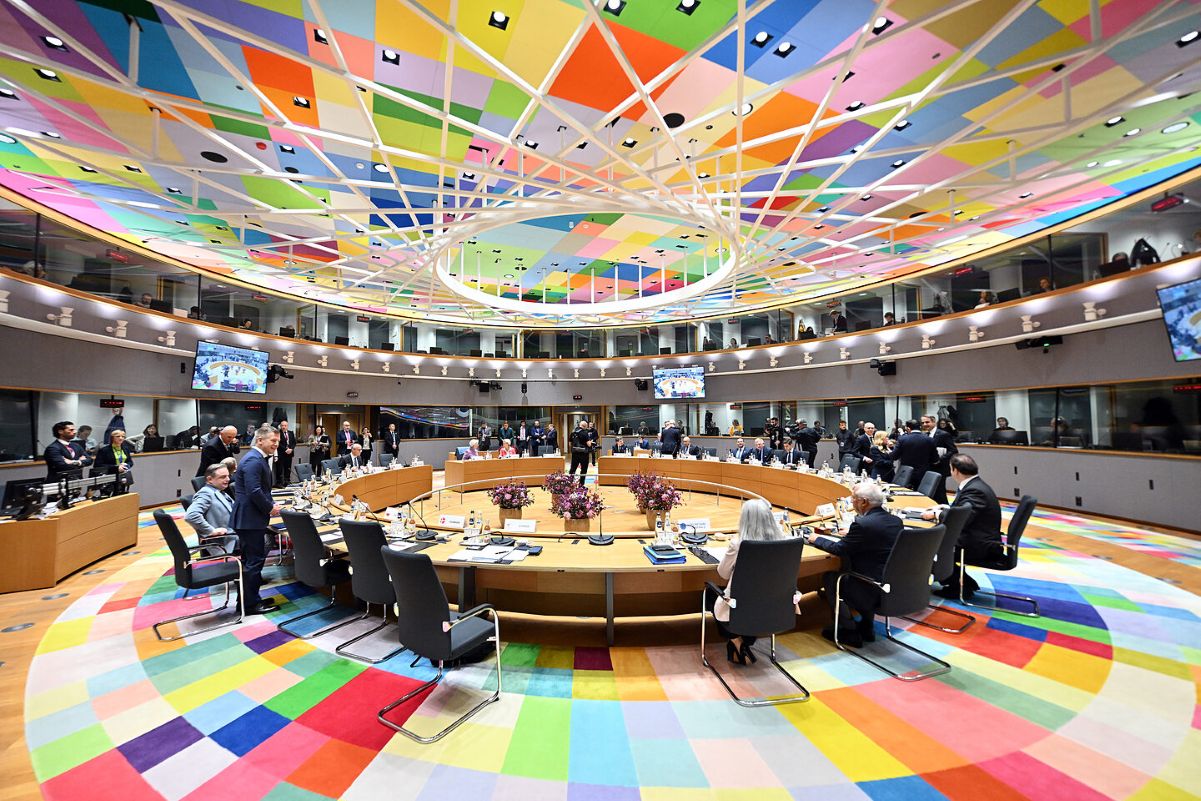
A special Brussels summit on the 2028-2034 budget ended without a deal, pushing the bloc's money fights, its next Ukraine loan and the choice of a new ECB chief to a crowded December summit.
World Politics
Introduction
European Union leaders failed on Thursday, November 26, 2026, to agree on the bloc's next long-term budget, a spending framework of roughly €1.78 trillion meant to run from 2028 to 2034. The extraordinary European Council in Brussels also left unresolved a proposed loan of up to €45 billion to keep Ukraine financed through 2027, with three member states refusing to join it. "We did not reach an agreement," European Council President António Costa told reporters, according to the Cypriot outlet Politis, citing Greek broadcaster ERT. The budget, the Ukraine loan and a package of European Central Bank appointments were all pushed to the regular summit on December 17 and 18.
The outcome was widely expected. Italy's prime minister, Giorgia Meloni, said on arrival that leaders were "light-years away from a solution," and Hungary's prime minister, Peter Magyar, wrote on Facebook that the chance of an agreement that day was virtually zero, adding that a Christmas deal did not look likely either. But the failure matters: the multiannual financial framework, as the long-term budget is formally known, sets the EU's spending priorities for seven years and needs the unanimous backing of all 27 governments, followed by the consent of the European Parliament, before money can flow from January 1, 2028.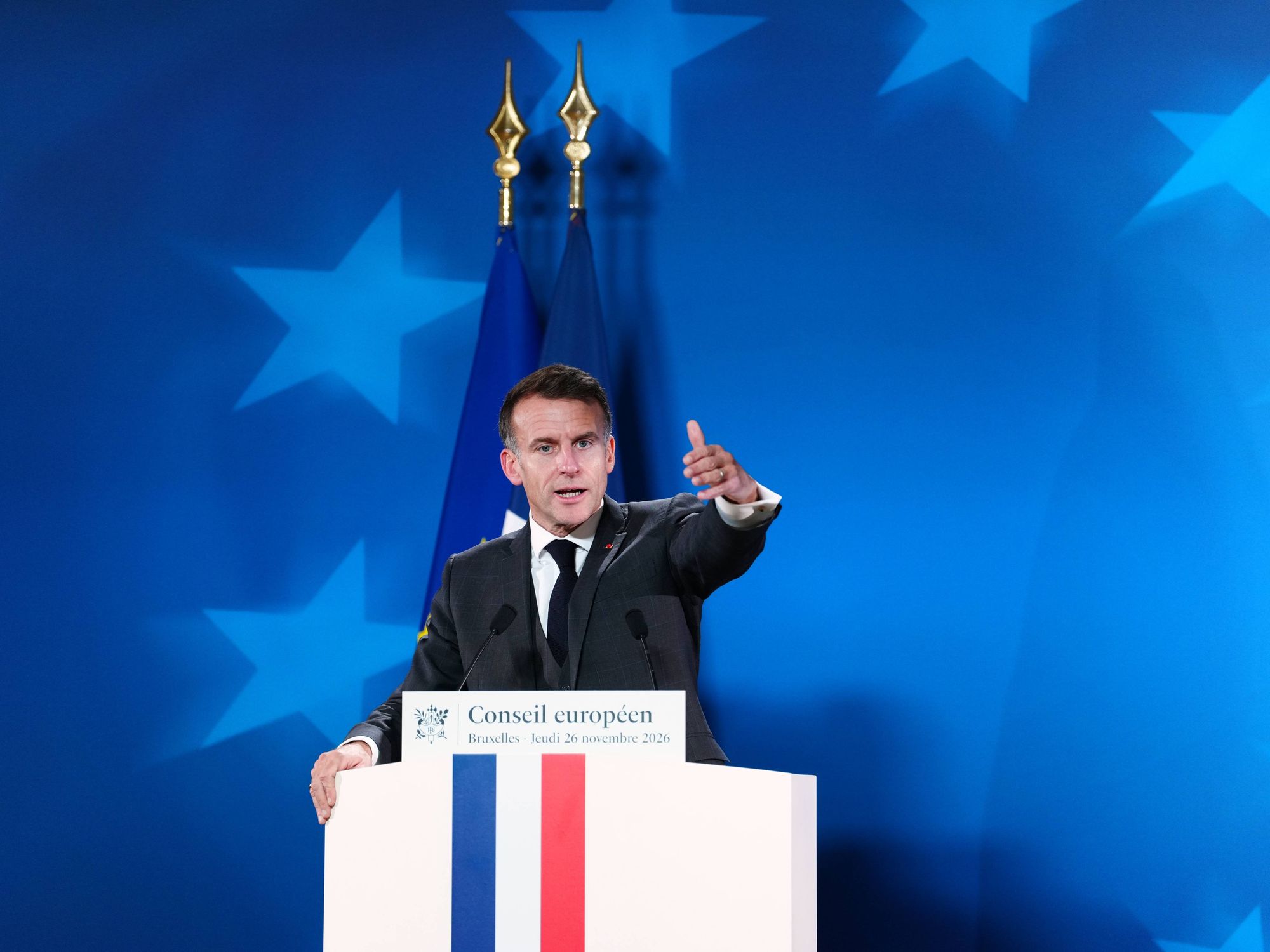
Background: A Smaller Budget for a Bigger Agenda
The negotiations began with a Commission proposal worth almost €2 trillion, intended to fund the EU's traditional priorities, farm subsidies and cohesion funds for poorer regions, alongside new ones such as defence, competitiveness and support for Ukraine. Costa's "negotiating box," the compromise document leaders worked from on Thursday, cut that total to about €1.78 trillion, a reduction of more than €200 billion. French President Emmanuel Macron put the cut at €204 billion. Al Jazeera, which reported in US dollars, described the box as worth nearly $1.76 trillion; the euro figures used by European outlets and Council documents are the more reliable reference.
Costa asked leaders to concentrate on three questions: the overall size of the budget, how it is divided between spending headings, and the "own resources," or new EU-level revenues, that would help pay for it. He said afterwards that most leaders opposed further cuts to the overall envelope, but the room was split along familiar lines.
Seven net contributors, Germany, Austria, Belgium, Denmark, Finland, the Netherlands and Sweden, want a smaller budget. Opposite them, a group of 17 "Friends of Cohesion" countries oppose any further reductions to cohesion and agricultural spending, and some want cuts already made in Costa's box reversed. Dutch Prime Minister Rob Jetten said the budget needed to be modernised and downsized if a deal was to be struck. Germany's chancellor, Friedrich Merz, said: "Europe needs solid finances. We can't and we mustn't take on more debt." Macron, by contrast, said France opposed further cuts and would reject an unbalanced deal. Meloni framed Italy's red line in terms of net balances, saying Rome was not willing to sign off on a budget under which it would have to give more to receive less.
The Ukraine Loan and the "24"
The most politically charged item was Ukraine's money for 2027. On November 18 the Commission proposed a loan of up to €45 billion for that year: up to €25 billion for military support and €20 billion in budget support tied to reforms. It is designed as a limited-recourse loan that Ukraine would repay only once it receives reparations from Russia. According to PCN Channel, the Commission estimates Ukraine's total financing gap for 2027 at about €70 billion, so even the full loan would cover only part of the need.
Costa said 24 member states supported the proposal. Bulgaria, according to Politis and PCN, would take part only in the non-military portion. Hungary, Slovakia and Czechia remain outside, as they were for the €90 billion loan arrangement that covers 2026 and 2027. Al Jazeera's account differs slightly, describing Bulgaria, Czechia, Hungary and Slovakia together as opposing the use of the funds for military aid; the reports agree that three countries are fully out and that Bulgaria's participation is limited.
Germany has tied the two files together. Merz warned earlier in November that he would block a budget agreement without a collective commitment to Ukraine, and at the summit he again pressed for all 27 states to back Ukraine financing. That linkage gives the three holdouts leverage over the budget, but it also gives Berlin leverage over them: countries that rely heavily on cohesion money have a strong interest in a budget deal that Germany says it will not sign without Ukraine.
The issue has been sharpened by events on the ground. In the days before the summit, Russia launched a large overnight attack on Ukraine with Iskander, Zircon and S-400 missiles and more than 100 drones, while Russian incursions into Polish airspace prompted a joint statement from President Donald Trump and NATO Secretary General Mark Rutte. Ukrainian intelligence has also claimed, without independent verification, that North Korea temporarily suspended some arms deliveries to Russia.
Digital Tax and New Revenues
On revenues, Commission President Ursula von der Leyen said a digital services tax had "broad support" among leaders and that there were good prospects for a package of new own resources. Costa said work on new revenues would continue. A summary by 10 Things reported that Costa has proposed reviving an EU digital services tax, an idea opposed by Washington and by Ireland, home to the European headquarters of many US technology companies. Any new own resource requires unanimity, and a levy that targets US tech giants would land in the middle of an already tense trade relationship: the US trade representative this week proposed new tariffs of up to 15 percent on EU goods as part of a Section 301 action against 14 economies. Von der Leyen acknowledged that reaching agreement "will be a challenge," while insisting that "we all know we need an agreement."
Other Business: A Spaniard for the ECB
Leaders also discussed the succession at the European Central Bank. Pablo Hernández de Cos, a former governor of the Bank of Spain and current general manager of the Bank for International Settlements, has been chosen as the candidate to succeed Christine Lagarde, who steps down on February 7, 2027. He would be the first Spaniard to lead the ECB. Laurence Boone and Markus Brunnermeier have been nominated for the Executive Board. Formal sign-off was moved to December along with the rest of the package, according to Politis. The appointments come with eurozone inflation reported at around 4 percent, well above the ECB's 2 percent target.
Reactions
Costa struck a deliberately patient tone, urging leaders to approach December with an "open mind, a constructive approach and the sense of compromise." Others were blunter. Meloni's "light-years" comment and Magyar's warning that even a Christmas agreement looked unlikely suggested that capitals see the negotiations as far from their endgame. Reports on the summit's length were inconsistent: Al Jazeera said it could run into Friday, PCN described it as a November 26 to 27 meeting, and Politis said it ended late on Thursday. Some coverage described the summit as ending early without a deal.
What's Next
Leaders now face a December summit loaded with three big decisions: the seven-year budget, Ukraine's 2027 financing, and the ECB appointments. History suggests long-term budget deals are rarely reached at the first or second attempt, and the 2021-2027 framework took marathon sessions to close. This time the calendar is tighter. Funds are supposed to flow from January 2028, the European Parliament must still give its consent, and Al Jazeera noted that elections in 2027 in France, Italy, Poland, Greece, Estonia, Finland and Slovakia could harden national positions the longer talks drag on.
The Ukraine loan is the most urgent piece. Kyiv's financing for 2027 must be settled well before the new year to reassure markets and partners, and the 24-country formula gives the EU a possible route around the holdouts if unanimity cannot be achieved. But Merz's insistence on a collective commitment means that route may not be enough to unlock the budget. Whether Germany softens that demand, or whether Hungary, Slovakia and Czechia accept a role in non-military support, as Bulgaria has, may decide whether December produces a breakthrough or yet another postponement.
For now, the summit's main result was to narrow the field of argument: leaders broadly agree that the budget should not shrink much further, that Ukraine needs funding, and that new revenues are needed. They do not yet agree on who pays, who benefits, or how far the EU should go in confronting Washington over a digital tax. Those questions will be waiting in Brussels on December 17.