DAKAR, Senegal
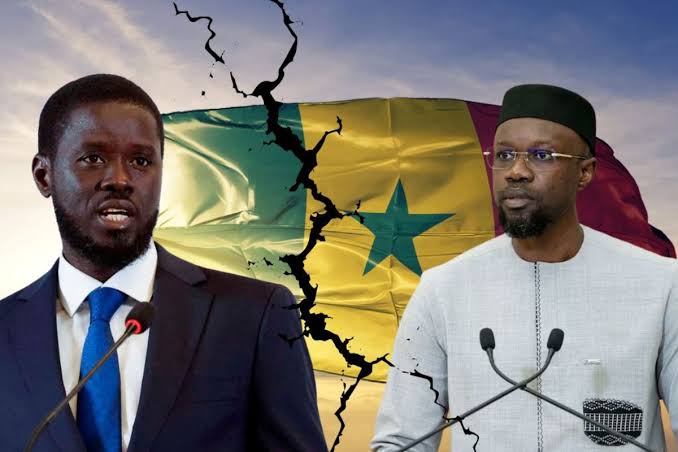
Senegal's National Assembly voted overwhelmingly on Wednesday to demand that President Bassirou Diomaye Faye withdraw the decree he used to put a rejected 2026 budget into force, escalating a constitutional standoff between the president and the man who helped bring him to power, former Prime Minister Ousmane Sonko, who now runs the legislature. The same day, Faye told his Cabinet to keep spending under the decree anyway.
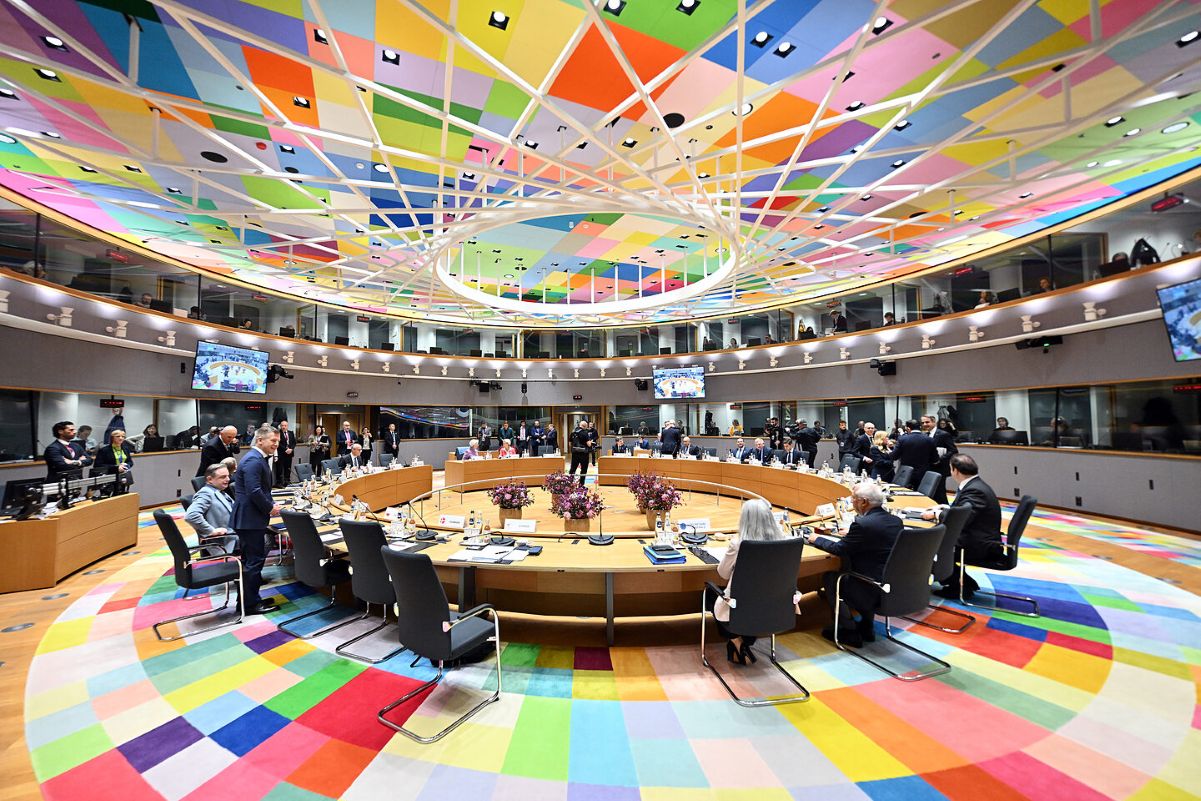
The clash matters well beyond Dakar's political class. Senegal is trying to finalize a $2.2 billion, three-year program with the International Monetary Fund to stabilize public finances after the discovery of large-scale misreported borrowing pushed its debt to about 132 percent of gross domestic product. The IMF has said that progress depends on a settled budget framework. Two branches of government are now openly contesting which of them has the power to provide it.
The vote
The resolution passed by 128 votes to nine, with two abstentions, according to figures from Seneweb reported by Afreeque and Bénin Web TV. It calls for the withdrawal of Decree No. 2026-2416 of Nov. 19, which brought the 2026 supplementary finance law into effect, and for an end to budget operations carried out under it.
Lawmakers from Pastef, the party Sonko leads and which holds a large majority in the Assembly, argue that the decree has no legal basis because the bill had already been defeated in a plenary vote on Nov. 3. Ayib Daffé, a senior Pastef lawmaker, described the decree as "illegal and unconstitutional," called for its immediate withdrawal and did not rule out going to court, according to Exclusif.net.
The resolution also carries a warning aimed at the civil service. It states that the personal responsibility of budget officers, financial controllers, public accountants, paymasters and tax and customs officials "could be engaged" if they execute the decree. The Assembly said it would scrutinize any new borrowing contracted under the decree and review those operations when it examines the 2026 budget settlement law.
The resolution has no binding force on the executive. Abdou Mbow, a lawmaker from the opposition Takku Wallu Sénégal coalition, questioned its legal value, noting that a challenge to a decree would go before the Supreme Court and a challenge to a law before the Constitutional Council. He called the majority's approach "unacceptable."
The president's legal argument
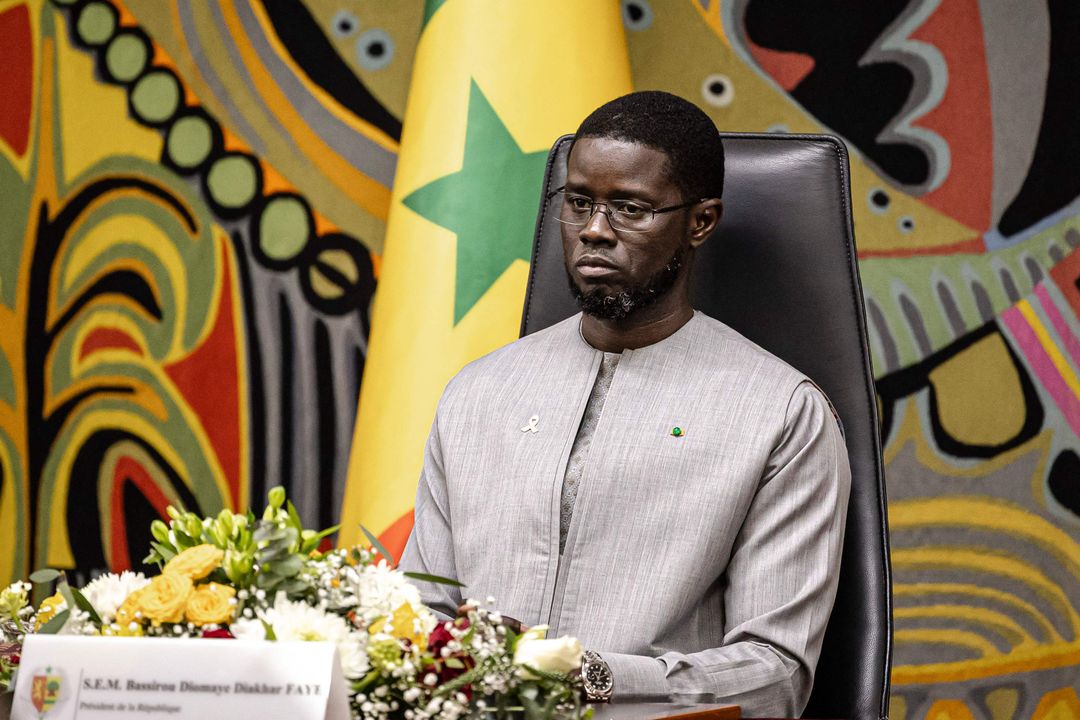
Faye's government says it is acting within the Constitution. Finance Minister Cheikh Diba has cited Article 68, which allows a finance bill to be put into effect by decree if Parliament has not reached a definitive vote within 60 days, according to Bénin Web TV. The government says the revised budget was transmitted to lawmakers on Sept. 18.
When it announced the decree on Nov. 19, the presidency said Faye was acting as "guardian of the constitution and guarantor of the regular functioning of the state," Reuters reported. The government has warned that without a revised budget, electricity supplies could be threatened, payments to businesses delayed and teachers' salary arrears left unpaid.
At Wednesday's Council of Ministers, held on the same day as the Assembly vote, Faye instructed Prime Minister Ahmadou Al Aminou Lo and Diba to proceed with carrying out the budget without delay, including financing the agricultural marketing campaign and honoring Senegal's international commitments. He also set out priorities including the development of eastern Senegal and its mineral resources.
The dispute turns on a legal question that Senegal's courts have not yet been asked to answer: whether a bill that Parliament actively rejected can still be enacted under a provision written for cases where Parliament fails to decide in time. Pastef says the Nov. 3 vote was a definitive decision. The government's position rests on the 60-day clock having run before that decision.
How the alliance broke
Faye and Sonko rose to power together. Sonko, the more charismatic opposition figure, was barred from the 2024 presidential race and backed Faye, his deputy in Pastef, who won and appointed him prime minister. The partnership was the defining political story of Senegal's transition.
It ended on May 22, 2026, when Faye dismissed Sonko by decree. Sonko was elected president of the National Assembly within days. The rift has been attributed to diverging views on the country's debt, on IMF demands and on mining and oil rights, with Sonko taking a more confrontational stance toward foreign creditors and investors.
The budget has become the main arena for that fight. On Nov. 3, the Assembly rejected the revised 2026 budget by 109 votes to 20, with three abstentions, according to Africanews, after first sending it back to committee. On Nov. 18 it voted against a 2027 budget bill as well, Reuters reported.
Pastef figures have made their objections personal. Amadou Ba, an influential Pastef lawmaker, said Faye was "making a bad mistake" and had "no authority to put into force a rejected revised budget bill," according to TRT Afrika's report carried by Citi Newsroom. Not everyone sees it that way. Cheikh Diop, leader of the CNTS-FC trade union, called the decree a "huge relief for the labour sector," reflecting the worries of workers whose pay depends on the budget being carried out.
What the IMF wants
The fund's position frames everything. In September, the IMF announced a preliminary agreement on a 36-month, $2.2 billion program, which still awaits approval by its executive board. The deal follows the revelation that the previous administration had misreported billions of dollars in borrowing, which the IMF says left public debt at 132 percent of GDP by the end of 2024.
IMF spokesperson Julie Kozack told a press briefing that advancing the package "depends on completion of the agreed steps on a budget framework." On Nov. 12, the fund asked Senegal to finalize the budget framework and secure financing assurances, according to Bénin Web TV. Africanews reported that the deadlock threatened hopes of a board vote as early as December.
Sonko's camp has opposed the debt restructuring that the program envisions, framing it as a threat to national sovereignty. Faye's government presents the revised budget as meeting the fund's demands for transparency. That leaves the IMF in an awkward position: it needs a budget framework it can rely on, and the legislature is warning civil servants not to implement the one the executive has adopted.
Analysis: a crisis of institutions, not just personalities
On the surface, this is a feud between two former allies. Underneath, it is a test of whether Senegal's institutions can handle divided power, something the country has rarely had to manage. The presidency and the Assembly are controlled by rival wings of the same movement, and neither has an obvious way to force the other's hand.
Faye's decree gives him a short-term win. Money can flow, salaries can be paid and the government can tell the IMF it has a budget. But it is a fragile foundation for a multiyear program. Lenders and the fund want assurance that budget commitments will survive politically, and a framework that the legislature rejected outright and then condemned in a 128-9 vote hardly offers that. The warning to civil servants adds a practical risk: officials who fear personal liability may slow-walk payments even with presidential cover.
Sonko's strategy carries risks too. Blocking budgets during a debt crisis can be framed as defending sovereignty, but it can also be blamed for unpaid teachers, power cuts and delayed payments to businesses. Africanews noted that high youth unemployment and the cost of living recently fueled a three-day general strike. If the standoff leads to visible hardship, public patience with both men could wear thin.
The most likely route to a resolution runs through the courts. A ruling by the Supreme Court or the Constitutional Council on the Article 68 question would give both sides, and the IMF, a clearer answer than political pressure can. Pastef has signaled that it may sue; the government has said it believes the law is on its side.
What to watch
The next steps include whether Pastef files a legal challenge and which court it chooses, whether finance officials execute payments under the decree in the face of the Assembly's warning, and how the Assembly handles the rest of the 2027 budget, part of which it has already rejected. The IMF board timetable is the clearest external deadline. If the board vote slips into 2027, Senegal will face mounting financing pressure.
For Faye, the challenge is to show creditors a budget that will hold. For Sonko, it is to show voters that obstruction is principle rather than rivalry. For Senegal, long regarded as one of West Africa's steadiest democracies, the larger question is whether two institutions controlled by estranged allies can find a rule-based way to govern together before the fiscal clock runs out.
Published By | News Editor