Written By | International News Agencies
Fausto Isidro Meza Flores, accused by Washington of flooding the United States with methamphetamine and fentanyl, was seized in Sinaloa with the help of US intelligence
World Politics
The Raid
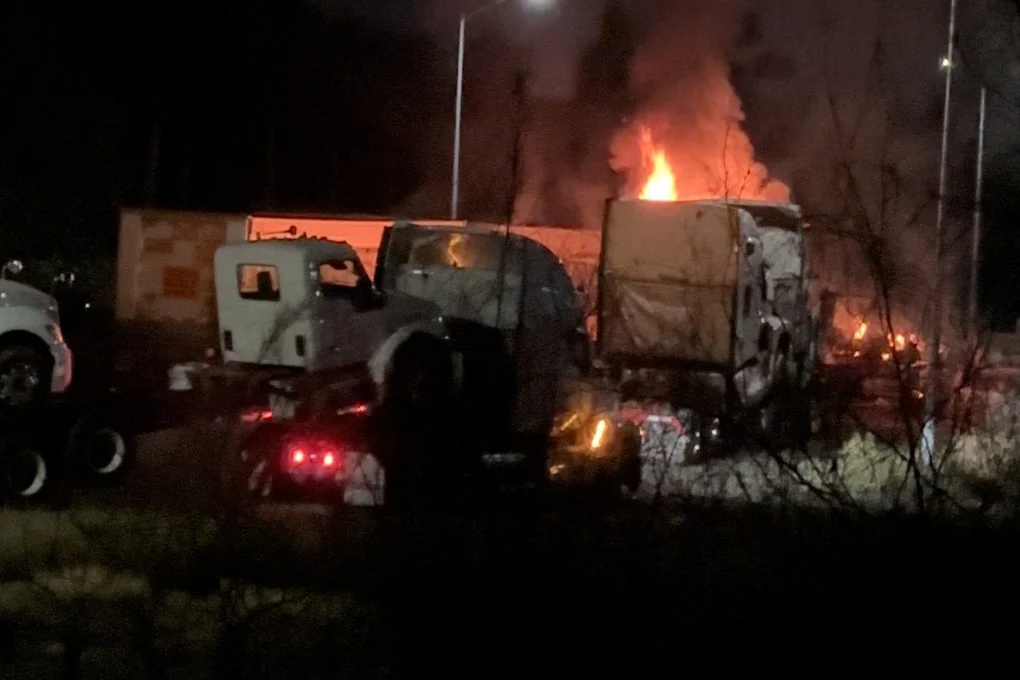
For several hours on the night of Friday, November 20, the agricultural city of Guasave in northern Sinaloa became a battlefield. Residents told the Associated Press that gunfire began around 7 p.m. and spread across the city; the Sinaloa state security ministry said shortly after 9 p.m. that federal forces had come under attack and urged people to stay indoors. Military helicopters fired on gunmen from the air while drones circled overhead. A Mexican Pacific League baseball game at Kuroda Park, between the Algodoneros de Guasave and the Venados de Mazatlán, was halted as players and fans fled, and the league later cancelled the rest of the weekend's games.
The target was Fausto Isidro Meza Flores, 44, known as “El Chapo Isidro,” the alleged leader of a trafficking organisation that grew out of the old Beltrán Leyva cartel. By the early hours of Saturday, November 21, he was in custody. Mexico's Defence Ministry said he was captured along with an alleged second-in-command, identified as Germán N, alias “Serafín,” and an alleged financial operator identified as José N. Authorities said eight people were detained in total, and weapons and ammunition were seized.
The cost was high. Eleven people died: four Mexican soldiers and seven suspected gunmen, according to the AP, Al Jazeera and other outlets. Officials have not said how many civilians were injured. Cartel cells set up roadblocks and burned vehicles in Guasave, Ahome, Guamúchil and Navolato, with the AP counting at least ten blockades in Guasave alone; petrol stations and convenience stores were set alight. A federal official told the AP that it was not possible to extract Meza Flores until about 4 a.m. on Saturday, adding: “Getting him out was extraordinary.” He was then flown by military aircraft to Mexico City.
How It Was Done
Accounts of the operation, drawing on Mexican officials and a New York Times report cited by Al Jazeera, describe weeks of preparation and close coordination with Washington. Mexico shared information with US intelligence agencies, which flew reconnaissance drones over the area; Mexican analysts used the footage to map Meza Flores's daily routine. Intercepted communications, reportedly including messages with family members, helped confirm his location. Two earlier attempts to detain him had failed.
On the night of the raid, an elite army unit, supported by National Guard special forces and more than two dozen undercover soldiers, moved on a house in Guasave while diversionary operations took place in nearby Los Mochis. Special forces reportedly confirmed his identity by his voice, build and gait. Two helicopters then flew toward Los Mochis to suggest he was being moved there, while a third stayed behind to engage gunmen; he was instead placed in an armoured vehicle and driven out. Some details differ among reports, including the exact time the fighting began and the relationship of those arrested with him, which Al Jazeera described as a cousin and a brother-in-law.
Who Is El Chapo Isidro?
Despite the nickname, Meza Flores is not related to Joaquín “El Chapo” Guzmán. Born in 1982 in Navojoa, Sonora, he is reported to have started out in the 1990s with the Juárez cartel before joining the Beltrán Leyva organisation, where he rose to senior rank. After that cartel fractured, his group, sometimes called Los Mazatlecos or the Meza-Flores organisation, operated largely independently from its base in Guasave. Mexican officials describe it as allied with the Mayos faction of the Sinaloa cartel, while older accounts portray him as a long-time rival of Sinaloa's leadership; the alliances in the region have shifted repeatedly over the years.
In the United States, he faces long-standing federal charges, with a 2012 indictment and later superseding charges covering conspiracy to manufacture and distribute methamphetamine, cocaine, heroin and marijuana for import, as well as firearms offences, according to US records summarised by Mexico News Daily and others. Latin Times reported that a newer superseding indictment adds narco-terrorism and material-support charges, an allegation that could not be independently checked for this article. The US Treasury placed him under Kingpin Act sanctions in 2013, the US government offered a reward of up to $5 million for information leading to his arrest, and in February 2025 the FBI added him to its Ten Most Wanted list. At the time, the bureau accused him of spending two decades “flooding the US with fentanyl, cocaine, heroin, and other deadly drugs.” Al Jazeera reported that he could face life imprisonment or even the death penalty if convicted in the United States.
Reactions in Mexico and Washington
Mexico's Security Secretary, Omar García Harfuch, wrote on X that the arrests were an important step toward restoring peace in Sinaloa. He said armed forces would remain deployed in the state to protect civilians, and expressed his regret over the deaths of the four soldiers. The Defence Ministry said the operation reflected an “unwavering determination” to curb organised crime and stressed that it followed coordination with US intelligence within a framework of bilateral cooperation. President Claudia Sheinbaum did not issue a widely quoted statement in the reports reviewed for this article.
US officials were quick to praise the outcome while emphasising partnership. “Results like these don't happen overnight. They are built on sustained cooperation and trust,” US Ambassador Ronald Johnson wrote on X, adding: “We will continue the hunt.” The Drug Enforcement Administration called the capture a significant victory against one of Mexico's most violent criminal networks. The US consulate in Hermosillo issued a security alert for American citizens in the affected municipalities. Speaking on Friday, President Trump repeated a familiar theme, saying “we can't let the cartels run Mexico. They're our neighbour,” according to Al Jazeera.
Defence Ministry statements say Meza Flores is subject to a US extradition order, though English-language outlets describe it as a pending request. Formal extradition through Mexican courts can take months or years, but Sheinbaum's government has also sent large groups of cartel figures to the United States in single operations outside the regular process; HNGN reported that 92 people have been sent so far. Officials have not said which route they will take in this case.
The Politics Behind the Arrest
The capture lands at a sensitive moment in US-Mexico relations. Since taking office in October 2024, Sheinbaum has been under intense pressure from the Trump administration to act against the cartels that supply fentanyl and methamphetamine to the US market. Washington has designated several Mexican cartels as foreign terrorist organisations, including the Mayos faction of the Sinaloa cartel, a move that has fuelled Mexican concern about the possibility of unilateral US military action. Sheinbaum has repeatedly said cooperation must respect Mexican sovereignty and has rejected the idea of US troops operating on Mexican soil.
Against that background, a high-profile arrest built on shared intelligence allows both governments to claim success. Mexico can point to a capture carried out by its own forces, at the cost of soldiers' lives, while Washington can point to the payoff from its pressure and intelligence support. The Mexican government says more than 74,000 people have been arrested for high-impact crimes since Sheinbaum took office, and earlier this year the military operation that fatally wounded Nemesio “El Mencho” Oseguera, leader of the Jalisco New Generation Cartel, marked another major blow against organised crime. Mexico City-based security analyst David Saucedo was blunt about the driver, telling the AP: “What is evident is this is a product of pressure from the United States.”
What Comes Next for Sinaloa
The question now is whether the arrest makes Sinaloa safer or more dangerous. The state has endured more than two years of internal war between the Chapitos, loyal to the sons of Joaquín Guzmán, and the Mayos, loyal to Ismael “El Mayo” Zambada, a conflict that has left thousands dead or missing. Mexican newspaper Reforma described Meza Flores as the main active capo in the state. Removing him and his deputy could shift the balance of power in northern Sinaloa, and experts cited by the AP warned that picking off top leaders has historically set off fresh waves of violence as successors and rivals fight for territory.
Saucedo cautioned against overstating the blow. “They arrested the No. 1 and No. 2,” he told the AP, “but the entire network of hit men, street-level drug dealers, businesses and political and police connections remains intact.” The speed with which cells blocked highways and attacked soldiers on Friday night showed that the organisation retains significant armed capacity. By Saturday a tense calm had settled over Guasave as troops cleared burned trucks, but residents described themselves to the AP as very afraid.
In the days ahead, attention will turn to three things: whether Mexico moves quickly to send Meza Flores to the United States, whether retaliatory violence spreads across northern Sinaloa, and whether Washington treats the arrest as evidence that its pressure campaign is working or as a reason to demand more. For Sheinbaum, the capture is a clear security achievement. Whether it also becomes a turning point in Sinaloa's long war will depend on what happens after the cameras leave Guasave.