The Pan American Health Organization is urging countries to step up testing and vaccination after a surge led by Brazil, where the variant that tore through Central Africa in 2024 is now gaining ground in Rio and São Paulo.
WASHINGTON, D.C
It was supposed to be yesterday's crisis. Just over a year after the World Health Organization lifted its global emergency over mpox, the virus is roaring back into the headlines — and this time, health officials are watching a more worrying strain take hold in the Western Hemisphere.
On Tuesday, November 25, the Pan American Health Organization (PAHO) issued a public call for countries across the Americas to strengthen surveillance as mpox cases climb. The warning followed an official Epidemiological Alert dated November 24, flagging a rise in infections since late September and growing detections of clade Ib — the branch of the virus that fueled a devastating outbreak in the Democratic Republic of the Congo and neighboring countries in 2024.
The numbers tell the story. From January to November 2026, 13 countries in the region reported 3,269 confirmed cases and four deaths, according to PAHO. Brazil alone accounts for 1,325 of those cases, including one death — and it is Brazil that is driving the latest upswing.

A Virus That Never Really Left
Mpox, formerly known as monkeypox, burst onto the world stage in 2022, when a global outbreak caused by a strain called clade IIb spread rapidly, largely through sexual networks among men who have sex with men. Since then, PAHO says, the Americas have recorded a staggering 76,084 cases and 202 deaths across 31 countries and territories.
The WHO first declared mpox a Public Health Emergency of International Concern in 2022, and declared it again on August 14, 2024, as clade Ib spread out of Central Africa. That second emergency was lifted on September 5, 2025.
But PAHO is clear that the end of an emergency was not the end of the virus. The virus still circulates, the agency says, and clades are being detected in multiple regions. In its new release, PAHO warns that transmission patterns are changing — and asks countries to keep a close eye on how.
Brazil: Ground Zero for the Surge
In Brazil, the signs have been building for weeks. According to Health Ministry data reported by CNN Brasil on November 15, the country had logged 257 confirmed and probable cases in November alone — making it the second-worst November since the virus first arrived in 2022, behind only November 2022's 599 cases. That compares with 249 in November 2024, 120 in November 2023 and just 50 in November 2025.
Two states account for the lion's share. São Paulo had recorded 409 cases this year and Rio de Janeiro 395 — together more than three-quarters of the national total at the time, according to CNN Brasil.
Rio's municipal health secretariat said cases had risen "above what was expected" in recent weeks, though it stressed numbers remain below the peak of four years ago.
Then came grim news from Rio: the country's first mpox death of 2026. The victim was a 48-year-old man with a pre-existing disease that weakened his immune system. The city's health secretariat said the condition "contributed to the worsening of the clinical picture," and withheld further details to protect the family's privacy.

Meet Clade Ib: Why Scientists Are Watching It Closely
What sets this wave apart is the strain behind it. Brazilian reporting by Estadão Conteúdo says the rise — concentrated in Rio de Janeiro, São Paulo, Ceará and the Federal District — is being driven by clade Ib.
São Paulo state health officials told CNN Brasil they had confirmed 103 clade Ib cases as of November 13, mostly in the São Paulo metropolitan area. In Rio, infectious disease specialist and clinical pathologist Carolina Lázari, a member of the Brazilian Society of Clinical Pathology and Laboratory Medicine, said sequenced samples show "a very clear predominance" of Ib, with the rise in São Paulo "also very evident." She noted the pattern only became visible in samples sequenced since September.
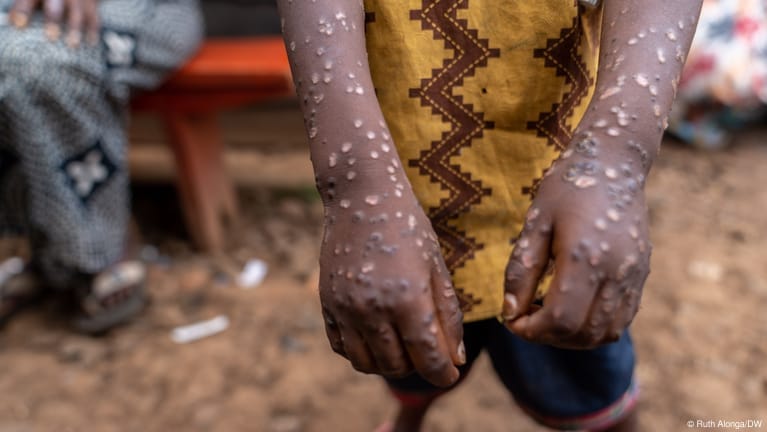
Why the concern? In Central Africa in 2024, clade Ib spread beyond sexual networks, infecting households and children and causing more widespread lesions. Bruno Tavares, an infectious disease specialist at Hospital Alemão Oswaldo Cruz in São Paulo, told CNN Brasil that studies outside Brazil suggest clade Ib is more transmissible and may cause more severe disease than clade IIb — but that it is not yet known whether that holds true in Brazil.
So far, there is reassuring news on that front. Lázari said there is no evidence yet of increased deaths or child cases linked to Ib in Brazil, adding that the African pattern "apparently is not reproduced in all contexts." Clade IIb still predominates among young men, she said. Brazilian reporting also stresses that there is not yet enough evidence to say the variant is necessarily more transmissible or deadlier than others.
Who Is Most at Risk
PAHO's data highlights a stark vulnerability. Mpox continues to disproportionately affect men who have sex with men. And of 114 mpox deaths in the region where HIV status was known, 111 — a striking 97% — were in people living with HIV.
That makes people with weakened immune systems, particularly those with untreated or advanced HIV, the group most likely to suffer severe or fatal illness. Rio's tragic first death of 2026 fits that pattern.
PAHO's Battle Plan
In its alert, PAHO laid out what it wants governments across the Americas to do — and fast:
- Strengthen epidemiological and genomic surveillance so that cases are detected and investigated in time.
- Boost laboratory capacity to confirm infections and identify which clade is circulating.
- Monitor shifts in how the virus is spreading.
- Reinforce targeted prevention and control measures, including vaccination for people at increased risk.
- Urge anyone with an unexplained rash or other symptoms — especially after close contact with someone infected — to seek medical advice and get tested.
- Advise travelers in higher-risk groups to get vaccinated before heading to areas with active transmission.
PAHO stresses that vaccination should be based on each country's situation and should complement — not replace — other prevention measures.
The Vaccine Squeeze
Vaccines exist, but supplies are tight. Brazil's Ministry of Health has bought 25,000 doses to bolster its national stockpile, according to Estadão Conteúdo, though the shot is not part of the routine immunization schedule. The vaccine's only manufacturer is Denmark's Bavarian Nordic, and supplies are limited globally.
To stretch doses, Brazil's ministry has told states and cities to use intradermal, fractional dosing — injecting a smaller amount into the skin rather than beneath it — which officials say can increase the number of people vaccinated by up to five times in specific groups.
Igor Marinho, an infectious disease specialist at São Camilo hospitals in São Paulo, said studies have shown immune responses comparable to the standard method, mainly against clade IIb. But, he cautioned, "it demands proper technique, and we still need more data on its effectiveness specifically against clade Ib." Tavares added that while vaccines cross-protect across clades, studies suggest less protection against Ib than against IIb — yet vaccination is still recommended for high-risk groups.
In Rio, the vaccine is currently offered in the municipal health network to adults living with HIV with a CD4 count below 200 cells/mm³, with gradual expansion to other people with HIV and to PrEP users as more doses arrive from the federal government.
Expert Perspective: "Attentive, But Not Alarmed"
For all the headlines, experts are urging calm, informed action rather than panic. "The population should be attentive, but not alarmed," Marinho said. Mpox, he and other specialists stress, does not spread through the air the way COVID-19 does. It is transmitted mainly through close contact — especially skin-to-skin contact with lesions, including during sex — and can also spread through contaminated items like clothing and bedding, according to WHO guidance cited by CNN Brasil.
Lázari pointed out that routine PCR testing confirms mpox but does not identify the clade; that is determined later through genomic sequencing at reference labs. For individual patients, she said, the strain matters "much more for planning than for individual clinical management" — treatment and isolation advice are the same either way.
What This Means for You
Whether you live in the Americas or are planning to travel there over the holidays, here is what you need to know. Know the symptoms. Mpox typically causes a rash or sores on the skin or mucous membranes, fever, headache, muscle and back aches, tiredness and swollen lymph nodes in the neck, armpits or groin. Some people have only a few lesions — sometimes just in the genital or anal area — which can make it easy to miss. Illness usually lasts two to four weeks, and most people recover.
Watch for danger signs. Marinho says to seek immediate care for intense pain, extensive lesions, eye involvement, difficulty swallowing or urinating, or any neurological changes.
Get tested if in doubt. If you develop an unexplained rash, especially after close contact with someone who is sick, contact a health provider and avoid intimate contact until you have been checked.
Isolate properly. Lázari advises staying isolated until all lesions have fully healed and the scabs have fallen off, because crusted lesions can still transmit the virus. Keep pets away, too — human-to-dog transmission was documented in 2022.
Ask about vaccination. If you are in a higher-risk group — including men who have sex with men with multiple partners, and people living with HIV — ask your doctor or local health department whether you are eligible, especially before traveling to an area with active spread. Protect people with HIV. If you are living with HIV, staying on effective treatment is one of the strongest protections against severe mpox.
The Bottom Line
Mpox's comeback in the Americas is not a repeat of 2022 — at least not yet. Case numbers remain well below that first terrifying peak, and Brazilian experts have so far seen no sign that clade Ib is killing more people or spreading widely among children.
But PAHO's alert is a pointed reminder that viruses do not read emergency declarations. With a newer strain gaining ground in two of South America's largest cities, scarce vaccine supplies and a holiday travel season ahead, health officials say now is the moment to test, track and protect the most vulnerable — before a simmering problem becomes a full-blown crisis.
Published By | Features Editor